Category Archives: Perennials

Garden Seminars & Workshops: Every Gardener’s Should-Do List

By Lee Edwards, Master Gardener

As Gardeners, we already know that gardening has many benefits including improving our health and connecting us with nature, to name just a few.  That said, did you know that attending gardening seminars and workshops can also improve your health- brain gain, ramp up your gardening skills, get you out meeting others with similar interests, and increase your communication abilities?  Even more, seminars and workshops add new ideas to your horticultural know-how, empower your confidence in gardening, and help to propel you to new gardening heights.

So, what does a gardening seminar or workshop look like?  Well, unlike lectures, they tend to be short, interesting, educational talks or demonstrations usually featuring a speaker engaged with a small group of attendees focused on garden topics of interest to the attendees.  During the event attendees typically get the opportunity to ask questions, participate in hands-on activities if any, learn something new, connect with speakers and increase their existing knowledge.

Indeed, during the cold winter as outdoor gardening slows down, attending a garden seminar or workshop is a great way to break up the long winter months away from the garden while remaining involved in garden goings-on and being amongst gardening enthusiasts.  The lively energy and creative atmosphere that permeates these events are infectious to everyone, worth the time and fee to attend, not to mention downright fun most-times.  Truly, garden seminars and workshops should be on every gardener’s yearly to-do list.  If you’ve never been to a garden seminar or workshop, now may be the time to try one, to investment in yourself, inspire your creative growth and add to your gardening knowledge.

Did you know that the Peterborough & Area Master Gardeners annually present a wonderfully fun and informative gardening seminar called “A Day for Gardeners?”

2019 Save the Date

A Day For Gardeners Seminars by Peterborough & Area Master Gardeners

A day of fun, friendship, food and learning.  Select 3 of 6 seminars presented by Master Gardeners and speakers on topics of interest to both new and experienced gardeners.

Date:   Saturday, March 2nd, 2019
Place:  Activity Haven Centre – 180 Barnardo Ave, Peterborough, ON K9H 5V3
Time:  10:00am – 3:00pm
Price:   $35 – EARLY BIRD (register and pay by February 2nd, 2019)
$40 – after February 2nd.
Includes lunch.  Walk-ins on day of seminars are welcome if room is available.

Have Fun Gardening!
 

What to Get a Gardener who has Everything For Christmas

by Suzanne Seryck, Master Gardener

Generally on the whole gardeners are a pretty easy bunch of people to get Christmas presents for – who doesn’t love a good ‘garden themed’ mug or calendar?

But what do you get the gardener in your life who already has a dozen or so mugs and calendars, bookcases overflowing with garden design, plant identification books and Canadian Gardening magazines, a shed full of shovels, trowels, pruners and every imaginable weeding tool that has ever been created.

So to my husband and anyone else who is looking for something a little different, I have attached my Christmas list:

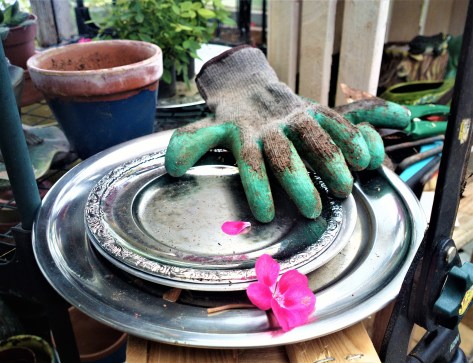
Gardening Gloves

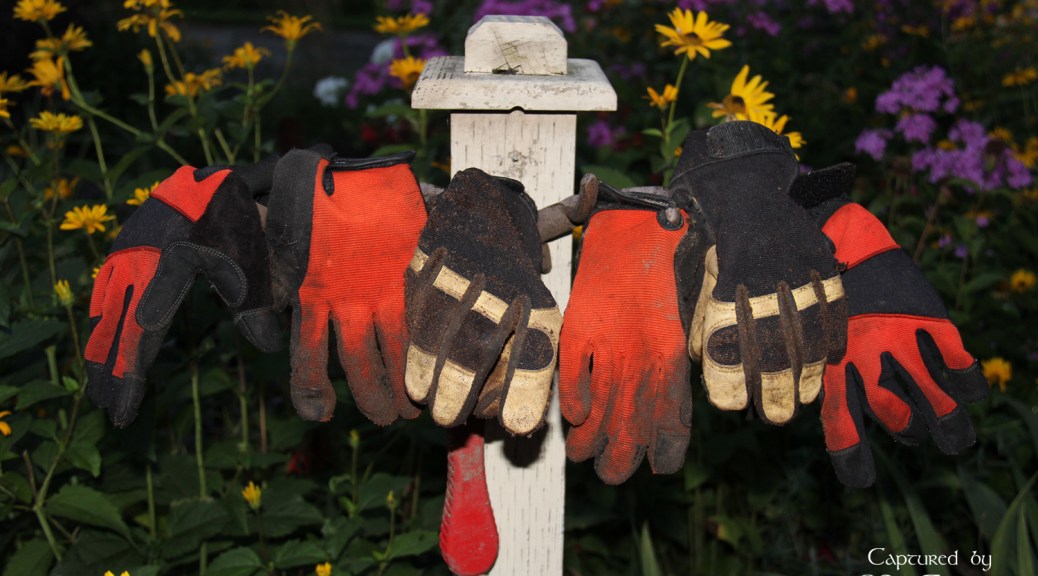
I know, I know I have at least 10 different pairs in the shed, but I must lose at least half of those pairs in a single season in my own backyard. Not to mention the other pairs I lose whilst gardening for someone else, or just simply driving, I’m not sure if they jump out of the car by themselves or simply get lost between the seats.

garden-2939827_1920


Gift Certificates

I’m pretty easy and flexible on these. Gift certificates for seed companies are always welcome, as is a gift certificate from Lee Valley, there has to be some tool I don’t already have. You can also purchase gift certificates from the many nurseries or garden decor/accessory shops in and around Peterborough, like those on the Peterborough and Area Garden Route. A gardener will always have room for one more plant, insect house or garden gnome.

giftcertificate

Advance Passes to a Garden Show

Canada Blooms in Toronto in 2019 is being held on March 8-17; advance tickets can be ordered here. And locally the Peterborough Garden Show is on April 26-28; advance tickets can be purchased at numerous physical locations plus online.

GardenShow

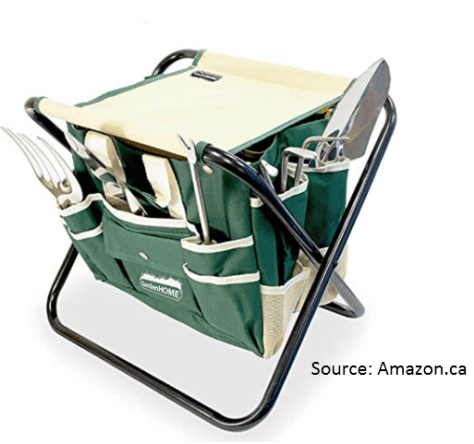
Folding Garden Stool with Tools

We are all getting older and in my case also more forgetful. As well as losing gardening gloves, I also frequently lose my tools. My husband even tried painting the handles of my tools bright red so I would be able to find them easily, that did not work. Every summer I must find at least 1 pair of pruners and a hori hori knife (I currently have 3) from the previous year or two. So to save both my aching knees and not lose any more tools I am adding this stool to my list, which actually stores the tools under the stool.

GardenStool.png

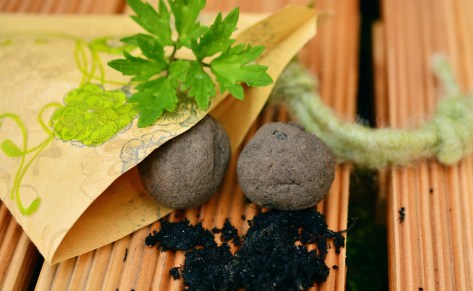
Seed Bombs

No other reason than I love the look of these. If you look at some of the websites out there you can find them in many different colors containing different types of plant seeds, for example seeds specifically for pollinators. They are also small enough to fit in a stocking, and if you like to make your own gifts this could be something you could do yourself.

seed-bombs-2314498_1920

A Gardening Book

And finally, of course, a gardening book, but not just any gardening book. This book was listed in the Toronto Star as one if the ‘100 notable books of 2018’.
It is called ‘The Overstory’ by Richard Powers. I haven’t read this, hence it’s on my list, but I am intrigued by the description given in The Star: ‘The science of botany and the art of storytelling merge to ingenious effect in Power’s magisterial new novel – in which people are merely the underbrush and the real protagonists are the trees that the human characters encounter’.

81tN8IGERxL

I wish you all a very Merry Christmas and hope you all receive what you wish for under your tree.

Butterfly Gardening – Monarch Waystation #204

by Mary Jane Parker, Master Gardener

Since 2008, my garden has been a monarch waystation.  In the beginning, when we purchased the property, we had to have a new septic system put in.  Because we are in a floodplain and the ground was saturated with water, we had to go up with the weeping tiles.  This meant that we had a berm at the front of the property and that was the beginning of my butterfly garden.

cottagejune23 038 (2)

Since then I have experimented with all kinds of native plants and wildflowers . The scope and layout of the property was such that formal gardens would have been impossible. Not all plants that I have tried have been successful but some have been my perennial favourites.

Monarda has self-sown over the years as has Phlox paniculata of which I probably have every colour available. Many plants have a personal history. Helianthus maximiliani came from Cathy Forget’s garden in Indian River and Glade Mallow (Napaea dioica) came from Mike and Sue Dolbey’s garden in Young’s Point. Many plants have come from gardens visited on horticultural trips near and far. I always leave room for native milkweed to grow. I have tried cultivated varieties of milkweed and unfortunately, they are not hardy here. The creek at the back of the property has an abundance of Joe Pye Weed (Eupatorium maculatum) growing naturally and I can’t think of anything prettier than when they are in bloom with the different shades of pink dancing in the breeze. I have always left room for Queen Anne’s Lace (Daucus carota) which not only attracts monarchs but a variety of interesting bugs. In the spring the Korean Lilac (Syringa meyeri) blooms are always a butterfly magnet.

Being a waystation has been fun. There are over 20,000 registered waystations around the world, most in North America, and although there are guidelines to follow, it does not appear that there are any hard and fast rules. The whole point is simply to provide habitat for monarchs and in doing so, you have a place that also attracts other butterflies, birds, and pollinators. Visit www.monarchwatch.org for more info.

houseonriver 044 (2)

Shady Gardens

by Sharleen Pratt, Master Gardener in Training

Now that the colder weather has arrived and the days are shorter, it’s time to dream about next year and possibly plan a new garden. Do you despair at the challenges surrounding a shade garden? We can enjoy the cooling effects of the shade and experience a garden that regales all of the senses. When choosing plants, consider interesting foliage and texture rather than solely depending on flower colour.

If you are planting under mature trees, especially non-native maples you must always remember that those vigorous, feeder roots quickly out-compete new transplants for water and nutrients. Every fall add several layers of shredded leaves as well as compost for additional nutrients. Remember to water often the first year.

There are many wonderful bulbs that would give you that burst of colour in the early spring before the trees get their leaves. The sun coming through the branches in early spring is perfect for encouraging Daffodil (Narcissus hybrids), Grape Hyacinth (Muscari botryoides) and Siberian Squill (Scilla Siberica) to flower before the tree canopy is in full leaf.

Hosta (Plantain Lily) are a must have in a shade garden and provides variations in leaf size, shape and colour. This perennial has hundreds of species and thousands of cultivars and they are tough, reliable plants. Along with the Hosta, you might consider Bleeding Heart (Lamprocapnos spectabilis). Their flowers hang down like dangling hearts and are a real source of delight. The dryer soil under a canopy of trees would quicken their disappearance shortly after flowering and would work well under the emerging large leaves of the Hostas. Another old-fashioned perennial is the Heartleaf Bergenia (Bergenia cordifolia) that has large waxy, heart shaped leaves. It also has some fall interest when the leaves take on a reddish winter hue.IMG_4094

Lungwort (Pulmonaria) are also shade tolerant and their delicately patterned foliage draws the eye throughout the summer. There are several species, some of which are variegated which can add texture and colour to the shade garden. Another perennial to consider is the Brunnera ‘Jack Frost’. This plant was named as the Plant of the Year for 2012. It bears panicles of light blue flowers held above silver leaves with green veins and edges. Once established, they can be fairly drought tolerant. An overlooked plant is the Foamflower (Tiarella cordifolia). It is a native groundcover and is happy in both full to light shade. It bears tall racemes of delicate white or pale pink flowers for six weeks in early summer. They grow best in moist, humus-rich woodland soil.

To give the shady garden some texture and shape, look at some of the broadleaf evergreen shrubs. The Oregon Grape Holly (Mahonia aquifolium) prefers moist, well-drained, acid soil. It produces very fragrant yellow racemes in mid-spring, followed by globose, dark blue fruit. Another broadleaf evergreen for shade is the Rainbow Leucothoe (Leucothoe fontanesiana ‘Rainbow’) a member of the Heath family with white urn-shaped flowers.

Take a close look at your growing conditions and plant accordingly. Put a bench under a tree and once established, the shade garden will be a wonderful oasis to roam and sit with a cup of tea and take in all the many senses surrounding you.

A good article that lists many perennials and groundcovers for a shade garden can be found at Landscape Ontario.

Spring Bulbs – Beyond Daffodils and Tulips

by Suzanne Seryck, Master Gardener

October and November is a great time to plant spring bulbs – these are the bulbs that will extend the colour in your garden,  often blooming when there is still snow on the ground. These bulbs – the most well-known being daffodils and tulips – bloom from March or April until late spring. They are incredibly low maintenance, you plant them once and then forget about them, with the exception of daffodils which often need dividing every 5 years or so. However the reward outweighs the hardship of dividing them, a clump of 5 can easily multiply to 40 or 50.

Daffodils and tulips are, by far, the most recognized spring bulbs, coming in many different colours, sizes and bloom times. However if you look beyond, you start to notice the many other different spring bulbs available.

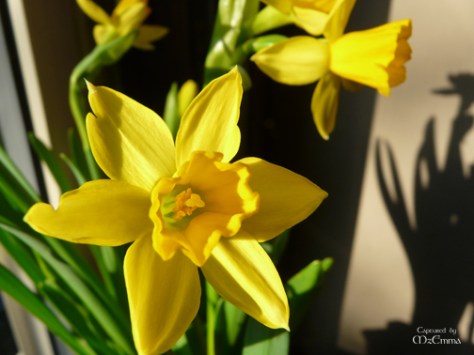
daffodils_EM

I live in Lindsay and like many cities, if you drive around in the spring, you will notice the many blue lawns. These are actually either glory of the snow (Chionodoxa spp.), or siberian squill (Scilla), tiny blue bulbs that naturalize in both your lawn and your flower beds. The difference between the two depends on the direction that the flower head faces, but either are perfect in the lawn. As well as blue they also come in lavender, pink or white.

Squill_EM

Snowdrops (Galanthus), which are among the earliest blooming spring bulbs will also naturalize in your lawn or flower beds, however in my garden, they are slower to multiply. They can be either single or double with a small white or snow colored flower.
I plant a lot of grape hyacinth or muscari in my garden, however I find them too large for my lawn and instead plant them in the perennial beds. They are also great under shrubs, trees or hedges. They come in blue, violet, pink and white and multiply easily, quickly spreading to form large clumps. Blue muscari works very well when paired with daffodils and can be planted in the same hole. Bulbs are typically planted at a depth determined by the size of the bulbs, allowing you to layer the muscari on top of the daffodils.

Crocuses whilst beautiful in their many different colours seem to be especially appetizing to squirrels. I planted orange crocuses two years ago and out of the twenty crocuses I planted, I may have seen one actually bloom, I was left with either holes where the bulbs used to be, or they would be nipped off when they were about 1 inch tall. I still plant them, but I make sure to plant a daffodil in the same hole, squirrels do not like the smell of daffodils and tend to stay away.

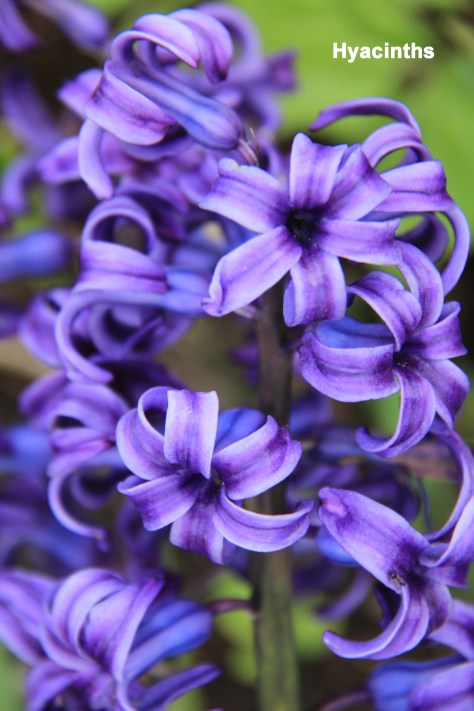
Other spring bulbs I have planted in my gardens include anemone, oxalis adenophylla, which is a very pretty pink colour, hyacinths, winter aconites, a very cheery shade of buttercup yellow, iris hollandica and of course English bluebells. I have to admit I do have a lot of daffodils and tulips in my garden from my early gardening days, but I am now starting to look beyond and plant the many different spring bulbs now available.hyacinths_EMHint: If you’re looking for ideas for something different check out this GardenMaking magazine article with ideas for 25 unique bulbs for your garden.


Planting to Encourage Proper Root Growth and Branching

By Sue Flinders-Adams, Master Gardener

Here are a few tips to ensure that the new shrub or tree you just brought home will thrive and grow to its full potential.

1. Before planting, soak the plant in the pot, in a pail of water for a few hours or even overnight to hydrate the roots.

2. Carefully remove plant from the pot. If it doesn’t come out easily gently press on the sides so that the roots will come away from the pot, and tap on the bottom.

3. There are usually roots circling the pot – gently coax these roots away from the root ball to encourage outward growth. If roots are left in the ‘circling’ position, they will continue to grow in this direction, circling the plant and even girdling the trunk of the tree in 10 or 15 years.flinders pic 1

4. The picture shows the roots that have been spread out in the very large hole. Partially cover the roots to hold them in place and water thoroughly with transplant fertilizer, according to the directions. Fill in the hole with the surrounding soil. Top dress with an inch or two of composted manure, and then 3 inches of mulch. Prune off any dead branches.flinders pic 2

5. Branches are often cramped and a little twisted from shipping. Gently pull them away to a better positon and secure with plant supports (pictured). In a couple of weeks you can take the supports away and the branches will continue to grow in that direction.

6. flinders pic 3Three weeks later, the Black Lace Elder is looking very happy. It is October which explains the lack of new growth.
The Plant Lover’s Guide to Salvias (Book Review)

By:  Mary Jane Parker, Master Gardener

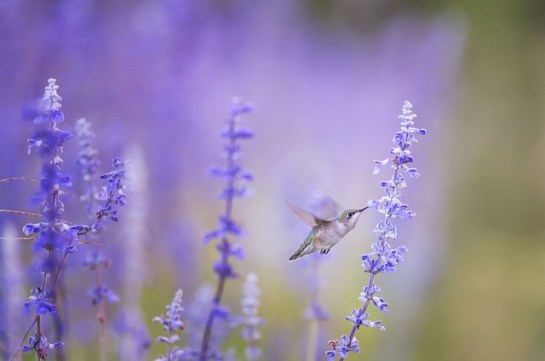
If you care deeply about natural gardening and attracting bees, insects and hummingbirds to your garden, then salvias should be one of your go-to plants. They have wonderful flowers and fragrant leaves and for me, they bloom almost all summer.

In this very readable book, The Plant Lover’s Guide to Salvias, John Whittlesey outlines designing with salvia plants in different climate zones. We learn that salvias are generally hot climate plants and many have low water requirements but some of the perennial ones can be treated as annuals in our climate. Some are rated for zones close to ours and will survive here as perennials. I have had Salvia glutinosa growing here for many years and the book rates that one only a US zone 6a. Culinary sage (Salvia officinalis) has overwintered for me also for a number of years.

hummingbird 1851489_640

The author next goes through and discusses 150 species and exceptional hybrids, their country of origin and specific cultural practices for each and any notable characteristics such as a strong hummingbird attractor.

Finally, he discusses general cultural techniques and then provides a listing of sources for plants and seed. After having read the book and descriptions of different salvia species, I have ended up with a two-page list of interesting species I wish to try.

The Peterborough Horticultural Society has this book available in their lending library or you can purchase from Timber Press.

New Garden Planning; a Look Ahead

By Cheryl Harrison, Master Gardener

Fall is a great time to get a head start on the new garden that you have been dreaming about for next year.

Deciding the new garden’s location depends on the purpose of the garden.  Will it be a quiet area for relaxing?  Look at the view from outside and also through the windows from inside your home when assessing potential locations.

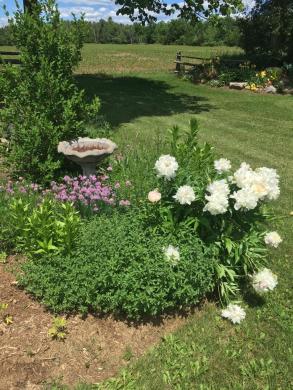
Consider the growing conditions.  Is the potential location windy, sunny, shady or combination sun/shade?  It may be important to know the location of utility lines and pipes depending on how radical the planned change to the landscape.  Do you have access to water?  New plants usually need supplementary water for their first year.  Also check the area for flooding and provide drainage when necessary.IMG_1164

Think about garden structures……perhaps an arbor, fence or pergola or maybe a bird bath or bench?  For larger structures, you may need a construction permit.  A landscape professional can be a great person to consult at any stage of planning.

Soil condition is vey important to the growth of plants.  Newly built homes often have very little topsoil layered over nutrient poor subsoil.  It may be necessary to dig out some of the subsoil and replace it with good topsoil.  This “digging” step is when to be aware of the location of your utilities.

Create a new garden by edging the chosen area with a sharp shovel or edging tool then placing the material (usually a combination of grass and soil) into the centre of the new garden location.  Smother unwanted growth by covering the area with 4-5 layers of newspaper, or cardboard, and water it down.  Then layer topsoil about 15 cm (6 inches) on top and add additional organic material like composted manure.  Finish the new garden bed with a 7-10 cm (3-4 inch) layer of mulch.  The newspaper/cardboard layer, and the mulch will eventually decompose to become part of the garden’s soil.

Your new garden bed is ready for planting.  Choose plant material by looking at plant catalogues and on web sites.  What a great way to spend a fall or winter afternoon!

Preparing Your Perennial Garden for (gasp!) Winter…

By Mary-Jane Pilgrim, Master Gardener

Winter is fast approaching, and it’s time to prepare your gardens for the long, cold months ahead. By spending a little time this fall preparing, you can insure a healthier start to next year’s  season. Here’s a checklist of fall activities to get them ready for winter before it gets too cold to comfortably work outside.

  1. In all areas, spring-flowering bulbs, such as tulips and daffodils, should be planted six weeks before you expect the ground to freeze.
  2. Dig and store tender summer bulbs, such as dahlias and canna lilies, after the first hard killing frost. Store them in wood shavings or crumpled/shredded newspaper in a cool, dry place.
  3. Stake and tie up any young trees or shrubs that may break under the weight of wet snow or ice. Use soft (but strong) ties around the bark of trees, as wire or twine can cut into the bark and cause serious damage. Place wooden tepees over shrubs growing under eaves where snow tends to fall off the roof.
  4. After the first couple of frosts, hosta and daylily leaves will pull up very easily. Doing the removal in the fall means that you don’t have to deal with a slippery mess next spring.
  5. To prune or not to prune perennials to ground level? It’s a good idea to leave some plant material for visual interest through the winter months; ornamental grasses and hydrangeas have attractive seed heads and always look gorgeous in the winter, especially sprinkled with snow. With the exception of hosta and daylily leaves, I choose to leave everything else for spring cleanup.
  6. Protect hybrid roses with rose cones or bark mulch piled over the crown of the plant after a hard freeze.
  7. Remove all weeds from your perennial beds, and add compost to create a good base for next year’s growth. Compost applied in the fall is better than the spring as it has had time to break down and release its nutrients into the soil.
  8. Move containers to a protected location when frost threatens. After a frost, remove soil and plants from containers and store ceramic and clay pots in a garage or basement. Place used potting soil in the compost pile. If the containers have perennials planted in them, consider digging a hole to bury the plant including the pot, or bury in leaves in a protected area. Potted perennials will not usually survive the winter if not buried/covered.
  9. Instead of raking and bagging the leaves to cart off to the landfill, shred leaves with a mower to create amazing leaf mulch which can be spread on the garden as a winter protectant.  The earthworms will love the food, and the leaves will eventually break down, adding nutrients to the soil. If you decide to cover gardens with unmulched leaves, do not apply a thickness of more than about 10 centimetres (four inches). Any deeper will smother bulbs and perennials trying to grow in the spring.
  10. Take pictures of your gardens to assist with your dreaming and planning for the next season after the snow flies!
  11. As you wind down the garden season, make notes on what worked and what didn’t work, to help you plan for a successful garden next year. You are more likely to remember key points now rather than next April or May.
  12. Join a local garden or horticultural society. Many organizations meet over the winter on a monthly basis and provide interesting speakers who can help chase away the winter blues and provide you with great ideas for your upcoming garden season.

The Importance of Plant Labelling

By MJ (Mary-Jane) Pilgrim, Master Gardener

Why should we label the plants in our gardens? The answer is simple–so that we know their names & can then give them the correct care. For herbaceous plants, the labels act as placeholders over the winter, so that we don’t accidentally disturb them, or try to plant bulbs too close to them while they are dormant.

Figuring out how to handle labeling is one of the trickier parts of perennial and vegetable gardening. Do you keep the tags your plants come with, filling your garden with dozens or hundreds of bits of plastic? Do you tape them into a special garden notebook, so you can keep track of where all of the information for your plants? Or do you simply toss the labels in the recyling bin as soon as you get the plants in the ground?

For me, the answer to all of these questions was ‘no’ simply because most of my first plants came from local plant sales and were probably pretty common (and invasive?) plants. The white paper address label from the sales were usually blank the following spring so I was no further off than when I started. Then, I started buying more unique perennials at garden centres — the real money kind of plants. It seemed a shame to toss those beautiful tags full of information, so I buried them close to the plant which worked well — but the tags did crack and disintegrate after a couple of seasons. Tags created with my simple Dymo labeller were often blackened by the sun after a similar amount of time. Then, I listened to a speaker at my local horticultural society discuss his approach to labels — one of those portable labelling systems that could take a special kind of tape: “high temperature/low temperature”. He reported that his labels were lasting 10 years and counting. Being a “techy” kind of person, I bought one from Brother/Staples about 5 years ago and I’ve been pretty happy with it. I also record plant information and cultivar names into my mobile phone’s “notes” feature in categories such as ‘hostas’, ‘coneflowers’, ‘sedum’, ‘trees’ so that if I forget to create a label, or the label goes through the chipper in the spring (yikes!), I still have something to go back to. Keeping a list of plants I’ve purchased on my mobile device also helps but doesn’t prevent me from purchasing duplicates. Sigh. (Been there, done that, too many times to count).

My last reason for labelling is that any visitor to your garden will ALWAYS want to know the names of your plants! They may already THINK they know what it is, and they are happy to have their knowledge confirmed with the presence of a tag.

Downside of Plant Labeling

  • The amount of time it takes to check the plant, produce the label, and attach it, not to mention regular checking and replacing of broken, moved and missing labels
  • The cost to purchase the labeller ($100 ish) and the label tape ($30 per roll)
  • Labels can be easily be mistakenly moved from one area to another at cleanup time — and a wrong label is worse than no label.
  • Labels can sometimes detract from the beauty of the garden.

Reasons to Label:

  • You’ll remember your plants’ names, and can give them the correct care.
  • You’ll remember which heirloom veggies are which for reordering next year.
  • You’ll know which very expensive perennial you purchased LAST year did not show up at all this year.
  • The labels act as placeholders so that you don’t accidentally plant something new in the space being held by another, but dormant, plant or bulb.
  • “Oh, I’ll remember what this is.” Oh no, you won’t; trust me.
  • Plants are worth WAAAAYYY more at plant sales if you know the cultivar name — we normally know the genus and species, but the cultivar name is much more tricky and often impossible to determine after the fact.

labelling optionsPlant Label Materials:

  • Simple white plastic labels for seed-starting are available at many landscape supply stores, but what to use for the actual marking?
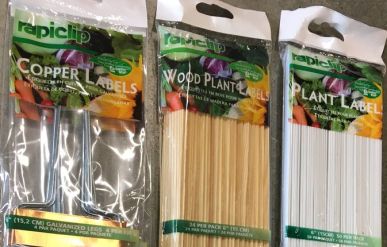
  • Copper labels – use a ballpoint pen to make a true inscription on the thin copper — although these are sometimes difficult to read years from now.
  • Paint the plant names on both sides of hand-sized smooth river-style rocks.
  • Cheapest option: plastic mini-blinds or wooden popsicle sticks but these often fade or disappear.
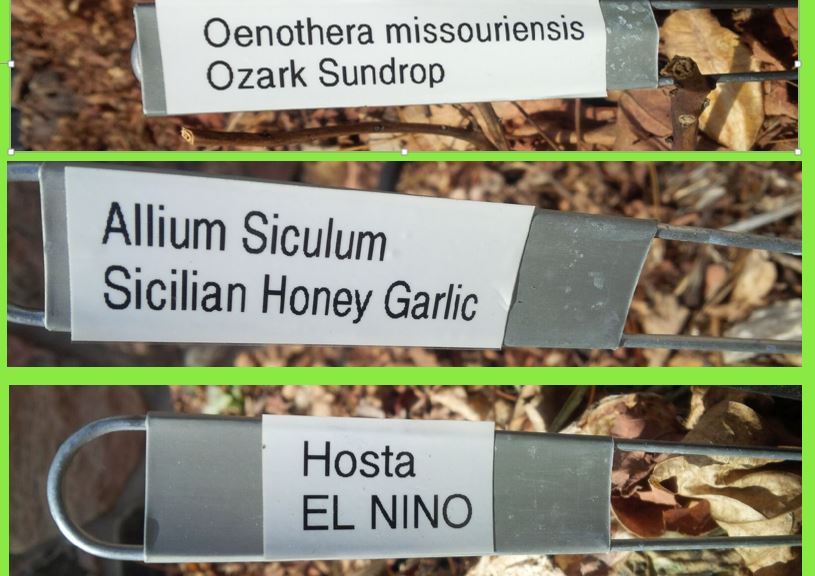
  • Strips of galvanized “duct hanger” metal strips, cut to length with a plastic label.
  • Metal hairpin-type labels with a plastic label: sturdy, but easy to step on or pull out with a rake.

According to my research, the following will work on plastic, wooden and/or metals tags: pencils, ballpoint pens, paint pens, Sharpies, and supposedly fade-resistant nursery marking pens. According to some articles I’ve read, the unexpected hero is the ordinary pencil on plastic or wood: it’s perfect for all but the shiniest materials. A great suggestion is to include the plant information on the back of the marker, too. If the front fades or is damaged, the info on the more protected back side will hopefully still be readable.

brother-labeller low-resMY Preferred Labeling System: hairpin-type label stakes (Lee Valley), pushed more than halfway down with white “live forever” plastic label tape (Amazon) printed on a small Brother labeller (see picture).

One last suggestion for plant record-keeping is the digital camera. It’s so easy to take a picture of the label right against the plant in the garden — you’ll then have a visual record of the name and where the plant is growing.

Hope this helps to save some time, energy and frustration for someone!