Every autumn, leaves throw one final party as they drop to the ground. It looks like they’ve just given up, disconnected from their branches and collapsed. But trust me—fallen leaves are not lying around doing nothing. They’re busy living their best afterlife.
First, an important definition:
Abscission: the natural detachment of parts of a plant, typically dead leaves and ripe fruit.
When leaves detach from their tree, they fall to the ground and form crunchy carpets, daring you to walk through and make as much noise as possible. (Kids and dogs in parks are especially good at this.) But once the fun is over, the real magic begins. Beneath those piles, leaves quietly turn into a delicious buffet for worms, beetles, fungi, and all sorts of tiny critters. It’s basically an all-you-can-eat salad bar for the soil.
As they break down, leaves release nutrients back into the earth, feeding your trees, flowers, and veggie patch — nature’s own recycling program. They also act like outdoor blankets, keeping plant roots warm through winter. Your daffodils may never say thank you, but they’re grateful. Just remember to peel back the blanket a bit in the spring when the daffodils want to make their grand entrance.
So next time you’re tempted to bag every last leaf in the fall, remember—they’re not just garden litter. They’re quiet agents of soil health, undercover mulch, and active decomposers. Fallen leaves aren’t dead weight. They’re just busy working on their next big role: turning into next spring’s garden gold.
So maybe this fall you can give your rake a rest and let the leaves do their thing. After all, they’ve been running this underground operation for millions of years. They know what they’re doing. Do take the time to rake them off of your grass, though, as grass doesn’t tolerate the leaf party as well as the garden does!
On a warm spring morning in Ontario, a familiar hum drifts through the air. Low, steady, and purposeful, it comes from a black-and-yellow visitor weaving between garden blossoms—the Eastern Bumblebee (Bombus impatiens). To most of us, it’s a sign of summer’s return, but beneath that fuzzy exterior lies a fascinating story of evolution, resilience, and quiet importance.
Bumblebees belong to the genus Bombus, a group that diverged from honeybee ancestors around 25 to 40 million years ago (Hines, 2008). Unlike honeybees, which thrive in massive colonies, bumblebees are social but live in smaller, more seasonal groups. The Eastern Bumblebee has evolved as a master of cool and temperate climates, thanks to its thick fuzz and the ability to generate heat by vibrating its flight muscles—a survival skill that lets it fly on chilly mornings when other pollinators remain grounded (Heinrich, 2004).
Every spring, the story begins anew with a solitary queen who has survived winter hibernation beneath leaf litter (leave the leaves!) or soil. Emerging hungry, she forages for nectar and pollen while searching for a suitable nest site—often an abandoned rodent burrow or a hollow beneath grasses. There, she lays her first clutch of eggs, which hatch into female workers. These workers soon take over foraging, allowing the queen to remain in the nest and focus on laying eggs (Colla et al., 2011). As the colony grows through summer, new males and future queens are produced. Mating occurs in late summer and early fall, after which the old colony dies, leaving only the fertilized young queens to overwinter and begin the cycle again the following year.
Eastern Bumblebees are generalist foragers, meaning they visit a wide range of flowers. They sip nectar for energy and collect pollen to feed their larvae. Unlike honeybees, which rely heavily on certain crops, Eastern Bumblebees are flexible, visiting everything from clovers and goldenrods to tomatoes and blueberries (Goulson, 2010). Their unique ability to perform “buzz pollination”—vibrating flowers to release hidden pollen—makes them essential for crops like tomatoes, peppers, and cranberries, which depend on this technique.
In the grand web of life, Eastern Bumblebees are lynchpins. By transferring pollen as they forage, they ensure the reproduction of wildflowers and food crops alike. This not only feeds people but also supports wildlife, since countless birds and mammals depend on the seeds and fruits that bumblebees help create. In forests, meadows, and city gardens, their work sustains plant communities that form the backbone of biodiversity.
Despite their adaptability, Eastern Bumblebees face mounting challenges. Habitat loss from urbanization and intensive agriculture has reduced nesting and foraging opportunities. Pesticides—especially neonicotinoids—pose lethal and sublethal risks, impairing navigation and reproduction (Woodcock et al., 2017). Climate change adds another layer of stress, disrupting flowering times and exposing bees to extreme weather (Kerr et al., 2015).
The Eastern Bumblebee may be small, but its impact is enormous. With every hum in your backyard or park, it carries the story of millions of years of evolution, a seasonal cycle of resilience, and a vital role in keeping our ecosystems alive. Protecting them means protecting the beauty and abundance of the natural world.
References
Colla, S. R., Richardson, L., & Williams, P. H. (2011). Guide to the Bumble Bees of North America. Princeton University Press.
Goulson, D. (2010). Bumblebees: Behaviour, Ecology, and Conservation. Oxford University Press.
Heinrich, B. (2004). Bumblebee Economics. Harvard University Press.
Hines, H. M. (2008). Historical biogeography, divergence times, and diversification patterns of bumblebees (Bombus). Systematic Biology, 57(1), 58–75. https://doi.org/10.1080/10635150801898912
Kerr, J. T., Pindar, A., Galpern, P., et al. (2015). Climate change impacts on bumblebees converge across continents. Science, 349(6244), 177–180. https://doi.org/10.1126/science.aaa7031
Woodcock, B. A., Bullock, J. M., Shore, R. F., et al. (2017). Country-specific effects of neonicotinoid pesticides on honey bees and wild bees. Science, 356(6345), 1393–1395. https://doi.org/10.1126/science.aaa1190
Pollinator insects – bees, wasps, beetles, flower flies, ants and butterflies–play an important role in the production of almost 75% of global food crops (FAO 2018). For example, only the tiny chocolate midge is able to pollinate flowers of the cacao tree and produce cacao pods!But bees, including native bees, are responsible for the biggest share at 35% of global food production (Ritchie 2021), including economically important commercial crops such as apples and blueberries!
Bees are such effective pollinators because of the specialized hairs and pollen carrying structures on their legs that enable them to gather and transport pollen. The vast majority of bee pollinators are wild, including over 20,000 species of native bees worldwide and 400 species in North America. In natural ecosystems, bees visit the most plants and have the most interactions with flowers as compared to other insect pollinators (Radar et al. 2020).
Bees have specialized hairs and pollen carrying structures as seen in the large filled pollen sacs of this Common Eastern Bumble Bee (Bombus impatiens) collecting nectar and pollen on native Shrubby St. John’s-wort (Hypericum prolificum).
I enjoy photographing the busy native Bumble Bees in my garden that collect pollen from a wide variety of flowers, often late into summer evenings. Here are a few species that you may see, too.
This Yellow-banded Bumblebee (B. terricola) with its distinct yellow and black abdominal band pattern is collecting nectar and pollen from the native Virginia Mountain Mint (Pycnanthemum virginianum). This species is ranked as “Special Concern” in Ontario, meaning it is not endangered or threatened, but may become threatened or endangered due to a combination of biological characteristics and identified threats. Its nests are often underground in abandoned rodent burrows or decomposing logs.
Here the Perplexing Bumblebee (B. perplexus) is collecting nectar and pollen from native Anise Hyssop (Agastache foeniculum). As its name suggests, this bumble bee can be rather perplexing to identify! As it’s not very common, rather little is known about it.
The Brown-belted (B. griseocollis) is a short-tongued Bumble Bee and native Butterfly Milkweed (Asclepsis tuberosa) is just one of the flowers it prefers. It is one of the most abundant and widespread bumble bees in northeast North America.
You can find excellent guides to help you identify the bumble bees in your garden here and you can learn more about native bees in this excellent publication.
Sadly, all pollinators are experiencing alarming declines due to habitat loss, pesticide exposure, invasive species, parasites/diseases and climate change. One study found that when compared to 125 years ago, 30% of plant:pollinator associations have been lost (Mathiasson and Rehan 2020). Five Bumble Bee species, American, Gypsy Cuckoo, Rusty-patched, Suckley’s Cuckoo, and Yellow-banded, are currently listed as Endangered, Threatened or Special Concern in Ontario.
Gardeners Can Help!
Gardeners can help native bees by creating habitat, providing floral resources and maintaining a pesticide-free garden:
Nesting & overwintering habitat
Most native bees (60-70%) nest in the ground. Use a thin layer of mulch and avoid using landscape paper/fabric which prevents bees from making a nest in the ground.
For the 30-40% of stem nesting bees, cut back perennials later in spring leaving those with hollow stems at varying lengths (20 to 60 cm) as shown in this excellent guide. If you do cut, leave the bottom 20 cm in place, bundle the cut stems, and place them in your garden.
An entrance hole of a bumble bee ground nest in a patch of native Pussy Toes (Antennaria neglecta) in the author’s garden.
Floral resources
Plant a diversity of native and non-native plants to have continuous blooms, and sources of nectar and pollen, from early spring to late fall
Include at least one native early spring blooming shrub or tree (e.g., willow, redbud, cherry) for emerging queen bees
Pesticide-free habitat
Avoid using pesticides. Recent research from the University of Guelph has shown that ground-nesting native bees experience reduced pollen collection, induced hyperactivity or decreased number of offspring emerging per nest even when so-called “bee-safe” pesticides were used (Rondreau and Raine 2024).
Your habitat restoration efforts, especially adding native flowering plants, will go a long way to helping our native bee pollinators, and also our food security.
Rondreau, S. and N.E. Raine. 2024. Single and combined exposure to ‘bee safe’ pesticides alter behaviour and offspring production in a ground-nesting solitary bee (Xenoglossa pruinosa). Proceedings of the Royal Society Biological Sciences. https://royalsocietypublishing.org/doi/10.1098/rspb.2023.2939
Ants are everywhere, but only occasionally noticed. They run much of the terrestrial world as the premier soil turners, channelers of energy, dominatrices of the insect fauna ~ Bert Holldobler
This spring I noticed that my patches of native bloodroot (Sanguinaria canadensis) and large-flowered bellwort (Uvularia grandiflora) appear to have spread to places where I didn’t plant it. So that got me wondering “how did that happen?”
Large-flowered Bellwort (Uvularia grandiflora) with Wild Ginger (Asarum canadense)
Apparently the answer is myrmecochory, which is defined as the dispersal of seeds by ants. Many plants have evolved to depend on a specific group of insects to disperse their seeds—in this case ants!
Plants that use ants to disperse their seeds have a fat-filled structure on the seed exterior called an elaiosome, which is a super snack for an ant. These structures or “food bodies” are rich in lipids, amino acids or other nutrients.
Elaiosome (e-lay-o-zome) (Greek: elaion=oil + soma=body) literally meaning ‘oil body’
Ant with Bloodroot seed (photo credit: Donna Bos)
Plants that use this technique include many of the spring ephemerals such as trout lily (Erythronium americanum), violets (Viola spp), trilliums (Trillium spp), bloodroot, wild ginger (Asarum canadense), dicentra (Dutchman’s breeches, squirrel corn, bleeding hearts), hepatica, spring beauty (Claytonia virginica), large-flowered bellwort, and sedges in the Carex genus.
How it Works
Elaiosome Production Myrmecochorous plants produce seeds with an elaiosome
Ant Attraction The elaiosome attracts ants, who are drawn to the food source.
Seed Transport Ants carry the seed back to their nest, where they consume the elaiosome.
Seed Dispersal The seed is then discarded, often near the ant nest, providing a good environment for germination and seedling establishment.
The seeds are dispersed away from the parent plant, which reduces competition with the parent plant and improves chances of successful germination in the new spot. The ants may also discard the seeds in nutrient-rich areas within the colony, further enhancing germination success.
Thanks to the ants, the seeds are buried in nourishing soil, protected from predators (e.g., slugs and mice) who would eat the entire seed, not just the elaiosome.
Myrmecochory occurs worldwide, with over 11,000 plant species depending on this partnership. In eastern North America, ants in the genus Aphaenogaster do the majority of the work. These ants nest in leaf litter and woody debris on the ground, so it’s important to minimize plowing and soil disturbance.
Aphaenogaster worker ants can often be spotted carrying seeds back to their nest (Photo credit: Katja Schulz – Flickr)
Ants are Important
Ants are a vital part of our ecosystem and worth protecting. They are keystone species – their diversity and behaviour affect their habitats and the surrounding plant and animal communities. So by conserving ants, we protect many other organisms that rely on them for the lifecycles.
The intricate tunnels and galleries ants create loosen the soil and allow moisture, nutrients, and air to move downwards. They carry leaf litter, prey, and other food items deep into the soil, which then are broken down by other invertebrates and microbes into the nutrients that all plants need to grow.
So next time you see your favourite spring plant has popped up in another location, thank the ants!
Tucked away in the cool corners of gardens, beneath leafy cover and damp soil, lives an unassuming champion of ecological balance: the American toad (Anaxyrus americanus). With their warty skin, endearing hops, and golden eyes, these amphibians may not boast the charisma of butterflies or hummingbirds, but their contributions to gardens are unparalleled. Often overlooked, the American toad quietly goes about its work, consuming pests, enriching the soil, and maintaining harmony in ecosystems. It’s time we shine a light on these remarkable creatures and embrace their presence in our outdoor spaces.
American Toad showcasing why warty skin is so great at camouflage
The American toad, native to eastern North America, thrives in a range of environments, from woodlands to suburban backyards (Elliott et al., 2009). Unlike frogs, toads are covered in warty, textured skin, an adaptation that provides effective camouflage against predators. This camouflage, combined with their nocturnal habits, allows them to move unnoticed as they perform their crucial ecological roles. Chief among these roles is pest control. Each evening, American toads emerge from their shelters to feast on insects, slugs, and other invertebrates. By consuming thousands of pests in a single season, they provide natural, chemical-free pest management, an essential service for gardeners and farmers alike (Mitchell & Lannoo, 2020).
In gardens, toads reduce populations of harmful insects like beetles, cutworms, and mosquitoes, preventing these pests from damaging plants or spreading disease. Unlike chemical pesticides, which often harm beneficial insects and pollute the environment, toads work in harmony with nature, maintaining ecological balance without collateral damage (Relyea, 2005). Furthermore, their waste contributes organic nutrients to the soil, promoting plant health and improving soil quality—a testament to the interconnectedness of life in the garden.
Well-fed American Toad guarding Thom Luloff’s plants from pests
The life of an American toad is a remarkable journey of survival, reproduction, and adaptation. During the day, toads shelter under rocks, logs, or thick vegetation to escape predators and prevent dehydration. At night, they hunt using their long, sticky tongues to capture prey with incredible precision. In spring, their lives become even more captivating as males gather at ponds, streams, or garden water features to call for mates. Their trills, a hallmark of the breeding season, are a welcome sign of spring. After mating, females lay long strings of eggs, often numbering thousands, which hatch into algae-grazing tadpoles within days (Elliott et al., 2009). These tadpoles play a vital role in keeping aquatic ecosystems healthy by controlling algae growth.
Toads are also experts at enduring winter, surviving through a process called hibernation. As temperatures drop, toads burrow deep into the soil, often using loose dirt, leaf litter, or even garden waste as insulation. These layers protect them from freezing temperatures and provide shelter from predators (Mitchell & Lannoo, 2020). For this reason, leaving leaf piles and garden debris untouched during fall and winter is critical. These natural materials serve as vital hibernation sites, not just for toads but also for other beneficial creatures like pollinators and soil invertebrates. Clearing the garden too early in the spring can disrupt or destroy these overwintering habitats, inadvertently harming the wildlife that supports your garden’s health. Waiting until temperatures consistently rise ensures that these creatures can safely emerge and resume their roles in the ecosystem.
Despite their adaptations, American toads face numerous predators, including snakes, birds, and mammals. However, their warty skin serves as more than camouflage—it secretes a mild toxin that deters many would-be predators (Mitchell & Lannoo, 2020). Some toads even use dramatic behaviors, such as flipping onto their backs and feigning death, to discourage attacks.
Beyond their ecological contributions, American toads are fascinating creatures with unique traits. They can live over a decade in the wild, a testament to their resilience and adaptability (Elliott et al., 2009). They can also change their skin color slightly to blend with their surroundings, shifting between lighter and darker tones based on temperature and humidity. These subtle abilities add to the toad’s allure for those who take the time to observe them closely.
Creating a toad-friendly garden is simple and deeply rewarding. To attract toads, provide shelter using overturned flowerpots, rocks, or logs, and allow areas of dense vegetation or mulch for shade. A shallow water feature is a magnet for toads, especially during breeding season, but ensure the water source has sloped edges to allow easy entry and exit. Perhaps most critically, avoid using pesticides and herbicides, which can harm toads directly or contaminate their food sources (Rowe et al., 2001). Leaving leaf litter and reducing outdoor lighting can also make your garden more inviting to these nocturnal helpers.
A garden with toads is a garden alive with balance, biodiversity, and beauty. These humble amphibians are more than just pest controllers—they are symbols of a healthy ecosystem, reminding us of nature’s intricacy and resilience. By encouraging toads to share our outdoor spaces, we not only protect these vital creatures but also create gardens that are richer, more sustainable, and teeming with life.
________________________________
References
Elliott, L., Gerhardt, H. C., & Davidson, C. (2009). The Frogs and Toads of North America: A Comprehensive Guide to Their Identification, Behavior, and Calls. Houghton Mifflin Harcourt.
Mitchell, J. C., & Lannoo, M. J. (2020). Amphibian Declines: The Conservation Status of United States Species. University of California Press.
Flowers planted in a vegetable garden aren’t just beautiful, nor just an edible addition to your salads, and not even just a pollinator attractant for your zucchini crop. Did you know that specific flowers that attract beneficial insects by providing pollen and nectar resources, known as insectary plants, are one part of the botanical triad preventative pest management approach used by organic farmers that you can apply in your own garden? The other two parts of the triad are the desired crop (vegetable or fruit) and a trap crop that is more attractive to insect pests than the desired crop, hence luring pest populations away. The trap crop once infested with pests is sacrificed.
Field trials have demonstrated that planting both insectary plants and trap crops is more effective at reducing pest populations than using either method alone (i). Researchers are developing guidelines for the most effective triad plant combinations for a localities’ pest and beneficial insects. Additionally, they are testing optimal planting arrangements, for example, planting insectary plants along field edges and inter-planting trap crops with the desired crop.
In Quebec, researchers evaluated 10 different flowering plants for how well they attracted both (i) beneficial natural insects and (ii) typical insect pests. Weekly surveys found that beneficial ladybeetle (Coccinellidae family) captures were twice as high in Marigold (Targetes patula), Nasturium (Tropaeolum majus), Cosmos (Cosmos bipinnatus) and Common Yarrow (Achillea millefollium) as compared to the other six plants in the study. Meanwhile, captures of Tarnished Plant Bugs (Lygus lineolaris) pests were highest in Bee (or Lady) Phacelia (Phacelia tanacetifolia) while flea beetle pests (Chrysomelidae: Alticinae) were highest in Sweet Alyssum, White Charlock (Sinapis alba), and Marigold (ii).
Trap crops can be in the same family as the desired crop, but have to be more attractive to the pest. For example, in one study 10% percent of the Broccoli crop area was interplanted with the Brassica, Pac Choi to effectively lure away flea beetles (iii). Similarly, Blue Hubbard Squash, susceptible to Squash Vine Borer (Melittia cucurbitae), Squash Bug (Anasa tristis), and spotted and striped cucumber beetles (Diabrotica undecimpunctata, Acalymma vittatum), is used by commercial farmers as a trap crop when growing other squash, cucumbers and melons (iv).
Home gardeners can apply the botanical triad by interplanting trap crops and insectary plants in their vegetable gardens.
The Pac Choi trap crop is more attractive to flea beetles than Broccoli. Once flea beetles feed on Pac Choi they can easily be controlled by other means, for example, tilling the infected Pac Choi into the ground (Photo used with permission from Dr. Joyce E. Parker, The University of Sydney).
Trap Crops
Planting a diversity of trap crops is more effective than planting only one trap crop species. The trap crop should cover at least 10% of the desired crop’s planting area to be effective, and must be destroyed to kill the pest before it moves to the desired crop (iii). A few trap crops that have been found to reduce insect pests on common vegetable crops follow.
A few studies have found that basil and marigolds effectively reduced thrip and tomato hornworm populations in tomatoes (v). The author planted a few basil (in all 4 corners of the raised bed) and marigold plants into this tomato bed.
Insectary Plants
Flowering annuals like Marigold, Nasturtium, Cosmos, Bee Phacelia and Sweet Alyssum can be started indoors before transplanting the seedlings into vegetable gardens after the frost-free date. These will flower within a month and be able to feed beneficial insects, when pest populations peak and right into late fall. Planting a succession of native flowering plants near the vegetable garden can also provide habitat for beneficial insects as well as support pollinators.
These annuals can be purchased in garden centres, but are often only available as varieties with double flowers that either produce less nectar (because energy is put into petal production) or block pollinator access to nectar and pollen (vii). Choose single or heirloom varieties to maximize pollen and nectar for beneficial insects. It is also more economical to start your own plants, because you can be certain they haven’t been treated with synthetic pesticides. After all you want to attract beneficial insects that will in turn prey on or parasitize insect pests on your vegetables!
As you plan your 2025 vegetable garden, consider whether the botanical triad could help prevent or minimize any pest problems you may have experienced in the past.
Some flowers like Marigolds both attract beneficial insects and trap pests, here helping to protect the Armenian Cucumber in the author’s garden. The Sweet Alyssum in the bottom left corner (and elsewhere in the garden) has also been found to be both an insectary plant and a trap crop (ii).
References
i. Shesthra, B., D.L. Finke, and J.C. Piñero. 2019. The ‘Botanical Triad’: The Presence of Insectary Plants Enhances Natural Enemy Abundance on Trap Crop Plants in an Organic Cabbage Agro-Ecosystem. Insects: June10(6):181 https://www.mdpi.com/2075-4450/10/6/181
iv. University of Missouri. 2017. Trap cropping: A simple, effective, and affordable Integrated Pest Management strategy to control squash bugs and squash vine borers. https://ipm.missouri.edu/MEG/2017/3/Trap_cropping/
v. Parker, J.E., W.E. Snyder, G. C. Hamilton and C. Rodriguez‐Saona. 2013. Companion Planting and Insect Pest Control. Chapter 1 in Weed and Pest Control – Conventional and New Challenges, Pages 1-30. http://dx.doi.org/10.5772/55044
In the quiet stillness of the garden, just beneath the surface of the soil, legions of extraordinary creatures carry out vital work. Among them, the multi-legged centipedes and millipedes are perhaps the most misunderstood. For many gardeners, these organisms evoke unease with their segmented bodies and scurrying movements. Yet, these “creatures of a thousand legs” are ecological superheroes, each playing a unique role in the delicate balance of life in the garden.
To appreciate their significance, it’s essential to understand the differences between these arthropods. Though often mistaken for one another, centipedes and millipedes lead entirely different lives, each defined by their distinctive anatomy, diet, and ecological niche.
Thom Luloff, MGiT, with an American Giant Millepede (Narceus americanus).
________________________________
Centipedes are the agile top predators of the soil. With their flattened bodies and one pair of legs per segment, they cut swift, predatory figures in the shadowy underworld. These arthropods are merciless in their pursuit of prey, targeting garden nuisances like aphids, grubs, and slugs. Their speed and venomous claws make them highly effective pest controllers, offering gardeners a natural, sustainable alternative to chemical pesticides. Picture this: a centipede darting through the mulch, its countless legs a blur as it strikes down a slug threatening your tender seedlings. This is nature’s pest control in action.
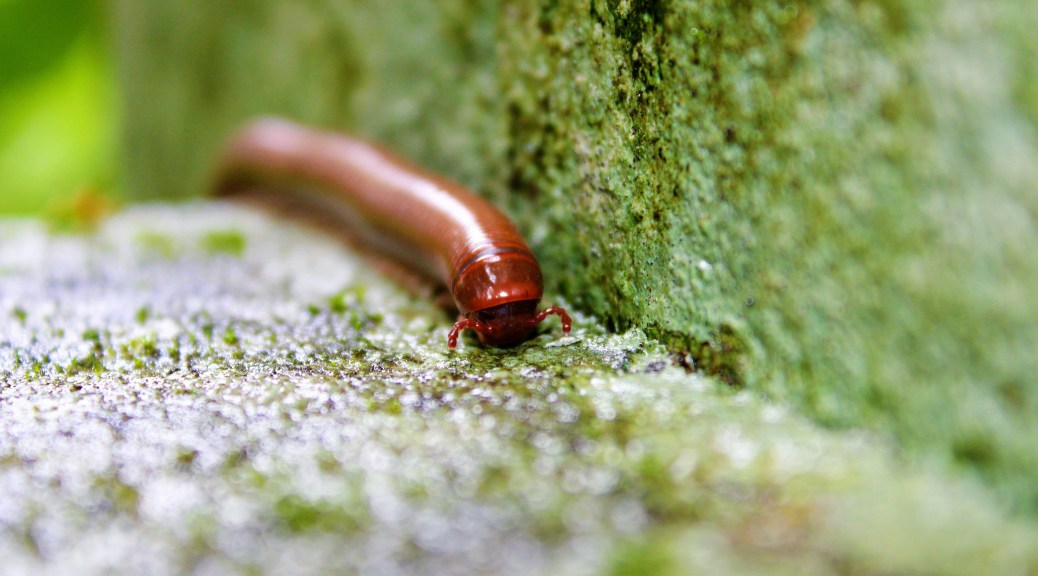
Millipedes, by contrast, are the humble custodians of decay. Their rounded bodies and two pairs of legs per segment give them a slower, more deliberate gait, befitting their work as decomposers. Millipedes feast on fallen leaves, decaying wood, and other organic matter, breaking it down into nutrient-rich humus that enriches the soil. They are, quite literally, the architects of fertility, ensuring that the nutrients locked within last season’s debris return to the earth to fuel new growth.
Differences between Millipedes and Centipedes, University of Kentucky College of Food, Agriculture and Environment
________________________________
Together, these creatures contribute to the health and vitality of garden ecosystems. Millipedes, with their voracious appetite for detritus, play a crucial role in nutrient cycling. They transform the clutter of dead leaves and organic waste into forms of nitrogen and phosphorus that plants can readily absorb, enhancing soil fertility and structure. At the same time, centipedes ensure balance by keeping pest populations in check, preventing infestations that could devastate your crops.
Moreover, the movement of these arthropods benefits the physical structure of the soil. As they burrow and scurry, they aerate compacted earth, improving water infiltration and promoting robust root growth. Their work is quiet, unseen, and often uncelebrated, yet its impact is profound.
________________________________
But why should gardeners go out of their way to encourage centipedes and millipedes to make their homes in the soil? For one, creating a welcoming environment for these arthropods reduces the need for synthetic fertilizers and pesticides. Their presence signals a healthy, balanced ecosystem—one where plants thrive without excessive human intervention.
The good news is that attracting these creatures is neither complicated nor costly. Simple actions like maintaining a layer of leaf litter, adding compost, and avoiding chemical pesticides can make all the difference. Leaf litter and compost not only provide millipedes with their preferred food but also offer the moist, shaded habitat both species need to survive. Likewise, steering clear of pesticides protects these beneficial arthropods from harm, allowing them to flourish and perform their vital roles.
By fostering a garden that welcomes centipedes and millipedes, you’re not just supporting these fascinating creatures—you’re investing in the long-term health and sustainability of your soil.
________________________________
So, the next time you catch a glimpse of a many-legged creature scuttling through the mulch, resist the urge to recoil (or stomp!). Instead, pause to appreciate their role in the grand tapestry of life beneath your soil.
Last April, I wrote an article entitled “How do my outdoor plants survive the winter?” Although not as popular a subject topic, a quick dip into the world of all things creepy crawly when the temperatures plummet may be of similar interest.
When winter hits our region, we head indoors, but what about insects? These creatures have incredible ways of making it through the cold winter months. So much for my favourite October joke: “What’s the best thing about October? The mosquitoes are dead.” True, but also not for long.
Some insects, like ladybugs and cluster flies, find shelter and enter a hibernation-like state called diapause. They slow their bodies down to a near standstill, using very little energy while tucked away in cracks, under leaves, or even in homes. Those sneaky lady beetles seem to be able to find a way into houses too!
Other insects, like woolly bear caterpillars, use natural antifreeze. Their bodies produce special chemicals called cryoprotectants, which prevent their cells from freezing. This allows them to survive temperatures well below zero.
Some insects, like mosquitoes, leave behind their eggs, which are tough enough to endure the cold. Come spring, these eggs hatch, and a new generation begins. Sigh. Similarly, some butterflies, like the Mourning Cloak, overwinter as adults in tree bark or woodpiles, waking up early in the spring.
For honeybees, survival is a team effort. They cluster together in their hives, shivering their bodies to create heat and keep the colony warm.
And then there are insects like crickets, which die off in the fall, leaving behind their eggs to carry on their legacy.
Winter may seem quiet, but beneath the snow, insects are surviving in remarkable ways. Whether through hibernation, antifreeze, or teamwork, our local insects prove how tough and adaptable nature can be—even in the coldest months. For some, like pollinators, that’s great news. For others, like the red lily beetle, the Japanese beetle, and aphids, we simply have to grin and bear it.
If you’re an avid gardener, you’ve likely encountered spiders in your flower beds, vegetable patches, or even hanging from delicate webs strung between your favorite plants. For many, spiders evoke an immediate reaction of discomfort or fear, but these eight-legged creatures are some of your garden’s most important—and often underappreciated—residents. Spiders play a crucial role in maintaining ecological balance and biodiversity, and they can be your best allies in managing pests without the need for chemical sprays.
The Ecological Role of Spiders
Spiders are predators—and highly effective ones at that. They feed on a variety of garden pests such as aphids, flies, beetles, and caterpillars, which, if left unchecked, could wreak havoc on your plants. By keeping these populations in check, spiders act as a natural form of pest control, reducing the need for harmful insecticides. In fact, studies show that spiders consume more insects each year than the weight of the entire human population combined! Garden ecosystems would struggle to manage pest populations, leading to overpopulation of insects that can damage crops and ornamental plants. In addition to maintaining balance in pest populations, spiders contribute to the biodiversity of your garden by providing food for other wildlife, such as birds and small mammals.
The Evolutionary Journey of Spiders
Spiders have been around for over 300 million years, evolving from ancient arachnid ancestors that roamed the Earth long before the dinosaurs. Through millions of years of evolution, they developed their silk-spinning abilities, which they now use for everything from building webs to creating egg sacs and even parachuting as juveniles (yes, baby spiders can “fly” short distances on silk threads). This evolutionary adaptability has made them some of the most successful predators on the planet, thriving in almost every environment, from deserts to forests—and yes, your garden.
Cool Facts
Not all spiders spin webs—some, like the jumping spider, actively hunt their prey, pouncing on insects with speed and precision.
Spider silk is one of the strongest materials in nature, stronger than steel of the same thickness, and scientists are studying how to replicate it for human use .
A female spider can produce thousands of eggs, though only a small percentage will survive to adulthood, ensuring that spider populations remain balanced in the ecosystem.
Spiders: Friends, Not Vermin
Contrary to popular belief, spiders are not vermin. Unlike pests like rats or cockroaches, spiders do not scavenge human food or spread disease. They are solitary creatures that prefer to be left alone, and they actively help your garden by preying on harmful insects. A garden without spiders would be more vulnerable to insect infestations, leading to less healthy plants and lower yields of fruits, vegetables, and flowers.
Thom with the Barn Orb-Weaver, his favourite spider 🙂
Meet 4 Friendly Garden Spiders of Peterborough
Now that you know how vital spiders are, let’s introduce you to five common garden spiders you might encounter in your Peterborough garden. These gentle creatures are doing hard work to keep your garden healthy, so next time you see them, take a moment to appreciate their efforts.
Barn Orb-Weaver, Araneus cavaticus
This fascinating garden ally is known for constructing large, intricate orb-shaped webs. These spiders are commonly found in barns, sheds, and near garden structures, often spinning their webs at night. Characterized by their rounded, bulbous abdomen, Barn Orb-Weavers typically range in color from orange to brown, with distinctive pale markings on their bodies. Despite their size and striking appearance, Barn Orb-Weavers are harmless to humans. They serve as a valuable asset in the garden by controlling insect populations, catching flies, moths, and other garden pests in their webs. Active from late summer through fall, they rebuild their webs each night, ensuring a fresh, sticky trap for their next meal. Known for being the inspiration behind Charlotte in the beloved story Charlotte’s Web, this spider holds a special place not just in literature, but in the ecological balance of gardens and rural spaces alike. Their presence signals a healthy ecosystem, and their web-spinning talents should be welcomed as an essential part of nature’s pest control system.
Bold Jumping Spider (Phidippus audax)
With their striking black bodies and iridescent green or blue chelicerae (mouthparts), jumping spiders are some of the most curious and approachable spiders you’ll meet. These small but mighty spiders don’t spin webs to catch prey; instead, they leap from plant to plant, using their excellent eyesight to hunt down pests.
Yellow Garden Spider (Argiope aurantia)
This stunning black-and-yellow spider is often found in gardens with tall plants and flowers. Known for its large, wheel-shaped web, the yellow garden spider weaves a zigzag pattern in the center of its web, which is believed to help it catch even more insects. It’s a fantastic predator of flying insects like mosquitoes and flies.
Wolf Spider (Pardosa species)
Unlike orb-weavers, wolf spiders do not create webs. Instead, they are ground-dwellers that chase down their prey in garden beds and among fallen leaves. Though they may look a bit intimidating due to their size and speed, they are completely harmless to humans and extremely beneficial to gardeners
Where Do Spiders Fit in the Ecosystem?
Spiders are an integral part of the ecosystem, serving as both predators and prey. By keeping insect populations in check, they ensure that plants remain healthy and free of infestations. They also provide food for birds, reptiles, and other animals higher up in the food chain. If we were to eliminate spiders, we would see a rise in destructive insect populations, which could lead to reduced biodiversity and weaker ecosystems overall. Encouraging spiders to thrive in your garden is one of the best things you can do for your plants, your local wildlife, and the environment. So, the next time you spot a spider spinning its web or prowling the garden floor, take a moment to thank it for the invaluable service it’s providing. No squishing!
Conclusion: A Home for Spiders Is a Healthy Garden
In the grand scheme of nature, spiders are our silent partners, working diligently to create a balanced, thriving environment. By welcoming them into our gardens, we contribute to a healthier ecosystem and ensure that our plants can flourish without the need for harmful chemicals. So, let’s embrace our eight-legged friends and recognize that the key to a healthy, biodiverse garden might just be hanging from the next web you see.
References
Nyffeler, M., & Birkhofer, K. (2017). An estimated 400–800 million tons of prey are annually killed by the global spider community. The Science of Nature, 104(3), 30.
Foelix, R. F. (2011). Biology of Spiders (3rd ed.). Oxford University Press.
Garwood, R. J., & Dunlop, J. A. (2014). The origins of spiders: Insights from the fossil record. Evolutionary Biology, 41(3), 523-535.
Vollrath, F., & Knight, D. P. (2001). Liquid crystalline spinning of spider silk. Nature, 410, 541-548
As fall arrives, many gardeners notice an increase in earwigs lurking around their plants. These small, dark brown insects with pincers on their tails can look a bit intimidating, but their impact on your garden is a mix of good and bad.
Earwigs get their name from the old European myth that they crawl into your ears and tunnel into your brain to lay their eggs while you are sleeping. YIKES! Lucky for us, this old wives’ tale is not true. But the pincers on the back on an earwig’s body are still enough to freak people out.
Earwigs are most active at night and can often be found hiding in damp, dark spots during the day. In the fall, they seek shelter from the cooler weather, often in garden beds, under mulch, or in piles of leaves. While earwigs have a bad reputation for munching on plants, their role in the garden isn’t all negative.
On the downside, earwigs do eat leaves, flowers, and vegetables like lettuce, strawberries, and soft fruits, which can cause damage to your garden. However, they don’t typically cause significant harm unless their population is out of control like in a season that’s wetter than normal.
On the positive side, earwigs help clean up the garden by eating decaying plant matter and even feeding on pests like aphids and mites. This makes them useful in keeping some pest populations down naturally. Earwigs will even eat other earwigs!
If you find earwigs causing damage, there are simple ways to manage them. Traps made from rolled-up newspaper or damp cardboard can attract them overnight. In the morning, simply dispose of the traps.
While earwigs can cause some harm to plants, they also play a helpful role in garden cleanup and pest control, making them a creature worth understanding in the fall garden ecosystem.