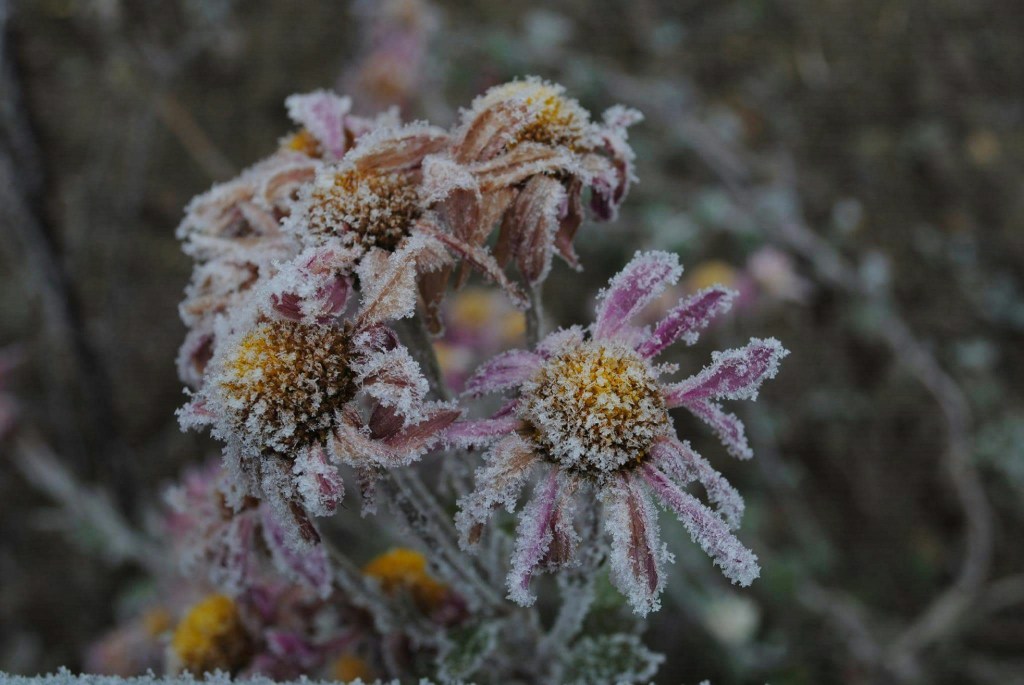
Do you ever wonder what’s going on in the garden when temperatures drop below freezing? How do perennials, shrubs and trees withstand the cold and dehydration of winter? As we prepare for the colder season above ground, a process of adapting to this change is also going on below ground.
What is Garden Dormancy?
Dormancy is a period of reduced growth in plants, allowing them to survive intense conditions such as cold temperatures or drought. During dormancy:
Trees and shrubs shed their leaves, reducing water loss and protecting against freezing temperatures.
Perennials retreat underground, focusing their energy on the roots rather than above-ground growth.
Dormancy is essentially a plant’s version of hibernation. Even though the plant may appear lifeless, it’s very much alive, just in a resting state.
Why Do Plants Go Dormant?
Survival Mechanism: Dormancy helps plants endure harsh conditions, preventing them from growing in unseasonal warm spells only to be killed by a subsequent freeze.
Rest and Rejuvenation: It allows plants to rest, develop stronger root systems and trunks, and accumulate the energy needed for vigorous growth in the spring.
Timing and Environmental Cues: Plants respond to environmental cues like shorter day lengths, decreasing temperatures, and reduced light to signal the onset of autumn and the need to prepare for dormancy.
The Gardener’s Role During Dormancy
Understanding the Cycle: Gardeners learn to recognize the signs of dormancy and understand its importance for plant health and the overall garden ecosystem.
Winter Protection: Proper care during dormancy, such as using mulch or wrapping to protect against frost, helps safeguard plants from potential damage.
Be patient: In spring, don’t panic if some perennials take longer to re-emerge. Late risers like perennial hibiscus, Rose of Sharon and some ornamental grasses may take several weeks longer than others to show signs of growth.
Rest and Relaxation: Just like the plants in their gardens need rest, so too does the gardener. The slower seasons of fall and winter allow us to take stock of our gardens — what worked, what didn’t work, what needs to change — so that we approach next spring and summer rejuvenated!
Pollinator Week 2025 is scheduled from June 16-22 this year. It is an annual celebration initiated by Pollinator Partnership to raise awareness of the vital role pollinators play in our ecosystems and food systems. This year’s theme, “Pollinator Cultural Connections,” emphasizes the deep ties between pollinators and human culture.
What Is Pollinator Week?
Pollinator Week is a global event dedicated to celebrating, protecting and promoting pollinators—bees, butterflies, birds, bats, and other insects—that are essential for the reproduction of over 75% of flowering plants and about one-third of the world’s food crops.
The 2025 Theme: “Pollinator Cultural Connections”
The 2025 theme invites reflection on how pollinators are interwoven with human culture, including agriculture, art, and spirituality. Many Indigenous communities have long recognized the importance of pollinators not only for their ecological contributions but also as a foundation for cultural symbolism.
What Can We Do?
You can contribute to pollinator conservation by:
Planting native pollinator-friendly gardens: Use a variety of flowering native plants to support pollinators .
Supporting local initiatives: Engage with community events and support programs like Bee City Canada, which recognizes and supports municipalities, Indigenous communities, campuses, and schools taking action to protect pollinators .
Educating others: Share information about the importance of pollinators and ways to protect them through social media and community outreach.
One of the fun Pollinator Week activities is a Bioblitz. From the Pollinator Partnership web site: “A Bioblitz brings together trained scientists and citizen scientists in a fun, friendly competition to record species observations. Community science efforts like this help advance scientific knowledge and foster public engagement, enable widespread participation in the scientific process, and break down traditional barriers between scientists and the public.”
I signed up for the Bioblitz. For more information see link.
I love taking photos of the pollinators that visit my gardens.
Tips for Creating a Pollinator-Friendly Garden
Diverse Planting: Incorporate a variety of native plants with different bloom times to provide continuous food sources for pollinators throughout the growing season. Native plants are more readily available now. I only began adding them to my gardens a few years ago. My gardens consist of lots of the usual perennials eg. day lilies, peonies, iris, daisies. The natives fit right in!
Provide Shelter: Include features like bee hotels, leaf piles and tall grasses to offer shelter for pollinators.
Eliminate Pesticide Use: Pesticides can harm pollinators.
Water Source: Provide a shallow water source, such as a birdbath with stones for landing. Pollinators will visit for a drink.
Celebrating Pollinator Week 2025 highlights the interconnectedness between pollinators and human culture. Participate in local events, support conservation efforts and make informed choices to contribute to the protection and celebration of these essential creatures.
Other Resources
Invite These Super Pollinators and Pest Managers to your Garden by Silvia Strobl, Master Gardener. See link.
How to Make the Perfect Pollinator Garden. See link.
Pollinator Partnerships – Threats to Pollinators. See link.
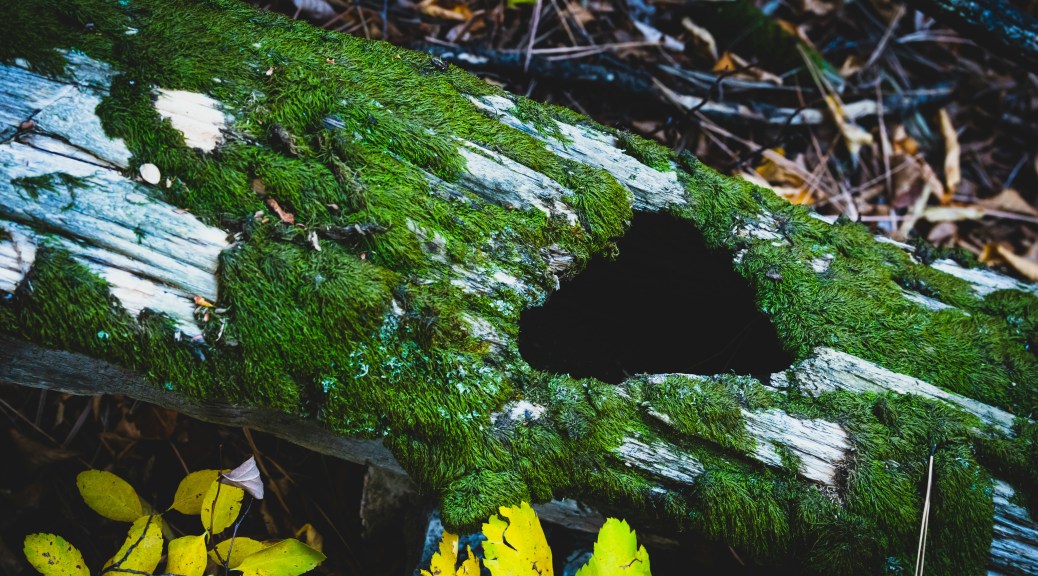
In the quiet corner of your garden, a story unfolds—one of decay, renewal, and survival. A fallen log, at least 15 cm in diameter, lies undisturbed, its bark peeling away with time. To most, it might seem like nothing more than a lump of rotting wood, but to the creatures of Ontario’s forests and backyards, it is a shelter, a buffet, and a nursery all in one.
The Architects of Decay
The transformation begins with Turkey Tail (Trametes versicolor), a vibrant bracket fungus spreading across the log in waves of blue, green, and brown. Working quietly, it releases enzymes that break down lignin, the tough compound that gives wood its strength (Boddy et al., 2021). Alongside it, Hairy Curtain Crust (Stereum hirsutum) and Split Gill Fungus (Schizophyllum commune) creep across the wood, softening its once-solid structure and preparing it for the next wave of life.
The Engineers of the Wood
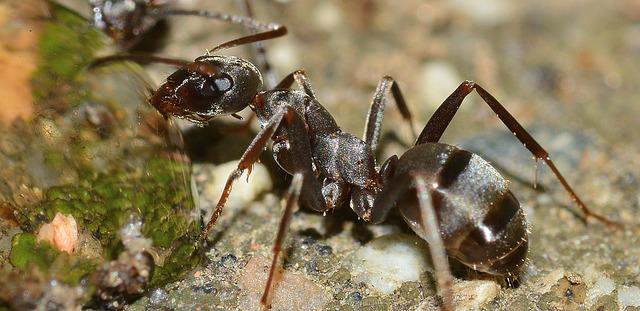
As the fungi work their magic, the log becomes an inviting home for insects. Snails and slugs slither across its damp surface, feeding on the growing fungi. Beneath the bark, Carpenter Ants (Camponotus pennsylvanicus) carve out intricate tunnels, not to eat the wood but to create hidden chambers for their colony (Foelix, 2019). Their tunneling allows moisture and air to penetrate deeper into the log, making it an even richer habitat for the next arrivals—Ontario’s native beetles.
Black ground beetles of various species arrive on the log en masse, searching for a place to lay eggs. Their larvae burrow deep into the softened wood, slowly turning it into nutrient-rich humus (Harvey et al., 2011). These beetles, in turn, attract predators like the Six-Spotted Tiger Beetle (Cicindela sexguttata), a metallic green hunter patrolling the log for an easy meal.
A Shelter for Ontario’s Wildlife
As the log softens and cracks, it becomes a refuge. The Eastern Red-backed Salamander (Plethodon cinereus) slithers beneath it, hiding from the drying heat of the day. This moisture-loving amphibian thrives in the humid microclimate the log provides, emerging at night to hunt for small insects. Nearby, the Northern Short-tailed Shrew (Blarina brevicauda) scurries through the leaf litter, using the decaying log as a hiding spot between hunting trips.
Above, the White-throated Sparrow (Zonotrichia albicollis) scratches at the log’s surface, searching for insect larvae hiding within. Not far away, the American Toad (Anaxyrus americanus) tucks itself into a crevice, waiting for dusk to begin its nightly hunt. Even the Little Brown Bat (Myotis lucifugus), a species at risk in Ontario, may roost in the log’s hollowed-out cavities, using it as a safe shelter from predators.
A Final Gift to the Soil
As the years pass, the log continues to break down, its nutrients seeping into the soil. Studies have shown that decomposing wood increases soil fertility and microbial diversity, providing essential nourishment for plants and fungi alike (Harmon et al., 2020). What was once a towering tree now gives back to the very land it grew from, ensuring the cycle of life continues.
Leaving a log to decompose in your garden isn’t just an act of neglect— it’s an act of conservation. It creates a thriving ecosystem, supporting species often overlooked in urban spaces. So the next time you see a fallen branch or an aging log, resist the urge to clean it up. Instead, leave it where it lies and witness the hidden world of life it supports.
References
Boddy, L., Hiscox, J., & Gilmartin, E. (2021). Fungal decomposition of wood: Fundamentals and impact on ecosystems. Annual Review of Ecology, Evolution, and Systematics, 52(1), 121-142.
Foelix, R. (2019). Biology of Spiders. Oxford University Press. Harvey, D. J., Hawes, C. J., & Gange, A. C. (2011). The role of dead wood in maintaining beetle diversity. Biodiversity and Conservation, 20(10), 2307-2323.
Harmon, M. E., Fasth, B., Woodall, C. W., & Sexton, J. (2020). Carbon storage and nutrient cycling in decomposing logs: A long-term perspective. Forest Ecology and Management, 466, 118127.
Many of us would like to use more fresh herbs in our cooking, especially when they are in season. But we often plant them out in the garden instead of having them close to the kitchen door within easy reach. Why not plant a container this season and place it where you will have it accessible.
For best results, plant herbs with similar water requirements in the same container. Be sure your container has drainage. Put holes in the bottom or use a container with drainage and put inside a pretty pot. Make sure the pot is deep enough… at least 8”. Use good organic potting mix that is light, rather than heavy garden soil and mix in some good compost. You can plant herbs closely, about 6”- 9” apart and they will grow up and out. Herbs in containers will do better with some fertilizer. Use an organic solution which is higher in nitrogen, but weaken the strength and apply every 4 weeks. Fish emulsion is a good choice.
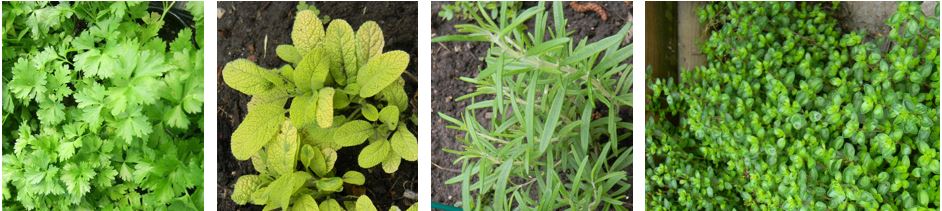
Parsley, Sage, Rosemary and Thyme
Choose a spot that gets at least 5 hours of sun. Early morning sun is best. If you have west exposure, you may need to water more often.
Many annual herbs like evenly moist soil, like parsley, basil, lemon verbena & dill. You will want a relatively deep pot for parsley as it does develop a tap root. Lemon balm is a perennial that likes it evenly moist. Chives are a perennial that are sweeter when kept evenly moist, but can take it dry.
There are many flavours of mint available including spearmint, strawberry, chocolate & mojito but beware as mint is a perennial that can be invasive. Better to contain it in a pot.
Thyme, winter savoury, oregano are all perennials that like dryer soil. Add rosemary & sage to the list of herbs preferring it dry. Treat rosemary as an annual. You can try to overwinter indoors if you have a spot that is cool and sunny and let the plant dry between waterings. The perennials can go into the ground in a permanent home in the fall. Sage may overwinter, so plant in the garden and watch for growth in spring. Prune down to active growth.
You can also plant herbs in separate pots and have a collection of pretty pots. Smaller pots will dry out quicker, so be aware of soil moisture.
Here are a few suggestions of combinations:
Lavender, citronella & marigold for aromatics
Lemon balm, lemon verbena & mint for teas
Thyme, sage, savoury & oregano for dry rubs or in a marinade for meats
Summer savoury is the annual version of winter savoury. It prefers evenly moist soil and has a lighter, sweeter flavour. Cilantro is another annual favourite that needs evenly moist soil. It often bolts with hot weather, going to seed and becoming coriander.
Perennial herbs like french tarragon and lovage are not suited to container gardening as they get too tall and develop deep roots.
Imagine a lovely tomato salad with fresh basil, or barbeque chicken with a savoury/ thyme rub, or fresh mint in your mojito. All organically grown by you!
For more on herbs, check out other articles on own website, by using the search window on the top right of this page.
Heavy ice weighed down tree branchesBroken limbs snapped hydro poles
In the wake of this year’s icy spring storm, many of us in Peterborough and the Kawarthas are surveying broken branches, toppled limbs, and fallen logs. But before hauling all that brush to the curb, I invite you to consider this: what if this is not just storm debris—but an opportunity?
Let’s make 2025 The Year of the Log.
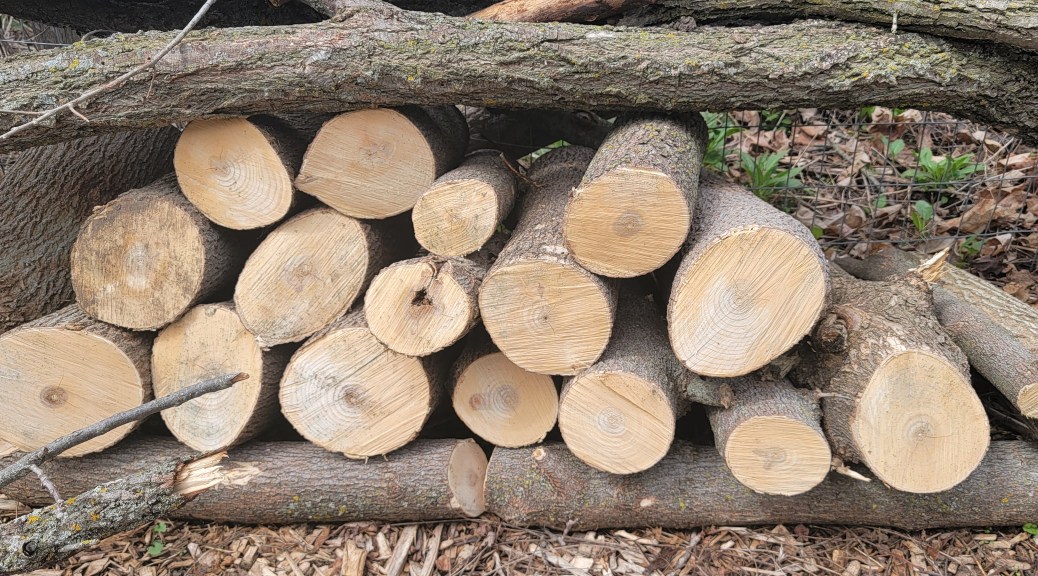
Leaving a log or brush pile in a quiet, sheltered corner of your yard might seem like neglect. In fact, it’s one of the simplest and most impactful things you can do to support local biodiversity—and save yourself some backbreaking yard work while you’re at it.
A single fallen log is a five-star wildlife hotel. It provides shelter for overwintering insects like native bees, beetles, and butterflies. These pollinators—often struggling with habitat loss—use dead wood to lay eggs, take refuge from predators, and hunker down for winter. Many of them emerge in spring just in time to pollinate our fruit trees and vegetable gardens.
Logs and brush piles also serve as nurseries for amphibians and reptiles. Toads, salamanders, and garter snakes all benefit from the cool, damp conditions under a decomposing log. They, in turn, keep garden pests like slugs and aphids in check—natural pest control at its finest. And then there are the birds. Wrens and chickadees will happily forage for insects in your brush pile, while robins use twigs for nest-building. Larger logs host fungi, mosses, and even young plants, enriching your soil and supporting the micro-ecosystems your garden depends on.
Trametes fungi thriving on a trembling aspen tree stump
By leaving a log or brush pile in a quiet corner of your yard, you’re not just reducing your workload—you’re creating a vital sanctuary. Here are five incredible species that will thank you for it:
🌟 1. Bumblebee Queens (Bombus spp.) Before flowers bloom in spring, bumblebee queens emerge from hibernation. These big, fuzzy powerhouses need sheltered, undisturbed places—like brush piles or hollow logs—to overwinter and start a new colony. Support them, and you’re supporting the pollination of tomatoes, berries, and native wildflowers.
🌟 2. Red-backed Salamander (Plethodon cinereus) Small, secretive, and surprisingly fierce for its size, this amphibian lives its whole life under logs and stones, eating garden pests like slugs and ants. No pond required—they breathe through their skin and thrive in moist log-rich corners. Think of them as silent garden guardians.
🌟 3. Mason Bees (Osmia spp.) Unlike honeybees, these super-efficient, solitary bees don’t sting and nest in tiny holes in rotting wood or hollow twigs. One mason bee can pollinate as many flowers as 100 honeybees. Leaving dead wood means giving them a nesting site—and ensuring bountiful fruit in your garden.
🌟 4. Eastern Chipmunk (Tamias striatus) More than just adorable, chipmunks are busy ecosystem engineers. They cache seeds (helping plants spread), aerate soil through their tunnels, and feed owls, hawks, and foxes. Brush piles give them safe cover from predators and harsh weather.
🌟 5. Downy Woodpecker (Dryobates pubescens) These energetic little birds forage in fallen logs and tree stumps, chiseling out insects and larvae that might otherwise damage your plants. Plus, their drumming calls add delightful percussion to your yard. Dead wood = good birding.
Downy woodpeckers love the logs…
We understand the urge to “clean up,” but what looks messy to us may be lifesaving habitat for countless species. And in a world where pollinators and wildlife face increasing pressures, your backyard could be part of the solution.
Want to keep things tidy? Try this:
Stack broken branches neatly into a low brush pile along a fence or under a shrub.
Lay a large log partially buried in a flowerbed as a rustic “nurse log”—watch it slowly become a home to mosses, mushrooms, and tiny critters.
Create a “wild corner” with storm debris, leaf litter, and stones—nature will take care of the rest.
This spring, instead of dragging logs to the street, drag them into your garden’s shady corner. Give nature a place to thrive, reduce your workload, and watch your yard come alive in ways you never expected.
Here’s to The Year of the Log—less raking, more life.
This week I’ve been enjoying watching a flock of American Tree Sparrows that have migrated south from their summer tundra breeding grounds to my garden north of Peterborough for the winter. While I have both sunflower and nyger feeders, they are feeding exclusively on the Big Bluestem and Savannah Grass seeds in my garden. Sadly, these native grasses seem to have a bad rap among gardeners which is too bad as they have many benefits for both you and local wildlife.
I have the following four commonly occurring warm season perennial native grasses in my full sun garden:
Big Bluestem (Andropogon gerardii) is a very tall (5 – 8 ft) grass with clumps that form a dense sod but does not creep by rhizomes. It competes aggressively with shallow-rooted flowers, so it is best planted with species that form deep tap roots or spring bloomers that go dormant in the summer. In my garden it is a fall season focal point at the back of a border behind Culver’s Root (Veronicastrum virginicum) which has a central taproot as well as underground rhizomes.
In early May, Big Bluestem still hasn’t emerged, but allium foliage and some blooming tulips fill the space (left). By late June, alliums appear to float above the Big Bluestem grass (highlighted in orange) that is now 2 ft. tall (middle) and hiding the bulb foliage. By late July, Big Bluestem grass provides a green backdrop for the white flower spikes of Culver’s Root (right).
Little Bluestem (Schizachyrium scoparium) is an excellent grass for gardens due to its shorter height (2 – 4 ft), clumping form, very showy silver-white seed heads, and bright red stems in fall.It prefers dry sandy soils.
Savannah Grass (Sorghastrum nutans)is another tall grass (5 -7 ft) for the back of the border. It tends to self-sow so the young seedlings require a little annual weeding.
Native grasses add movement and colour to the garden. Little Bluestem’s red stems are illuminated by early October morning sun (left) while the late afternoon August sun highlights the tiny golden flowers and flower stalks of Savannah Grass (right).
Sideoats Grama (Bouteloua curtipendula) is a hardy, short bunchgrass that spreads very slowly by means of short, stout rhizomes and doesn’t compete with other plants. Its deep fibrous roots make it useful on slopes to prevent erosion (or on the edges of slightly sloped garden beds as in my garden). Do not plant it in clay soils.
Sideoats Grama has delicate hanging flowers (left), and later seeds (right) that are held in spikes that fall gracefully to one side of the stem.
Benefits for you
As well as being stunning fall and winter focal points, the tall native grasses, Big Bluestem and Savannah Grass, make excellent privacy borders. Their very deep roots (5-6 feet or more) make them useful for erosion control on slopes. Each of these native grasses is drought tolerant. And, each creates excellent winter interest as they tend to maintain their upright form. Another bonus is that they all have low palatability to deer.
Big Bluestem (left) and Savannah Grass (right) stand tall in the author’s garden despite 12 inches of winter snow.
Benefits for wildlife
Many butterfly skipper and moth larvae feed on these native grasses and they provide critically important seeds and habitat for native birds in fall and winter.
An adult Delaware Skipper rests on a blade of Big Bluestem in the author’s garden (left). Big Bluestem is a host plant for this butterfly’s larvae. Both Little Bluestem and Sideoats Grama are host plants for Leonard’s Skipper caterpillars. The adult butterfly is seen here nectaring on marigold in the author’s garden (right)
American Tree Sparrows feeding on a buffet of Big Bluestem (left) and Savannah Grass (right) seeds in the author’s garden. It is fun to watch them “ride” the Savannah grass stems to the ground so they can more easily peck at the seeds some of which spill onto the fresh snow.
Native Grass Establishment and Maintenance
Most native plant nurseries stock these grasses and all of them are easily propagated from seed. Plant seedlings densely at 1 ft to 1.5 ft spacing to discourage weeds. Water during the first year while roots are getting established. Fertilization is not necessary. All can be easily divided, but Sideoats Grama should be teased apart, not cut with a spade.
Remnant pockets of native grasses like this one of Big Bluestem growing on the shoreline of Little Jack Lake (left) are good places to collect seeds to propagate your own plants (right). Never collect more than 10% of seeds.
Depending on how much seed the birds eat in winter, you might get a few volunteer seedlings. If you don’t want more plants, they are easily kept in check by weeding when they are small.
If weedy cool season grasses have seeded into native warm season clumps, use a propane torch in early spring to burn emerged leaf blades while warm season native grasses are still dormant. Be sure to first cut off last year’s dry stalks and have a hose nearby. Don’t do this on a windy day!
Big Bluestem, Savannah and Little Bluestem are 3 of the 4 dominant grasses found in remnant tall grass prairies and oak savannahs, of which less than 1% of their pre-European settlement extent remains in Ontario. (The other is Switchgrass (Panicum virgatum) which can self sow quite a bit so might not be suitable for small gardens.) These grasses are also found on dunes, sandy shorelines, rock barrens, roadsides, and hydro corridors. Including these grasses in your garden can help support some of the wildlife that rely on this endangered ecosystem.
Have you ever wondered how some plants manage to survive freezing temperatures while others wither away at the slightest frost? It all comes down to a fascinating trait called hardiness.
Hardiness in plants refers to their ability to endure cold weather conditions, especially freezing temperatures, without being damaged. Plants that are considered hardy have evolved various mechanisms to protect themselves from the harsh effects of cold.
Most perennials sold in garden centres in our region are hardy if their tags refer to zone 5 or lower. Zone 6 perennials may survive if planted near a foundation in a sheltered spot. Trees are also labelled with a zone, and I’ve given up buying trees that are not in zone 4 or lower. Plants listed as “annuals” like most vegetable seedlings are simply not hardy at all in our zone. They may be hardy in other zones like Florida, though! In general, Peterborough is listed as hardiness zone 5a. The lower the number and letter of the alphabet, the colder it gets in the winter and the more hardy a plant needs to be in order to survive.
So how does hardiness work? One key factor contributing to a plant’s hardiness is its genetic makeup. Some plants naturally possess traits that make them more resistant to freezing temperatures. These traits can include thickened cell walls which provide structural support and help prevent cell damage when temperatures drop. Additionally, certain plants produce antifreeze proteins that lower the freezing point of their cell fluids, allowing them to survive in sub-zero temperatures.
Another important aspect of plant hardiness is acclimation. Just like animals, plants can adapt to their environment over time. As temperatures gradually decrease in the fall, hardy plants undergo physiological changes that prepare them for the cold ahead. This process, known as cold acclimation, involves the production of protective compounds such as sugars and proteins, as well as changes in cell membrane composition to maintain fluidity and prevent cells from rupturing.
Lastly, some hardy plants have developed mechanisms to avoid freezing altogether. They might shed their leaves, which are more susceptible to damage, or enter a state of dormancy until warmer temperatures return.
In summary, a combination of genetic traits and adaptive mechanisms allows the hardy plants in my gardens and yours to brave some of the chilliest of climates.
When it comes to dealing with invasive plants in our gardens, some can be quite challenging to control, let alone eradicate. In a system of Integrated Pest Management (IPM), gardeners may need to choose a number of different control methods and the methods considered need to make the least environmental impact. These methods involve cultural, mechanical, biological, and chemical options. In most invasive plant situations, choices will be cultural and mechanical. Chemicals may not be an option for home gardeners due to licensing, legislation, and product label requirements. However, some chemicals may be necessary in situations where there is a health and safety concern—e.g. Heracleum mantegazzianum (Giant Hogweed). Some of the usual methods that are used may include pulling, digging, cutting, removing flowerheads, sifting the soil for root fragments, smothering, or solarizing with tarps. Many invasive plants are difficult to remove in their entirety due to their extensive rhizomatous roots or their ability to produce many seeds that can last for years in the soil. Two unwanted plants that have popped-up in my garden in recent years are Campanula rapunculoides (Creeping Bellflower) and Allilaria petiolata (Garlic Mustard). My property is fenced but it is not closed off and so is open to seeds coming from other areas (including adjacent neighbouring properties). Because of this, my approach is about control of existing plants but also in preventing new ones from becoming established.
In addition to some of the methods mentioned above, two others you can add to your arsenal is to use mulch and to plant more densely.
Add Mulch
While the above-mentioned weed seeds do travel by wind, the majority of them will fall near the parent plant on the other side of the fence. All along the open fence lines I have added a thick layer of arborist wood chips. Adding a 4” layer will inhibit the germination of weed seeds as light is prevented from reaching them. Any seedlings that do germinate can be easily pulled as the roots cannot take a firm hold within the mulch. The mulch will break down over time and will need to be replenished.
Add Dense Plantings
e.g. Solidago Flexicaulis (Zig-Zag Goldenrod)
There is a wooded area near my house that is densely covered by a native plant called Solidago flexicaulis (Zig-Zag Goldenrod). Recently I noticed that there were only two or three Garlic Mustard plants amongst it. The Goldenrod was beating it! The Ontario Invasive Plant Council advises planting certain native plants at a density of 9 or 11 plants/m2 in order to compete with Garlic Mustard.[i] In addition to Zig-Zag Goldenrod these other plants are recommended as Garlic Mustard competitors:
Solidago flexicaulis (Zig Zag Goldenrod) and Parthenocissus vitacea (Woodbine), and Allilaria petiolata (Garlic Mustard) together in a wooded area in Peterborough
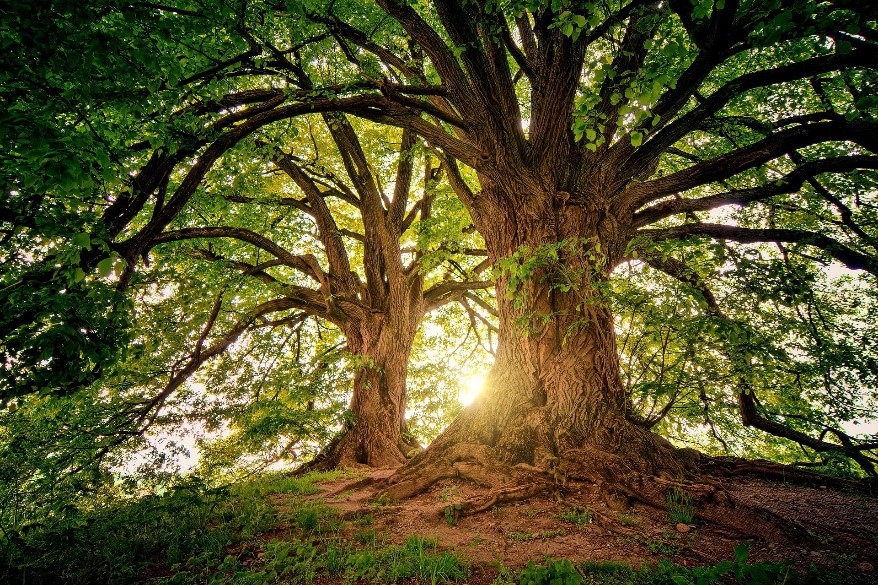
Peter Wohlleben in his well-know book, The Hidden Life of Trees, describes how trees are like families, continually communicating and supporting one another. Trees improve soil and water conservation, moderate climate, increase the wildlife habitat, reduce stress and improve health.
It is imperative we continue to increase the tree canopy in our ever-growing cities. This became more important after the recent storm that whipped through Southern Ontario and took out so many beautiful trees.
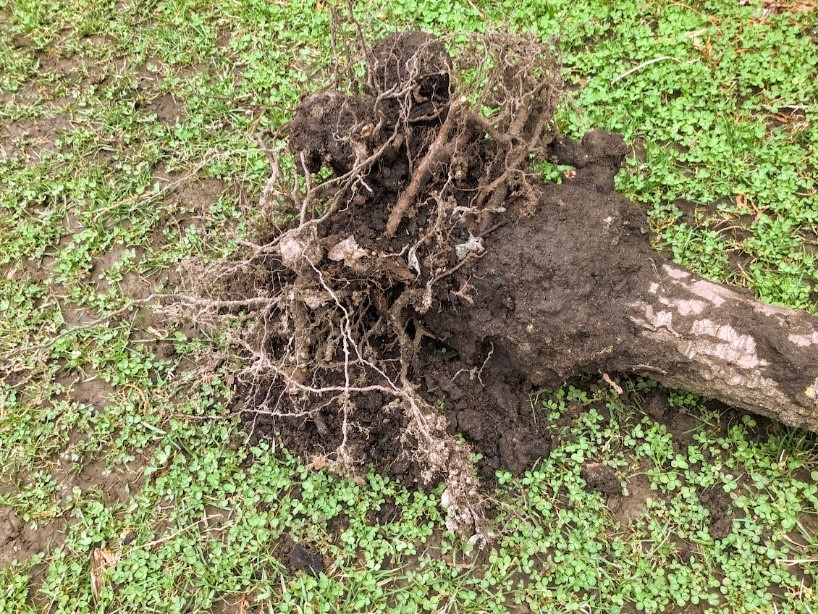
There are many factors to consider when planting a tree and it is easy to make mistakes. I learned this the hard way this past month when I was able to literally pull a 9-year-old tree out of the ground. Believe me, I am no incredible hulk! I made many mistakes when planting that tree; the picture shows it was planted too deep, the roots girdled around the original root ball and by amending the dug hole with compost the tree likely resisted growing roots into the surrounding clay soil.
Image Courtesy of Author
Do your research and purchase a tree that is suitable for your yard conditions:
How much sun and shade you receive each day?
What type of soil do you have?
Would you prefer a large tree or one that is smaller and more suitable to an urban setting?
What growing zone do you live in? (Check out this Zone Map if you are unsure)
Are you looking for a tree that will attract pollinators?
I would suggest you consider planting a native tree. Trees that occur naturally in our surrounding area are better adapted to local climate and soil conditions and more resistant to disease. Oak trees are a powerhouse for feeding birds and attracting pollinators and insects, however, they are quite large. A smaller tree to consider would be an Eastern Redbud or a Fall Witch Hazel.
Here is an article from Landscape Ontario with suggested native trees to consider.
HOLE DEPTH
In well-drained soils, the planting hole width should be two to three times the diameter of the root ball and only as deep as the root ball. Widening the planting hole produces a hole with a greater volume of loose cultivated soil that allows rapid root growth. This way roots gain access to a greater volume of loosened soil. Do not plant the tree’s root flare below the ground. The root flare should be within the top 5 cm of the soil surface. Use a brush to find the top of the root flare which is where the structural roots begin.
SOIL AMENDMENT
Remove any grass roots, weeds, rocks or other debris from the planting hole. It used to be believed that you should fill the hole with an organic amendment such as compost, however, recent research has found that this doesn’t improve root development or tree growth and can sometimes be detrimental to tree performance and survival. It is best to backfill in layers and lightly tamp and water to eliminate air pockets. Additions of mulch and compost can be surface applied in future years to supplied much needed nutrients.
CREATING A BERM
It is wise to build a 10 cm high berm of soil extending 15 to 20 cm around the periphery of the root ball. It should be firmed and is intended to keep water from flowing away.
MULCH
Apply mulch such as leaf litter or untreated wood chips evenly at the base of the tree. It will help to reduce evaporation and suppress weeds. Be sure to pull the mulch about 15 cm away from the base of the trunk. The depth should be between 5 to 10 cm. I often see trees planted with mulch piled like a volcano. This does not allow the water to penetrate to the roots and can also cause damage and disease to the trunk of the tree.
STABILIZATION
Only stake the tree if the roots will not support its height or if it is exposed to high winds. If a tree must be staked, place stakes no higher than 1/3 the height of the tree. Stake the tree loosely so it can move naturally in the wind. This movement will help to increase the tree’s stability. The staking material should not constrict or rub against the bark of your plant. Remove stakes after roots have established, no longer than one growing season.
LASTLY
Remove all plant identification tags and any trunk protection or packaging material.
Supplemental watering is recommended the first 2-years after planting your tree. A sprinkle with the hose for a couple of minutes does more damage than good as this does not provide enough water to penetrate deep into the soil. Newly planted trees must be watered regularly until frost. Also, if water is pooling around the tree, cut back on the watering.
Do not be tempted to add additional fertilizer at this point. Mineral imbalances can occur and cause more vegetative growth than root growth.
Do not prune the tree beyond removing any dead, diseased or damaged branches.
For further information, check out this Tree Planting Guide from Landscape Ontario.
Most people know of the White Trillium (Trillium grandiflorum) as Ontario’s provincial flower. This is the flower featured on many of our provincial documents, from health cards to driver’s licenses. It was on March 25, 1937 that the Province of Ontario gave the trillium this honour.
Trilliums have three broad leaves, three small green sepals, three petals, and a three-sectioned seedpod. The “tri” in the Latin word trillium refers to these collections of three.
Trilliums are very slow-growing plants; their seeds take at least two years to fully germinate. The plant itself takes seven to 10 years to reach flowering size. After first flowering, it will bloom annually in early spring, with the blooms lasting for around three weeks. Trilliums can live for up to 25 years.
Did you know that the plants are phototropic? This means that the blooms will bend toward the sun and follow it across the sky.
You may not know that ants are involved in the dispersion efforts of the trillium. Ants are attracted to the protein-rich seed sac on the seeds which they eat after carrying the entire seed back to their nests. The actual seeds are not harmed during this process, and are later discarded to grow a new plant in a new location.
As a spring ephemeral, trilliums have a few short weeks in the spring to collect as much sunlight and nutrients as possible to be able to survive for the rest of the year. If trilliums are picked in the height of their flowering glory, they may not be able to collect enough resources to survive.
There’s a pervasive myth that it’s against the law in Ontario to pick or relocate these native plants. In 2009, former Peterborough-Kawartha MPP Jeff Leal introduced a private members’ bill called the Ontario Trillium Protection Act. Although the bill passed first reading, it never became law. If you do relocate these spring beauties or buy them from a garden centre, mulch with leaf litter for best results. Filtered light is best as they cannot tolerate much direct sun. The soil needs to be rich in organic matter, well-drained, and moist.
There are several varieties of trilliums in Ontario, with the most common being the White Trillium. The next common variety in our region is the Red Trillium which is also called “Stinking Benjamin” (Trillium erecta). Why? Go out this spring and find one and take a sniff. You may discover it smells a bit like rotting meat. Yikes! The aroma’s purpose is to attract pollinators, and in this case, the pollinators are green flesh-flies who are out in search of rotting meat on which to lay their eggs. Instead of finding the perfect nursery, however, they end up assisting the plant in its procreative efforts.
Plants are rarely boring, once you get to know them!















 The Peterborough & Area Master Gardeners