Category Archives: Soil

Weed Control

by Sharleen Pratt, Master Gardener in Training

Some of Mother Nature’s weedier creations can become a real nuisance in the garden because they rob other more desirable plants of nutrients, moisture and light. If they become established, they can be very difficult to control, therefore, it is highly recommended for the health of your plants, that you weed on a regular basis. The best time to weed is right after it rains as the weeds will be much easier to pull.

A weed is generally any plant that is not welcome in your garden! They are usually plants that can grow in any kind of soil, reproduce prolifically and interfere or compete with other more desirable plants. Many weeds have been introduced from another country and often become invasive. They can be very difficult to control and it is important that all gardeners try to prevent these particular plants from taking hold and spreading through their neighborhood.

Weed Identification can be intimidating! A few of the more common weeds, generally found in your lawn are:

BROADLEAF PLANTAIN, Plantago major (pictured above)

Broadleaf plantain is a perennial weed that spreads rapidly by seed and new shoots arising from the roots. Broadleaf plantain is distinguished by its rosette of dull green, oval leaves with thick green stalks, and its elongated spikes of tiny green flowers. Each flower is followed by a small egg-shaped pod with 5 to 15 tiny dark brown or nearly black seeds that are rather glossy. The flowers set seed from spring until late autumn. Broadleaf plantain is easily removed with a dandelion fork. It can be out-competed in a lawn by over-seeding and aeration.

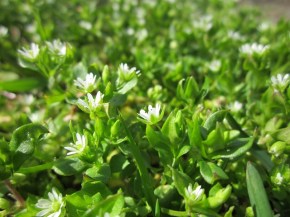
COMMON CHICKWEED, Stellaria mediastellaria-media-846435_640

The common chickweed may be an annual, winter annual or perennial. They have small white flowers with 4 to 5 petals. They reproduce by seed and by horizontally spreading leafy stems that root at the nodes. Common chickweed will flower through the spring, summer and fall. One plant can produce 10,000 to 20,000 seeds. The seed remains viable for up to 10 years.  Hand-weeding is best when the seedlings are small. It can be reduced by over-seeding since chickweed doesn’t like a lot of competition.

PURSLANE, Portulaca oleraceaPurslane

Purslane is a summer annual, reproducing by seed. It has fleshy leaves and stem, which lie prostrate on the ground. The seeds in small capsules are black, kidney-shaped and extremely small. An average plant produces 60,000 seeds. Purslane is one of the most common weeds in gardens throughout Ontario. Though rarely producing roots from the stem, if even a small portion of the root of an uprooted plant touches the soil, it can grow a new root system and become established. It is easily pulled and dies at first frost.

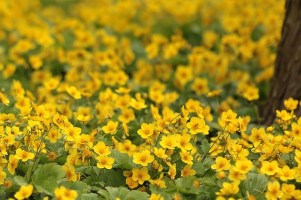
CREEPING BUTTERCUP, Ranunculus repensbuttercup

Creeping buttercup is a perennial and reproduces by seed and runners. There are two common buttercups, one is a tall buttercup and the other is a creeping buttercup. The tall plant does not have runners and, therefore, reproduces by seed only. Both will flower in early spring to the end of July. Flowers are bright yellow, about 1 inch across. Each plant is capable of producing up to 250 seeds. The first leaves are kidney-shaped and somewhat hairy below. This weed is poisonous to grazing animals, and care should be taken to control it from spreading. Creeping buttercup survives best in moist location, so any improvement in drainage will help to control it. Persistent cultivation will also help, as well as constant mowing.

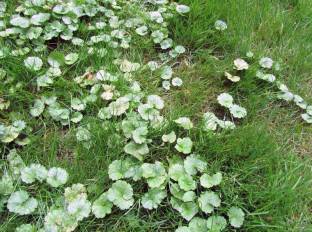
CREEPING CHARLIE or GROUND IVY, Glechoma hederaceaCreeping-Charlie

Creeping Charlie, also known as Creeping Jenny or Ground Ivy is a perennial which reproduces by creeping tangled rootstocks and also by seed. It is part of the mint family. The leaves are opposite and palmately veined. They have a bright green surface. The seeds are smooth and dark brown. The plant reproduces well through its surface runners. It has rapid growth in early spring and is a persistent plant whose leaves and stems stay green under the snow, allowing it to flower early. It flowers in spring around the same time as the dandelion. This plant spreads easily in a lawn, particularly in shady areas. Close mowing will help. If possible, be sure to dig out the small seedlings by hand in early spring. With large patches, heavy mulch or newspaper would help to kill an infestation.

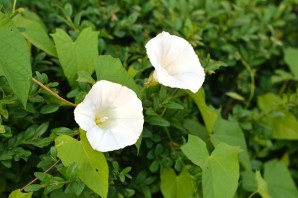
FIELD BINDWEED, Convolvulus arvensisbindweed-2453936_640

Field bindweed is a perennial weed that spreads rapidly by seed and creeping roots. It is a hairless, twining, or trailing plant with deep, cord-like roots. There is an extensive spreading, underground root system. The creeping white rhizomes have been reported to grow up to 30m in length and 5m deep. Under favourable conditions, plants may flower within 6 weeks of germination and the twining nature of the plant can cause serious problems with crops. It is part of the morning-glory family. Seedlings can tolerate frost temperatures of minus 8C. Seeds can remain viable for up to 50 years. A severe infestation of bindweed is capable of producing over 800 kg of seed per acre.

An excellent website to help you identify weeds is: www.omafra.gov.on.ca/english/crops/facts/ontweeds/weedgal.htm

Book Review – The Natural Formula Book for Home & Yard

by Suzanne Seryck, Master Gardener

Yesterday I was lamenting the fact with a friend, who has just celebrated her 90th birthday, that something had been eating the leaves on my fruit trees. She went away and quickly returned with a book that in her own words talked about using an Integrated Pest Management (IPM) approach which consisted of making home pesticides using ground up insect pests.

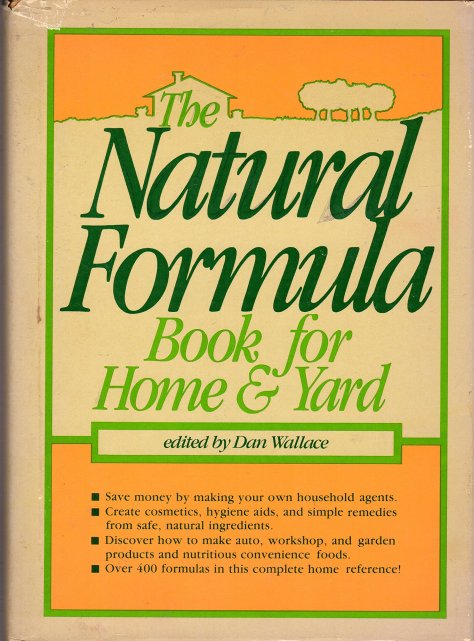
Having piqued my interest with visions of myself running around in my pajamas early in the morning trying to catch said insects, I felt that I had to read the book, The Natural Formula Book for Home & Yard, edited by Dan Wallace and published in 1982.

book cover

The section in the book that I most focused on was the section entitled ‘Outdoor Formulas’. Topics described include the importance of nourishing and rebuilding the soil using organic methods such as composting and mulching, crop rotation, interplanting, companion planting and succession planting, along with fertilizing and managing garden pests. The book does a good job explaining what each of these terms means and gives a detailed explanation on types of composting, how to achieve the correct balance between carbon and nitrogen, and what materials to add.

Natural Fertilizers

Natural fertilizers are discussed in detail and the reasoning behind using natural or organic fertilizers (as opposed to chemical alternatives) is laid out reasonably and convincingly. Formulas are included for making your own general purpose organic fertilizers, as well as specific fertilizers for trees. What I like about this book is that detailed descriptions are included that explain the reasoning behind each ingredient and how to apply the fertilizer. An example of the all-purpose tree fertilizer formula is as follows:

  • 3 parts soy or blood meal
  • 2 parts finely ground raw phosphate
  • 3 parts wood ash, granite, rock or green sane
  • 1 part dolomitic limestone

trees_royaltyfree

Managing Garden Pests

Managing garden pests is outlined in the book as follows

‘There is more than one way to approach garden problems and so-called pests, Insects, soil diseases (like fungi), prolific weed control, and trespassing wildlife can be viewed as enemies that need to be obliterated as soon as they are discovered – or they can be considered natural occurrences that call for careful management’.

IPM is described as a way to structure your garden or farm so that different animal and plant species can coexist and complement one another thereby creating a stable growing environment where no individual species takes over; balance is created.

Steps to achieve this balance include achieving good soil health, choosing the correct plant varieties, and growing crops at specific times when pests are less active. If however balance is lost, there are a number of formulas included for making your own organic sprays. These formulas are given with the suggestion that you should first try spraying with cold water from the hose for at least one week before resorting to other sprays. Again, the formulas are given with detailed explanations on how and when to spray along with the reasoning behind the individual ingredients. Sprays include liquid soap sprays, plant and insect sprays, dormant oil spray and botanical sprays.

At the time of writing this review, I have not tried any of the recipes or formulas in the book, I am therefore not recommending that we all start catching and grinding up our garden pests. However it is an interesting read and does offer us alternative options.

Used copies can be purchased through Amazon.ca or your local used book store (links to Peterborough area stores below)

Mark Jokinen Books

Lakefield Station Book Store

Knotanew Bookstore

NOTE: The book explores more than just gardening/outdoor solutions – it also has detailed directions for making polishes, stain removers, detergents, shampoos, herbal remedies, baking mixes, cereals, and other household products from easily available ingredients.

For more information on IPM, please check out the following links:

National (US) Pesticide Information Center on IPM

OMAFRA IPM

Continue reading Book Review – The Natural Formula Book for Home & Yard

Where’s the Rain? How to Deal with Drought Conditions in Your Gardens

By Emma Murphy, Master Gardener

(top photo courtesy of the Missouri Botanical Gardens website; Dogwood (Cornus) wilting from water stress)

Just two years ago, the Peterborough area experienced Level 2 drought conditions. Local residents and businesses were encouraged to reduce their water use by 20 per cent daily and there were 11 days in August when daytime temperatures were higher than 30 degrees Celsius.ONDrought_zpsal2mmbjn

Drought conditions usually relate to sunny, dry conditions, combined with an extended period of very hot weather, and it looks like the summer of 2018 is shaping up to be very similar to 2016. “The watershed region received below normal precipitation amounts in June, and during the first two weeks of July precipitation has been 25% of normal.” said Dan Marinigh, Chief Administrative Officer for Otonabee Conservation.

So what can a gardener do to help their gardens survive (and even thrive) during dry or drought conditions?

In the Short Term

Just before or during drought conditions

Recognize the Signs of Stress

Plant dehydration symptoms include:
• Curling or rolling of leaves
• Slowed/no growth, undersized leaves
• Leaves, blossoms, or fruits drop prematurely
• Wilting, limp and droopy leaves
• Leaf scorch, yellowing and/or browning, death of leaf edges
• Dead or brown/dying extremities starting from the outer leaves inward

Water Wisely

Avoid watering during the heat of the day when evaporation rates are highest. Water either very early in the morning or late in the evening, and adhere to any watering restrictions that may be in place. Try and keep water off flowers, as sunlight is magnified through water droplets and can damage delicate flowers. Depending on your garden, consider hand watering rather than using a hose or sprinkler. Hand watering using a watering can targets the water to the areas that really need it, keeping waste to a minimum.20180716_133136

Harvest Water

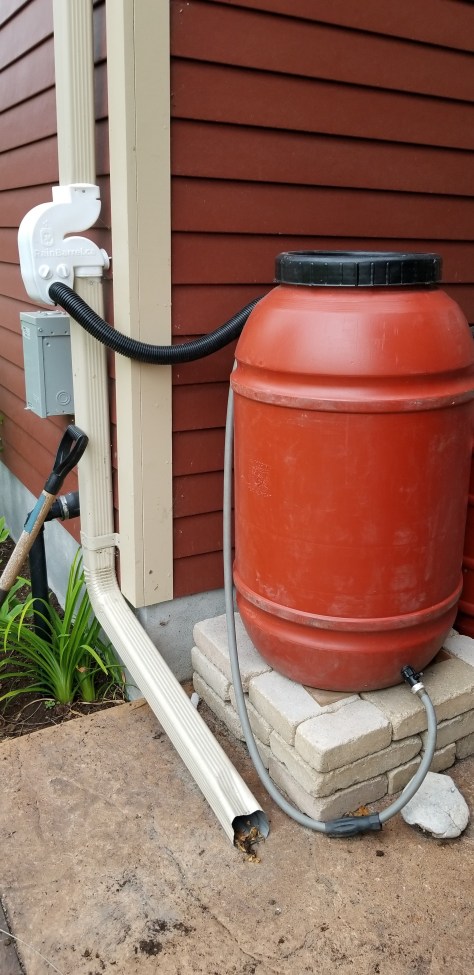
Water harvesting is a great way to use water from your home’s roof and direct it onto the landscape, where the soil becomes your “holding tank.” The best example is using a water barrel – we have four of them in our garden and they are a great investment. You can also practice ‘passive’ water harvesting by creating depressions that fill with water from the roof runoff or formal rain gardens, both of which help with stormwater runoff issues. You can find out more about rain gardens here. Peterborough Greenup Rain Program 20180716_132548

Reduce Stressors

Skip the fertilizer or pruning live branches during drought conditions. No need to add to the plant stress! When soil moisture is low or temperatures are high, plants don’t benefit from fertilizer and without adequate water, fertilizer can burn your plants. Excessive pruning will stimulate new growth that will not be drought tolerant. However, it is good practice to deadhead flowers, as removing spent blooms before they have a chance to set seed saves energy for your plants.

Make Priority

Give priority to watering newly planted trees and shrubs during periods of drought. Young plants have not had sufficient time to establish deep root systems, and depend on surface water for survival. Do not let the root balls of newly planted trees and shrubs dry out completely or become too saturated.

P1040111.JPG

Over the Long Term

Planning for Future Drought Conditions

Think About Plant Selection

Use appropriate plants, which are often marked as drought tolerant or resistant. Consider native plants, which generally adapt better, have lower water demands, and fewer pest problems. Group plants according to how much water they need. Ask your local garden centre or nursery staff which plants they recommend. Check out members of the local Peterborough Area Garden Route. Peterborough and Area Garden Route

Maintain Healthy Soils

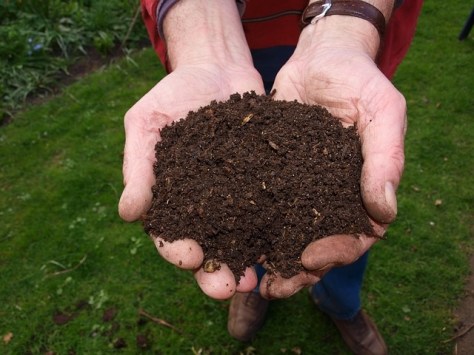
Good soil is the foundation for good plant growth. Anything you can add to your native soil like compost or other organic matter will make it easier for roots to penetrate deeper, creating more expansive root systems that can seek out water and nutrients. The result? Healthier, more drought-resistant plants. Good soils are better able to absorb surface water runoff, minimize erosion, and access nutrients and sediments.fresh-2386786_640

Use Mulch

Mulch reduces evaporation, moderates soil temperature, and inhibits weed growth. It is estimated that three quarters of the rain falling on bare soil is lost to plants through evaporation and runoff. Both of these are reduced up to 90 percent by adequate mulch. Use compost, wood chips, bark nuggets, shredded bark mulch, shredded leaves, or any other organic material to cover the surface of the soil at least 5 cm deep.

Water Well

Deep watering encourages roots to go deep down in the soil to where it is moist and a lot cooler. Water less frequently but for longer periods, so water reaches deep into soil. Good thorough watering promotes healthier plants. Also, water only when necessary, based on condition of the plant. Most plants will normally wilt in hot sun, and then recover when watered. Also, a dry surface is not always a sign of water need. The surface generally dries out first and is not a true indicator of what is going on down deep near the plant root. Make use of a hand trowel to check for moisture.

Weed Management

Weeds will compete with your plants for moisture and nutrients. Keep your gardens and areas beneath trees and shrubs weed free. Once the weeds are eradicated, apply mulch.

Consider Alternate Watering Methods

Investigate use of soaker hoses or other irrigation techniques using a timer, which keeps water on the soil and reduce losses by evaporation. Adjust watering frequency and amounts based on season, temperature, and amount of rainfall. Overhead watering uses more water and encourages fungal diseases.

Practice Water Conservation

Not just in your gardens. Water is our most valuable resource. Learn how to reduce water use throughout your house and gardens at this link.
Water Conservation Fact Sheet – Otonabee Conservation 20150822_185728

Dealing with Drought in the Garden

By Mary-Jane Pilgrim, Master Gardener

Plants are composed of anywhere from 50-90 percent water. When they suffer from the heat, it’s because of an insufficient amount of water being available to them. Drooping, seemingly lifeless leaves are a sign that a plant does not have enough water and is unable to take in carbon dioxide from the air through tiny, open pores on the underside of the leaves and make food.

When plants wilt from lack of sufficient water, they stop growing, stop producing and will die if their cells are not replenished with water.

Plant Selection

The best way to deal with drought is through plant selection. Grow plants that don’t ask for much!

pink-2678918_640

Choose plants that are drought resistant and can handle the heat in the first place, rather than struggling with the more sensitive types. Some suggestions are: ornamental grasses, salvia, sedums, cacti. Also native plants such as black-eyed susan, liatris, purple coneflower, coreopsis, lavender. Some non-native plants such as daylilies, hellebore, barrenwort/epimedium also all tolerate the heat well.

Watering

The best way to get moisture to the plants is to apply water at ground level with drip irrigation or via soaker hose, and the best time to do this is in the morning. The idea is to give the plants an infrequent but deep soaking. Water that seeps deep into the soil will help plants develop a deep root structure, which helps them survive prolonged periods without rain. The morning is the coolest time of the day, and there is less evaporation while temperatures are relatively cool than later in the day when the temperature is at or near its peak. The second best time is right at dark or just before dark.irrigation-2402568_640 (1)

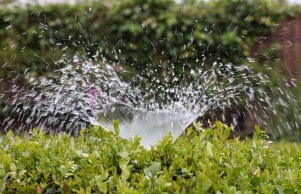
Using sprinklers is not as optimal because a significant amount of water is lost due to evaporation from the leaves into the air before the leaves can absorb the water.  However, for extensive garden beds, it may be the only available choice!

For patio container plants, consider adding water gels to the potting mix. The gels absorb water and release it slowly to the plant roots, reducing the number of times the plants will need to be watered. Another option for patio containers is a self-watering pot. These types of containers have a water reservoir from which water is absorbed up into the pot and to the root zone. Like the gels, these specialized containers will reduce the need for frequency of watering.

Mulching

Another way gardeners can help their plants survive excessive heat and drought is to mulch their garden beds. The mulch will help reduce evaporation, insulate plant roots from the high temperatures and reduce or eliminate weeds, which compete with desirable plants for water and nutrients. When choosing mulch, use only biodegradable materials that decay over time. Two to three inches of mulch should be plenty for the growing season. Don’t put mulch up against trees because it can cause the trunk to rot. Also, mice and other vermin may create nests in the mulch and chew on the tree’s bark.

IMG_2320Shredded leaves are also an excellent choice, but they break down faster than wood mulch and may harbor seeds like maple keys. However, earthworms love shredded leaves and will make the soil more friable and fertile with their castings. If leaves are hard and fibrous, leave them in place to decay. Oak and other tough leaves should be shredded and allowed to decay a bit before placing on the garden. Soils topped with shredded leaves will soon be crumbly and easy to plant.
Weed-free straw is good mulch and is often used in vegetable gardens. It packs down and hold weeds at bay. Make sure to use straw (grain stalks) instead of hay (dried grass) to prevent seeds from germinating.

There are many other tips / tricks about gardening during drought but the key message is that “you don’t have to stop gardening due to drought. Simply change the way that you garden to adapt to the conditions.”

Growing Perennials in Containers

By Amy Woodward, Master Gardener

Throughout the years annuals have been a staple to grow in containers.  However, they can be high maintenance and expensive as they are discarded after a season of planting.  Growing perennials in containers has started to become popular.  Perennials require less maintenance and are expensive initially but are a great investment as they continue to grow year after year.  Advantages of growing Perennials in Containers:flower-3397964_640

  • Great way to have perennials if you don’t have a lot of space
  • Fast spreading perennials can be contained
  • Mobility- you can move your plants to suit your needs
  • Weeding is eliminated and less deadheading
  • You can adjust your soil PH easily depending upon the perennial you are planting
  • Perennials can be planted before annuals as they can handle the cooler temperatures

Choosing Plants and Containers:

  • Use plants that have similar requirements for sun, feeding and moisture.  Plants in containers will need more watering than those in the garden, as the plants can’t draw nutrients and moisture from the soil.
  • Use “thrillers, fillers and spillers”.  The tallest plants are the thrillers and they go in the middle of the pot.  Fillers are medium sized and go around the thriller plant. Spillers trail over the sides of the pot.
  • If you do not plan to overwinter the perennials then make sure you choose plants that are 2 zones hardier
  • Use larger pots as plants become root bound and are quick to dry out
  • Make sure your pot has been cleaned before use and has good drainage
  • Choose a container that does not dry out quickly or freeze

Examples of perennials to choose:flowerpot-1345371_640

Achillea, Echinacea, Aster, Heuchera, Astilbe, Hosta, Bergenia, Lamium, Bleeding Heart, Phlox, Coreopsis, Sedum

Options for Overwintering Perennials

In colder climates, perennials cannot be left outside in containers over the winter. Remember plants that are hardy in the ground may not last in a container.  When you chose perennials you must consider the zone.  If you choose to leave in a container over the winter the rule of thumb is to choose plants that are 2 zones hardier.  Here are some other options to overwinter perennials:

  1. Move plants in containers to an unheated garage. Do not fertilize when the plants are dormant.  Once plants stop growing in the fall, stop fertilizing.  Plants will need to be watered until the soil is frozen.  When temperatures increase in late winter or early spring gradually move containers back outdoors.
  2. Transplant into the garden.  Then dig them up in the spring and return to the containers.
  3. Bury the pots in the ground.  The roots will then be better insulated.  In the fall, dig a hole in the ground that is large enough for the container.  Place the container in the hole then cover with leaves or mulch.  In the spring, bring the pot out of the ground.

Trench or “Hole” Composting

By Suzanne Seryck,  Peterborough Master Gardener

After squirrels chewed through my black plastic compost bins 2 years in a row, I decided it was time to try something new. Trench or hole composting is a relatively simple, easy and cheap way to compost kitchen and yard waste. The plants are fed at the roots, where they need it the most, producing healthier plants with strong root systems.

The rules of what materials you can compost using this method are similar to that of a compost bin or pile:

  • Dead leaves
  • Kitchen Scraps
  • Newsprint
  • Coffee Grounds
  • Paper
  • Fresh Garden Waste
  • Wood chips
  • Vegetable waste
  • Corrugated cardboard
  • Fresh grass clippings
  • Sawdust
  • Manure
  • Corn Stalks
  • Hay
  • Dry Straw

For more information on what to use look at this Planet Natural article

In just 2 years of composting using this method I have already noticed a difference in the health of my soil, my plants and especially in the number of earth worms.

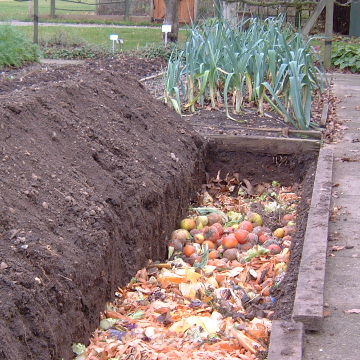
Trench composting works well in larger vegetable gardens and involves digging a trench approximately 12 to 18 inches deep, filling it with roughly 4 to 6 inches of yard waste and/or kitchen scraps and then back filling with the soil you removed. Trenches can be used either in a rotation cycle, where you would divide the garden into zones, an actively growing zone, a path and a trench composting zone. Each year you would rotate the zones, allowing you to compost the whole vegetable garden in 3 years. The second method is to dig trenches in between the vegetable rows, this method works well if you grow your vegetables in evenly spaced rows. Over time as everything breaks down the compost will then nourish the plants nearby.

compost-trench

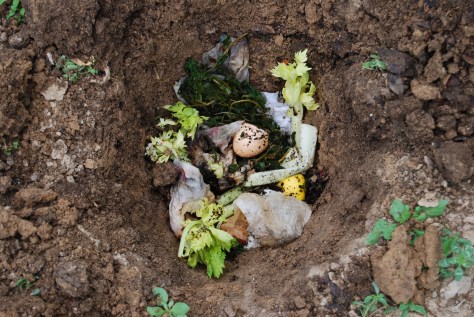
However for my small city garden, I found the trench composting system did not work well. I don’t plant in rows and whilst I do practice crop rotation (which is a method of rotating your crops each year to manage soil fertility and help control pests and diseases) I like to use almost every available space in my vegetable garden. Instead I practice “Hole composting”, which works in all types of garden, vegetable, perennial and shrub, just about anywhere where you can dig a 12 to 18 inch hole.

It is especially good if you do not have room for a composter or do not have a sunny location to place a compost bin or pile. Basically you dig a hole, put in the kitchen and/or yard waste, again about 4 to 6 inches and fill the hole in. It really does not get any easier than that. Over time the waste is turned into decomposed organic matter or humus along with millions of microorganisms and there is nothing better for your plants. This type of composting is invisible, does not produce odours, takes very little effort (you don’t have to turn and layer as you would using a compost pile), it costs nothing, and you don’t have to buy other soil amendments or plant fertilizers.

2012-04-03_13-24-52

During the active growing season, I dig holes in my perennial garden and bury my kitchen and yard waste. However, in the fall after I harvest the vegetables I also practice this in my vegetable garden, in particular the areas where I have grown heavy feeders, like corn or squash. The following spring most of the material has decomposed and you are ready to plant. In just 2 years of composting using this method I have already noticed a difference in the health of my soil, my plants and especially in the number of earth worms.

Additional information on trench or hole composting here


Frost Dates and Pushing the Limits

By Chris Freeburn, Master Gardener

Many of us have grown up with the rule of planting the vegetable garden on Victoria Day (May 24th) long weekend. With the changing weather, hardier plants and stretching the limits, we have realized that many plants can go into the ground well before that date, while others do need the soil to be warmer.spinach-3368254_640

Cool Weather Crops

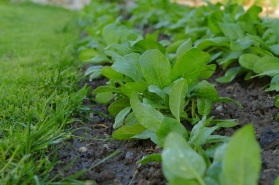
Cold weather crops like lettuce, spinach, pea, beet and carrot seeds can be planted well before that mystical date. They actually like a cooler temperature to germinate. If you plant them the first week of May, you should have sprouts coming up by the time you plant other seeds.

Warm Weather Crops

Ground temperatures need to be warm for beans and cucurbits such as squash, pumpkin, cucumber and zucchini. Mid May to early June is probably best for putting actual plants in the ground, if you are in an area that does not get frost. Check your weather network for overnight lows. If the temperatures drop and the night sky is clear, chances of frost are better than on a cloudy night. If the air is still, colder air will settle close to the ground and damage plants. If your property is on a slope or higher ground, the cold air will settle around you in the valleys and you may not be touched by a light frost. Being closer to water often draws the cooler air away. If you have planted tomatoes and peppers and there is a frost warning, go out and cover your tender plants with sheets.

Basil and cilantro do not like cool nights, so leave these tender herbs in pots to bring in overnight or do not plant until June.

Annuals

pansy-3373732_640Some annuals such as pansies, dusty miller and english daisies are cold tolerant while others like potato vine and impatiens do not like temperature changes. Do not plant the latter 2 choices into the ground until all danger of frost has passed and the soil temperature has warmed. If the nights temperatures are dropping, bring your pots into your garage or cover with an old sheet to protect.
Perennials

Perennials have survived the winter frozen in the ground so a bit of frost will not hurt them. If you are buying perennials that have been grown and forced in a hot greenhouse, they will need to be pampered by slowly introducing them to seasonal temperatures. This is called hardening off. To harden off any plants that have been living in a warm greenhouse, put them outside in a shady area, protected from the wind for a few hours over several days. Bring them back into the warmth of your home or heated garage for the night. Increase the number of hours they are outside each day, until they are used to the outside temperatures.

According to the Farmers Almanac, the last frost date for Peterborough is May 14th, however the full moon is on the 28th. If the night of the full moon is clear and cool, we could see frost. Beware!

Preparing your garden beds for planting vegetables and annuals

By Judy Bernard, Master Gardener

It’s spring. You’ve got a lot of the clean-up well underway. You’re starting to look at your annual and vegetable beds to get them ready for bedding plants and seeds.

bannerpick

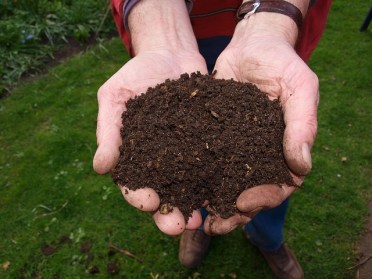
If you work the soil too early, it could be too wet and end up compacted. To test if it is time to prepare the soil, pick up a hand full and squeeze it into a ball. Then drop the ball from a height of about a meter or break it up with your fingers. If it shatters readily then it is ready to be worked. If it stays in clumps, then it is too wet and you need to wait a bit.

Can’t wait? Use a large flat board or two to step on. Move them around as you work. The board will distribute your weight and not compact the soil as much.

Remove any weeds that have sprouted over the winter.

If the soil is nice and light and easy to dig into, then all you need to do is add a good layer of compost and let the worms in the soil do the mixing for you. A healthy soil is moist, dark and crumbly with lots of organic matter. Compost is is full of all of the the nutrients the plants need which are released as the plants need them.fresh-2386786_640

Mulch the soil with some straw for the vegetable beds or shredded bark for the flower beds. This will discourage weeds and conserve moisture in the soil until it is time to plant. All you will need to do is to pull the mulch back, plant your plants, and put the mulch back in place.

For more information about soil check out this site:
https://www.planetnatural.com/garden-soil/

Happy Gardening!

Why a Rain Garden?

By Cauleen Viscoff, Lindsay Master Gardener

In the forest, a raindrop’s journey is long; from cloud to creek; intercepted by trees and vegetation before it soaks into the ground-less than 10% runs off into rivers and streams
In the city, its a fast ride; on the roof, down a spout onto a driveway, onto the street and down the storm drain.pavers-2946486__340

When a forest becomes a city, more than 50% of rainfall meets impervious surfaces -roads, buildings, parking lots; the rain becomes stormwater, filled with polluted urban waste; fertilizer, animal waste, oil, heavy metals, road salt, cigarette butts, etc.It causes erosion, flooding, (over $1 billion in flood-related insurance in past 6  years). Stormwater is the leading cause of poor water quality.

Every time you press your car’s brakes, cadmium and zinc are released onto the road; and every pound of leaves left on the street, contains enough phosphorous to bloom up to 10 pounds of algae (if allowed into the storm drain).

What can we do?

Manage rain where it falls.
SOAK IT UP – porous pavers, grass and gardens
SLOW IT DOWN – rain barrels, downspouts into garden – keep away from foundation and out of storm drain
KEEP IT CLEAN  – rain garden – filters rain water, slows it down, soaks it up and keeps it clean.

A rain garden is easy, simple and best in a low spot where rain naturally runs off. Use plants with spreading roots. Find out how to here:
http://www.greenup.on.ca
http://www.bluethrumb.org
http://www.seagrant.umn.edu
http://www.susdrain.org

For a detailed plant list, send me a note: cauleensgardens@gmail.com

Maintaining the Garden – Common Garden Practices

By Sharleen Pratt, Master Gardener in Training

Bed Preparation

This is probably one of the most important practices of gardening.  How you prepare your soil will have huge implications on the health and survival of all your plants.
Heavy clay or stony soils are very challenging and can be quite intimidating, but an initial effort to either remove or amend the soil will go a long way in ensuring healthy plants.  Two years ago, my husband dug a deep hole in preparation for building a small pond.  All the clay, rocky soil was removed.  In the end, we decided on a smaller water feature, so I filled the hole with the soil from my composter as well as some good quality garden soil.  I ended up creating a garden bed that was rich in nutrients and a soil that had good water-holding capabilities.  The following spring, I planted annuals in my ‘new’ garden bed.  They were fantastic!  The old saying, “Tend the soil, not the plants” is right on the mark!sharleenpratt


Perennial Division

Some perennials can get out of control quickly and benefit from division.  One common problem of fungal infections in gardens are plants that are overcrowded without sufficient air movement.  They can become spindly and weak and are more prone to disease, as well as insect attack.  Remember that some perennials will divide easily while others will not be happy! It’s always best to check with your favourite garden centre or a good perennial book to find out the best time to do the division.

Plants will benefit from dividing when:

  • They are spreading into other plants
  • Shoots are popping up amongst other plants
  • There is a bare patch in the centre of the plant
  • They are leggy and sparse and not flowering well
  • Soil around the plant has become clumpy and hard

A general rule for perennials is to divide in early spring and just after flowering.  Avoid hot, windy days and ensure that all newly divided plants are well watered for at least six weeks.  Dividing is an excellent way to share your favourite plants amongst friends and your perennials will definitely benefit from the division.