Category Archives: Slugs and Bugs

Why Spiders are Your Greatest Garden Guardians

By Thom Luloff, Master Gardener in Training

If you’re an avid gardener, you’ve likely encountered spiders in your flower beds, vegetable patches, or even hanging from delicate webs strung between your favorite plants. For many, spiders evoke an immediate reaction of discomfort or fear, but these eight-legged creatures are some of your garden’s most important—and often underappreciated—residents.  Spiders play a crucial role in maintaining ecological balance and biodiversity, and they can be your best allies in managing pests without the need for chemical sprays.

The Ecological Role of Spiders

Spiders are predators—and highly effective ones at that. They feed on a variety of garden pests such as aphids, flies, beetles, and caterpillars, which, if left unchecked, could wreak havoc on your plants. By keeping these populations in check, spiders act as a natural form of pest control, reducing the need for harmful insecticides. In fact, studies show that spiders consume more insects each year than the weight of the entire human population combined! Garden ecosystems would struggle to manage pest populations, leading to overpopulation of insects that can damage crops and ornamental plants. In addition to maintaining balance in pest populations, spiders contribute to the biodiversity of your garden by providing food for other wildlife, such as birds and small mammals.

The Evolutionary Journey of Spiders

Spiders have been around for over 300 million years, evolving from ancient arachnid ancestors that roamed the Earth long before the dinosaurs. Through millions of years of evolution, they developed their silk-spinning abilities, which they now use for everything from building webs to creating egg sacs and even parachuting as juveniles (yes, baby spiders can “fly” short distances on silk threads). This evolutionary adaptability has made them some of the most successful predators on the planet, thriving in almost every environment, from deserts to forests—and yes, your garden.

Cool Facts

  1. Not all spiders spin webs—some, like the jumping spider, actively hunt their prey, pouncing on insects with speed and precision.
  2. Spider silk is one of the strongest materials in nature, stronger than steel of the same thickness, and scientists are studying how to replicate it for human use .
  3. female spider can produce thousands of eggs, though only a small percentage will survive to adulthood, ensuring that spider populations remain balanced in the ecosystem.

Spiders: Friends, Not Vermin

Contrary to popular belief, spiders are not vermin. Unlike pests like rats or cockroaches, spiders do not scavenge human food or spread disease. They are solitary creatures that prefer to be left alone, and they actively help your garden by preying on harmful insects. A garden without spiders would be more vulnerable to insect infestations, leading to less healthy plants and lower yields of fruits, vegetables, and flowers.

Thom with the Barn Orb-Weaver, his favourite spider 🙂

Meet 4 Friendly Garden Spiders of Peterborough

Now that you know how vital spiders are, let’s introduce you to five common garden spiders you might encounter in your Peterborough garden. These gentle creatures are doing hard work to keep your garden healthy, so next time you see them, take a moment to appreciate their efforts.

  1. Barn Orb-WeaverAraneus cavaticus
    • This fascinating garden ally is known for constructing large, intricate orb-shaped webs. These spiders are commonly found in barns, sheds, and near garden structures, often spinning their webs at night. Characterized by their rounded, bulbous abdomen, Barn Orb-Weavers typically range in color from orange to brown, with distinctive pale markings on their bodies. Despite their size and striking appearance, Barn Orb-Weavers are harmless to humans. They serve as a valuable asset in the garden by controlling insect populations, catching flies, moths, and other garden pests in their webs. Active from late summer through fall, they rebuild their webs each night, ensuring a fresh, sticky trap for their next meal. Known for being the inspiration behind Charlotte in the beloved story Charlotte’s Web, this spider holds a special place not just in literature, but in the ecological balance of gardens and rural spaces alike. Their presence signals a healthy ecosystem, and their web-spinning talents should be welcomed as an essential part of nature’s pest control system.
  2. Bold Jumping Spider (Phidippus audax)
    • With their striking black bodies and iridescent green or blue chelicerae (mouthparts), jumping spiders are some of the most curious and approachable spiders you’ll meet. These small but mighty spiders don’t spin webs to catch prey; instead, they leap from plant to plant, using their excellent eyesight to hunt down pests.
  3. Yellow Garden Spider (Argiope aurantia)
    • This stunning black-and-yellow spider is often found in gardens with tall plants and flowers. Known for its large, wheel-shaped web, the yellow garden spider weaves a zigzag pattern in the center of its web, which is believed to help it catch even more insects. It’s a fantastic predator of flying insects like mosquitoes and flies.
  4. Wolf Spider (Pardosa species)
    • Unlike orb-weavers, wolf spiders do not create webs. Instead, they are ground-dwellers that chase down their prey in garden beds and among fallen leaves. Though they may look a bit intimidating due to their size and speed, they are completely harmless to humans and extremely beneficial to gardeners

Where Do Spiders Fit in the Ecosystem?

Spiders are an integral part of the ecosystem, serving as both predators and prey. By keeping insect populations in check, they ensure that plants remain healthy and free of infestations. They also provide food for birds, reptiles, and other animals higher up in the food chain. If we were to eliminate spiders, we would see a rise in destructive insect populations, which could lead to reduced biodiversity and weaker ecosystems overall. Encouraging spiders to thrive in your garden is one of the best things you can do for your plants, your local wildlife, and the environment. So, the next time you spot a spider spinning its web or prowling the garden floor, take a moment to thank it for the invaluable service it’s providing. No squishing!

Conclusion: A Home for Spiders Is a Healthy Garden

In the grand scheme of nature, spiders are our silent partners, working diligently to create a balanced, thriving environment. By welcoming them into our gardens, we contribute to a healthier ecosystem and ensure that our plants can flourish without the need for harmful chemicals. So, let’s embrace our eight-legged friends and recognize that the key to a healthy, biodiverse garden might just be hanging from the next web you see.

References

  1. Nyffeler, M., & Birkhofer, K. (2017). An estimated 400–800 million tons of prey are annually killed by the global spider community. The Science of Nature, 104(3), 30.
  2. Foelix, R. F. (2011). Biology of Spiders (3rd ed.). Oxford University Press.
  3. Garwood, R. J., & Dunlop, J. A. (2014). The origins of spiders: Insights from the fossil record. Evolutionary Biology, 41(3), 523-535.
  4. Vollrath, F., & Knight, D. P. (2001). Liquid crystalline spinning of spider silk. Nature, 410, 541-548

Google Lens (free!) for all of your identification needs

By Mary-Jane Pilgrim, Master Gardener

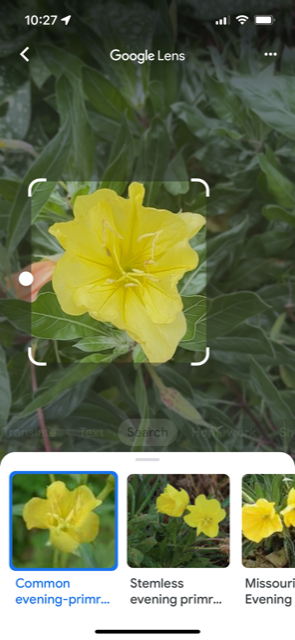
If you’re outside enjoying the fresh air, and happen across a flower or bird or insect and you’re not sure what you’re looking at, a new feature from Google can help you out.

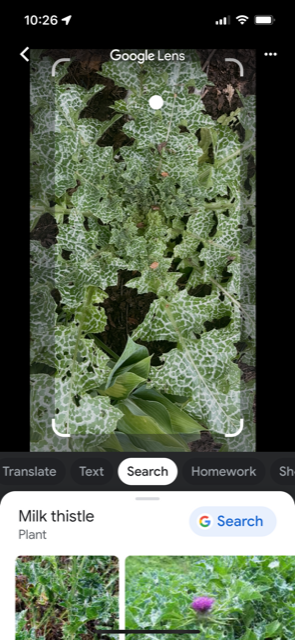
Google Lens lets you search what you see. Using a photo, your camera or almost any image, Lens helps you discover visually similar images and related content, gathering results from all over the internet.

All you need to do is: On your phone, open the Google app and in the search bar, tap Google Lens. Point your camera at the flower to identify the plant. Swipe up to learn about the discovery.

On Android, Google Lens is likely already built right in — open the Google App or Google Photos app. Tap Discover or tap the Google Lens icon.

On Apple, Google Lens is part of the Google app — a separate app from using Google on Chrome, Firefox or Safari. Go to the App Store and download/install Google as a unique app if you haven’t already done so.

When you open the Google App, you’ll see a screen like this with the Lens icon. It’s your window to discovery!

Last week, I went for a long walk and checked out a lot of the volunteer trees and plants along the rural roadway. Sometimes I wanted to verify an item I thought I already knew, but more often I wanted to determine the name of a common but name-unknown item. Google Lens scored on both fronts. Now if only I could remember all of those names!

If you have a bug infestation, use Google Lens to identify the bug if you can get it to sit still long enough!

There’s plenty more you can do with Google Lens, too, including pulling the contact information from business cards, identifying unusual foods and almost anything else. It can also translate words on the screen into other languages, and read them back to you.

The ability of the app to actually CORRECTLY identify plants and bugs is pretty decent, and will get better over time. It helps to allow Google to use location services, so that it’s not searching through the entire rain forest to determine the name of the plant in your neighbourhood. You can also allow Lens access to your photos, so that you can identify items you’ve already taken pictures of.

Best of all, it’s free and will always be free. Try it!

Holes in Leaves

By Christine Freeburn, Master Gardener

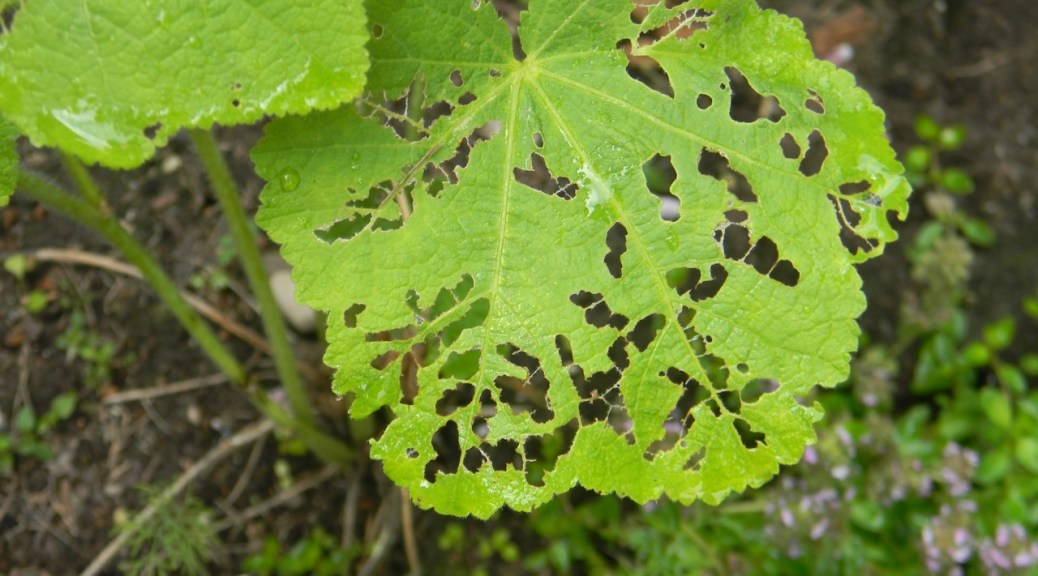
Several years ago I heard a wonderful talk by Martin Galloway on “Holes in Leaves.” His philosophy was that you can never totally eradicate pests from your gardens, so you should enjoy the beautiful lacing they do to your leaves. At the time, I was skeptical about how I could love holes in leaves and the pests that put them there. However as a Master Gardener, I now understand his perspective and I do try for a balance using safe methods to control pests. Integrated Pest Management (IPM) is a practice where pests are controlled using environmentally safe and economically sound values. Biological controls like BTK or parasitic nematodes can be used. Barriers such as diatomaceous earth, wood ashes or sticky boards are mechanical control methods as well as hand picking. Cultural methods include plant nutrition, sanitation, planting pest resistant varieties and plant rotation (in the case of vegetables).

Although we don’t want bad bugs in our garden, we do want the beneficial bugs that are predators and parasites. These include dragonflies and damselflies, lady bugs, lacewings, spiders, wasps and some types of flies.

Aphids or plant lice are one of the most common pests to attack your plants. They are tiny soft bodied creatures that can be black, red or green in colour. They suck the sap from your leaves, and leave a sticky substance behind. You will often see them in a long line on your stems. Red aphids are common on garden phlox. You can use an insecticidal soap for aphids. Or use a blast of hose water to knock them off your plants.

Beetles are hard bodied insects that are generally easy to find on your plants. There are many types and they are often named after their plant of choice, like scarlet lily beetle. The most effective method for controlling beetles is hand picking. Look for the striped cucumber beetle inside the blossoms. When handpicking, place a hand under where the beetle is to catch it as they tend to jump when you touch them.

Caterpillars are another garden pest that are easily spotted. In spring you may find your Hydrangea arborescens has closed, puckered leaves which are holding the common leaftier. You can gently open the leaf and remove and destroy the caterpillar inside or pluck of the entire leaf and squish.

Slugs and snails are sometimes difficult to find as they like dark damp places and feed at night. But you will know you have them when they are munching on your hosta leaves. Check out Gardens Plus for Dawn’s formula for slugs.

As we enter the dog days of summer, we are all battling voracious bugs eating our beautiful flowers and vegetables. The healthier your plants are, the less they will suffer from a deluge of bad bugs. That is why it is important that you give your plants the water and nutrients they need to be their best. Good soil health and good fertilizing methods will give you healthier plants.

Remember that anything you apply to your plants to kill those pests can also hurt pollinators and will be on the vegetables and fruit that you ingest.

To make your garden less inviting to pests

  1. plant the right plant in the right spot to keep it happy and not stressed
  2. do not overcrowd plants which encourages dampness and pests
  3. diversity in your garden will help with pest control – if there are a variety of plants, specific pests will not take over
  4. keep nitrogen levels moderate as many pests like aphids thrive on plants with high levels of N.
  5. Remove garden litter; if pests are present as they can overwinter there.

My favourite method of hand picking beetles and slugs and hosing down aphids is no cost and gets you out into your gardens….where you can enjoy your own “Holes in Leaves.”

For more information on garden pests go to https://www.missouribotanicalgarden.org/gardens-gardening/your-garden/help-for-the-home-gardener/advice-tips-resources/pests-and-problems.aspx

or try https://cdn.dal.ca/content/dam/dalhousie/pdf/agriculture/ExtendedLearning/gardenbox/Managing%20Vegetable%20Pests_Garden%20Box_Online.pdf

Quarantines are Not Just for Humans

By Mary-Jane Pilgrim, Master Gardener

Seeing bugs outside is generally pretty tolerable as we know that many of them are pollinators, but seeing them inside our houses is a completely different story, right? Fortunately, it’s usually easy to manage most indoor pests with little more than some water, a cotton swab, and a soap solution. It all starts with a few preventative actions:

Aphids
  1. Whenever you happily bring home a new treasure (or sometimes, victim!), make sure that you carefully inspect them. Many types of houseplant bugs piggyback their way into your house from friend’s homes or stores. Look on leaf undersides, along the stems, and even in the soil for signs of common pests (sticky substances, flying cloud when disturbed, little bumps, fine silky webbing).
  2. Put your new treasure in solitary confinement for a few weeks, like in a spare room. Even if you think a new plant is pest-free, it may have pest eggs or larvae that you can’t yet see. Watch it carefully and only put it in close contact with other plants after it’s been confirmed to be pest-free. If the pandemic has taught us anything, quarantining is right at the top of the list and it applies to plants as well as humans.
  3. Place a few yellow sticky cards in among your plants. Many pest insects are attracted to the color yellow, and they’ll quickly get trapped on the card. Check the card every few days for any insects. If you have some on the card, you probably have many more on the plant itself.

What if You Detect an Infestation?

The most common pests are aphids, fungus gnats, mealybugs, scale, spider mites and white flies. See this resource for bug-specific instructions.

For all infestations, the first thing to do is to move the affected plant away from all other plants. Quarantine!

Then, take the plant to the bathtub/shower and spray it with water. Many bugs are tiny and are easily washed off the plant. Be sure to rinse both upper and lower leaf surfaces. After the plant has fully dried, use a light-weight horticultural oil or insecticidal soap to smother the pests. Reapply the oil/soap every 10-14 days for two more applications for the best control.

If you detect small bumps, wipe the plants with a cotton ball soaked in rubbing alcohol and remove the bumps if possible.

If you detect pests in the soil, it’s often caused by overwatering. Reducing the amount of water, or watering your plants from the bottom instead of the top should take care of the problem. Spraying the soil lightly with insecticidal soap occasionally often helps as well.

Resources

How to Get Rid of Bugs on Houseplants
Common Houseplant Insects & Related Pests
How to Get Rid of Common Houseplant Pests

Spider mites


A Slimy Subject

by Lois Scott, Master Gardener

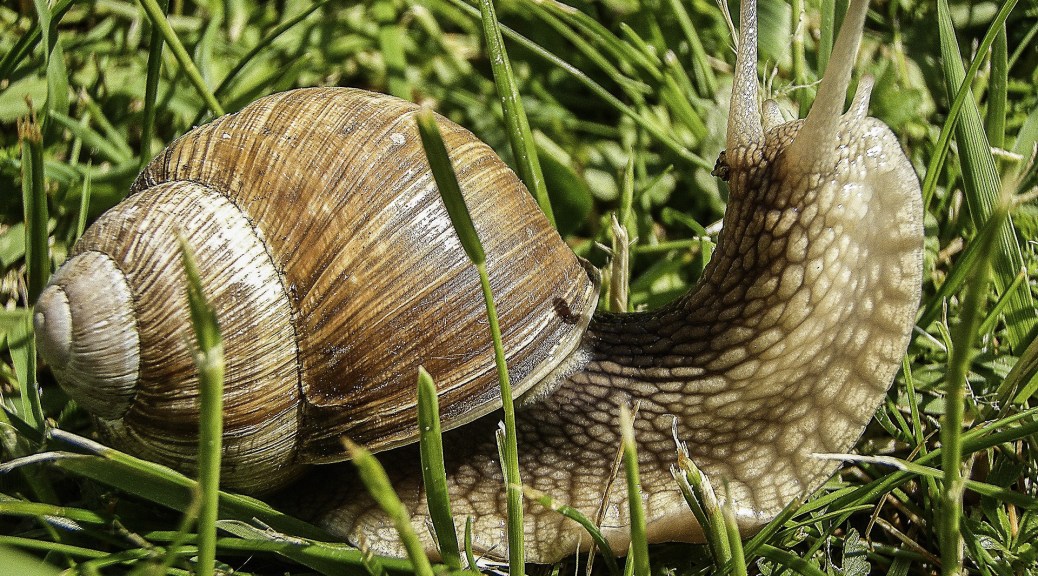
I recently read the book “The Sound of a Wild Snail Eating” by Elisabeth Tova Bailey. The author recounts her observations of a common woodland snail while she was bedridden. Although the very title of this book could strike fear and loathing in a gardener’s heart as we imagine our plants being shredded, it was an enjoyable, informative read and made me curious about the slimy creatures that lurk in my garden.

What I have learned about snails and slugs (gastropods) can hardly be described as scratching the surface but here are a few details.

In their natural settings gastropods help disperse seeds and spores, break down decaying plant matter, consume empty snail shells, sap, animal scats and carcasses and provide food for other predators like birds, small mammals, salamanders, turtles and invertebrates like firefly larvae that feed exclusively on snails.

Gastropods are equipped with thousands of sharp teeth that are routinely replaced.

Non-native species of gastropods are higher risk for damaging agriculture and preying on native species of gastropods and are most likely the ones we encounter in our own gardens.

The fact that non-native gastropods are likely the predominant ones in my garden might make me more interested in spending evenings in the garden with a flashlight picking slugs off my plants but some studies have shown that doing so doesn’t make a dent in their populations. So, for the time being I will continue to do what I have in the past which is essentially nothing. In a ‘Laidback Gardener’ blog, Larry Hodgson discusses Snails (okay) and Slugs (bad!) and one in which he discusses the effectiveness of various slug control methods. Both blogs are informative reads.

There is really only one of his ‘effective’ treatments that I engage with in my garden, and that is to encourage slug predators by providing an environment for wildlife. The rest can seem like too much work! Planting slug resistant plants is also something to consider and Larry Hodgson provides a list for that too.

In my garden I find practices such as seeding lettuce in containers and planting out hardened off nasturtium seedlings slow down slug predation but I generally accept some cosmetic damage to plants and at the same time enjoy the sight of the resident chipmunk munching on a slug.

Other Resources

The Secret World of Slugs and Snails’ by David George Gordon

Slugs of the Mid-Atlantic and Northeastern United States