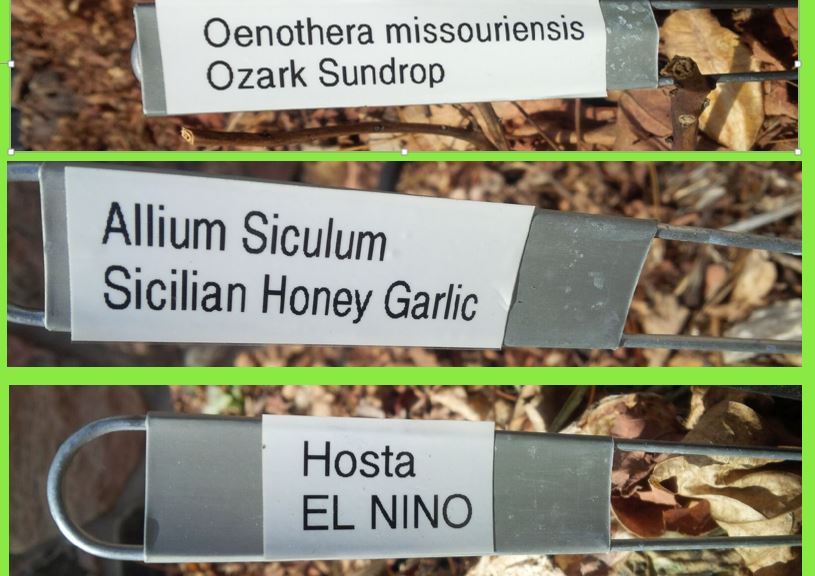
By MJ (Mary-Jane) Pilgrim, Master Gardener
Why should we label the plants in our gardens? The answer is simple–so that we know their names & can then give them the correct care. For herbaceous plants, the labels act as placeholders over the winter, so that we don’t accidentally disturb them, or try to plant bulbs too close to them while they are dormant.
Figuring out how to handle labeling is one of the trickier parts of perennial and vegetable gardening. Do you keep the tags your plants come with, filling your garden with dozens or hundreds of bits of plastic? Do you tape them into a special garden notebook, so you can keep track of where all of the information for your plants? Or do you simply toss the labels in the recyling bin as soon as you get the plants in the ground?
For me, the answer to all of these questions was ‘no’ simply because most of my first plants came from local plant sales and were probably pretty common (and invasive?) plants. The white paper address label from the sales were usually blank the following spring so I was no further off than when I started. Then, I started buying more unique perennials at garden centres — the real money kind of plants. It seemed a shame to toss those beautiful tags full of information, so I buried them close to the plant which worked well — but the tags did crack and disintegrate after a couple of seasons. Tags created with my simple Dymo labeller were often blackened by the sun after a similar amount of time. Then, I listened to a speaker at my local horticultural society discuss his approach to labels — one of those portable labelling systems that could take a special kind of tape: “high temperature/low temperature”. He reported that his labels were lasting 10 years and counting. Being a “techy” kind of person, I bought one from Brother/Staples about 5 years ago and I’ve been pretty happy with it. I also record plant information and cultivar names into my mobile phone’s “notes” feature in categories such as ‘hostas’, ‘coneflowers’, ‘sedum’, ‘trees’ so that if I forget to create a label, or the label goes through the chipper in the spring (yikes!), I still have something to go back to. Keeping a list of plants I’ve purchased on my mobile device also helps but doesn’t prevent me from purchasing duplicates. Sigh. (Been there, done that, too many times to count).
My last reason for labelling is that any visitor to your garden will ALWAYS want to know the names of your plants! They may already THINK they know what it is, and they are happy to have their knowledge confirmed with the presence of a tag.
Downside of Plant Labeling
- The amount of time it takes to check the plant, produce the label, and attach it, not to mention regular checking and replacing of broken, moved and missing labels
- The cost to purchase the labeller ($100 ish) and the label tape ($30 per roll)
- Labels can be easily be mistakenly moved from one area to another at cleanup time — and a wrong label is worse than no label.
- Labels can sometimes detract from the beauty of the garden.
Reasons to Label:
- You’ll remember your plants’ names, and can give them the correct care.
- You’ll remember which heirloom veggies are which for reordering next year.
- You’ll know which very expensive perennial you purchased LAST year did not show up at all this year.
- The labels act as placeholders so that you don’t accidentally plant something new in the space being held by another, but dormant, plant or bulb.
- “Oh, I’ll remember what this is.” Oh no, you won’t; trust me.
- Plants are worth WAAAAYYY more at plant sales if you know the cultivar name — we normally know the genus and species, but the cultivar name is much more tricky and often impossible to determine after the fact.
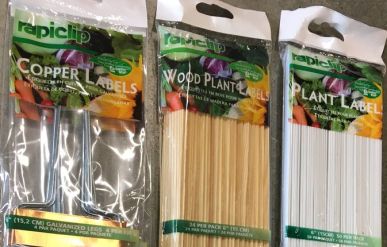 Plant Label Materials:
- Simple white plastic labels for seed-starting are available at many landscape supply stores, but what to use for the actual marking?
- Copper labels – use a ballpoint pen to make a true inscription on the thin copper — although these are sometimes difficult to read years from now.
- Paint the plant names on both sides of hand-sized smooth river-style rocks.
- Cheapest option: plastic mini-blinds or wooden popsicle sticks but these often fade or disappear.
- Strips of galvanized “duct hanger” metal strips, cut to length with a plastic label.
- Metal hairpin-type labels with a plastic label: sturdy, but easy to step on or pull out with a rake.
According to my research, the following will work on plastic, wooden and/or metals tags: pencils, ballpoint pens, paint pens, Sharpies, and supposedly fade-resistant nursery marking pens. According to some articles I’ve read, the unexpected hero is the ordinary pencil on plastic or wood: it’s perfect for all but the shiniest materials. A great suggestion is to include the plant information on the back of the marker, too. If the front fades or is damaged, the info on the more protected back side will hopefully still be readable.
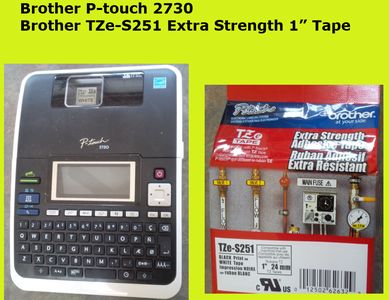 MY Preferred Labeling System: hairpin-type label stakes (Lee Valley), pushed more than halfway down with white “live forever” plastic label tape (Amazon) printed on a small Brother labeller (see picture).
One last suggestion for plant record-keeping is the digital camera. It’s so easy to take a picture of the label right against the plant in the garden — you’ll then have a visual record of the name and where the plant is growing.
Hope this helps to save some time, energy and frustration for someone!




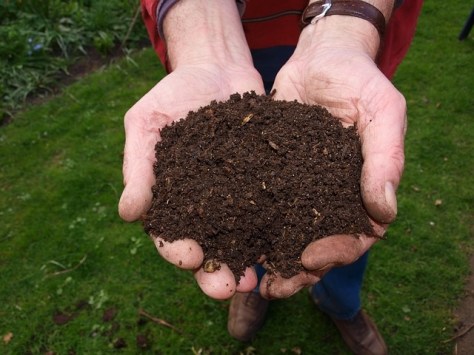





 Shredded leaves are also an excellent choice, but they break down faster than wood mulch and may harbor seeds like maple keys. However, earthworms love shredded leaves and will make the soil more friable and fertile with their castings. If leaves are hard and fibrous, leave them in place to decay. Oak and other tough leaves should be shredded and allowed to decay a bit before placing on the garden. Soils topped with shredded leaves will soon be crumbly and easy to plant.
 Clematis is a genus of about 300 species within the buttercup family, Ranunculaceae. They are a very popular perennial climber and produce many beautiful flowers in the summer months.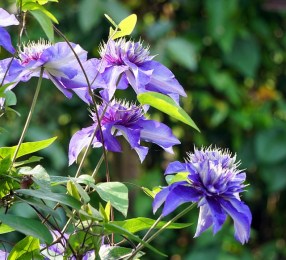
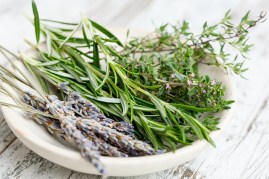
 CULINARY : herbs are used in pesto’s, soups, salads, and flavours for vegetable preserves. Mint can be used as garnish in a drink or tea , parsley or cilantro on fish dishes
 The Peterborough & Area Master Gardeners