All posts by peterboroughmastergardeners

The 12 Plants of Christmas – Part 1

by Emma Murphy, Master Gardener

The snow is on the ground and the cold winds in the air. Canadian gardeners are reflecting on their gardening season (why does it always go by so fast?) and thinking about next year’s garden (has your first seed catalogue arrived yet?).

So in the spirit of the Christmas season, this week’s blog is about the 12 plants of Christmas—some decorative, some food, and some traditions! In Part 1 we’ll look at Christmas plants and one food; you’ll have to wait until next week for more food and other plant traditions.

CHRISTMAS PLANTS
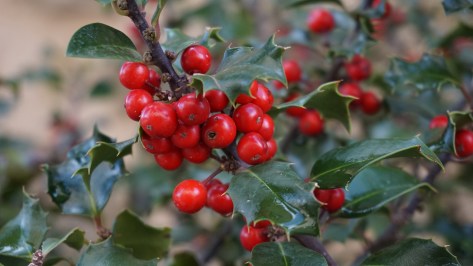
holly-tree-1030595_1920

1. Holly

Decorative green plants like holly, ivy, and mistletoe originate in pre-Christian times and were associated with celebrating the Winter Solstice by warding off evil spirits and celebrating new growth (well the latter only in warmer climate). Many countries (especially the UK and Germany) still decorate their homes with these plants today, often in Christmas arrangements or wreaths. The beautiful berries of the Christmas holly are produced by some of the approximately 400 species of holly (Ilex) that growing wild around the world. Typically, holly trees and shrubs are smooth-barked and have small flowers, fleshy red or black berries, and leathery, shiny leaves.

In pagan times, Holly was thought to be a male plant and Ivy a female plant. An old tradition from the Midlands of England says that whatever one was brought into the house first over winter, tells you whether the man or woman of the house would rule that year! But it was unlucky to bring either into a house before Christmas Eve. For the Christian faith, the prickly leaves symbolize the crown of thorns that Jesus wore when he was crucified. The berries are the drops of blood that were shed by Jesus because of the thorns.

If you are interested in five fascinating facts about holly, check out this link.

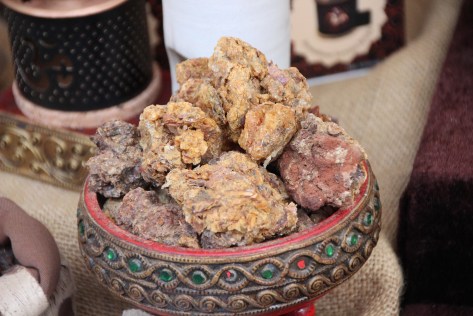
mistletoe

2. Mistletoe

Mistletoe has long been a symbol of love, peace and goodwill. The custom of using mistletoe to decorate houses at Christmas is also pre-Christian and the habit of kissing under the mistletoe continues today in many countries. Mistletoe is the common name for obligate hemi-parasitic plants in several families in the order Santalales. The plants in question grow attached to and within the branches of a tree or shrub. In the past, mistletoe was often considered a pest that kills trees and devalues natural habitats, but has recently been recognized as an ecological keystone species. Studies have shown that rather than being a pest, mistletoe can have a positive effect on biodiversity, providing high quality food and habitat for a broad range of animals in forests and woodlands worldwide.

For a whole host of information on mistletoe myth and legend, plus practical details of how to grow it in your own garden, Jonathan Briggs’ Mistletoe Pages.

cactus

3. Christmas Cactus

The Christmas cactus (Schlumbergera xbuckleyi) is popular for its colourful flowers that appear during the Christmas season. It is native to the coastal mountains of south-east Brazil where it is found growing on trees and rocks.

However, if you have picked up a “Christmas cactus” in the past month or so that is now blooming beautifully it probably is a Thanksgiving cactus (Schlumbergera truncate), which usually blooms about a month before Christmas cacti and has very cool flowers– I have heard them described as “leaping shrimps” or “lobster claws”. You can read more about the varieties, and how to tell them apart (hint it’s all in the leaf segments) here.

poinsettia

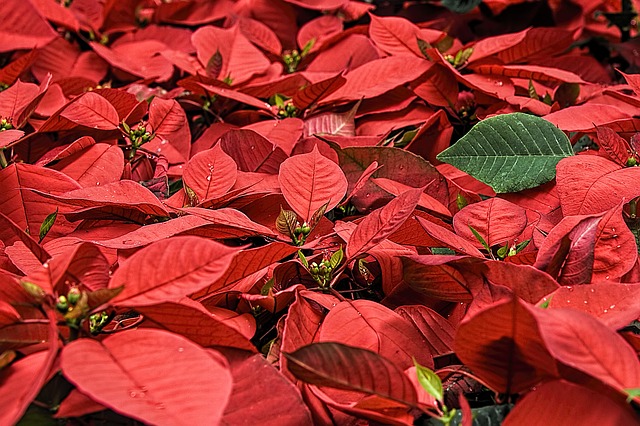
4. Poinsettia

Euphorbia pulcherrima is is a shrub native to Mexico where it is known as “Noche Buena”, meaning Christmas Eve. The Aztecs called it cuetlaxochitl (brilliant flower), and made a purple dye from its bracts and a fever medicine from its sap. The plant’s association with Christmas began in Mexico 400 years ago. According to legend a young girl who was too poor to provide a Christmas gift for the birth of Jesus was inspired by an angel to gather weeds from the roadside and place them at the church altar. Crimson “blossoms” appeared from the weeds and became beautiful poinsettias. The poinsettia plant was named after Joel Robert Poinsett, who was an American ambassador to Mexico around 1829. Poinsett was an amateur botanist and liked the plant so much that he sent several back to his home in South Carolina where he grew them in his greenhouse and introduced them in the US.

Poinsettias are popular Christmas decorations in North America and Europe, and the colours have expanded far beyond the traditional red to all shades of pink, salmon, apricot, yellow, cream, and white. While lovely at Christmas they are tough to keep as a houseplant given our dry indoor conditions. During the 1960s, plant breeders worked hard to make the poinsettia more colourful, compact and floriferous, which is what you see today. More information here.
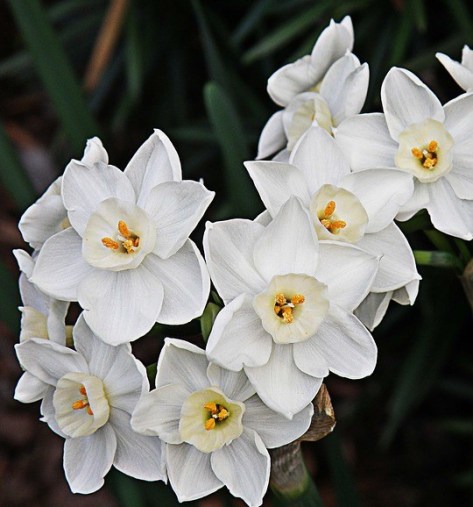
paperwhites

5. Paperwhites

Tazetta daffodil types – usually the paperwhite narcissus N. ‘Ziva’ – is specially prepared to flower in time for December 25. Cultivars of N. tazetta include ‘Paperwhite’, ‘Grand Soleil d’Or’ and ‘Ziva’, which are popularly used for forcing indoors.

If you want to try them out and have flowers all winter, here’s some information about how to do it. More here. (One word of warning: not everyone loves the perfume of paperwhites. One component of the paperwhites’ unmistakable scent is indole, and some people’s noses find this adds a fetid edge that’s really rather unpleasant. So you may want to sniff before you try.)

Paperwhites may grow tall and leggy, flopping over just as they begin to bloom. Tie a ribbon around the stems, about two thirds of the way up. According to a professor at Cornell University if you grow paperwhites in a 4 to 5% solution of alcohol it helps regulate the growth. Given that most liquors are 40% alcohol, this would be 1 part alcohol to 9 parts water. Don’t use beer or wine (just hard liquor – gin/vodka/whiskey/rum/tequila).
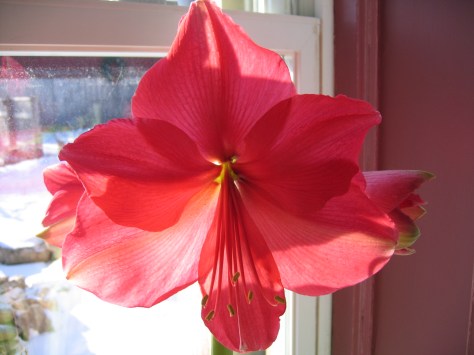
121-2135_IMG

6. Amaryllis

Everyone I know loves the amaryllis, and we closely associate them with the festive season. While the popular name is “amaryllis”, hippeastrum is generally accepted as being the correct name. It usually blooms around Christmas or into January or February in the Northern Hemisphere, then produces long green leaves that allow it to store energy for the following year.

Native to Peru and South Africa, amaryllis comes from the Greek word amarysso, which means “to sparkle.” Bulbs were brought to Europe in the 1700s and have been known to bloom for up to 75 years. Amaryllis flowers range from 4 to 10 inches in size, and can be either single or double in form. While the most popular colours are red and white, flowers may also be pink, salmon, apricot, rose or deep burgundy. Some varieties are bicolour such as purple and green, or picotee (having petals with a different edge colour). Lots of information here.

You can buy bulbs on their own or potted up. Select the largest bulbs available as they will produce more stalks and blooms the first year. Bulbs should be firm and dry with no signs of mold, decay or injury. It is common to see new growth (leaves, buds) emerging from bare or planted bulbs. Want to get your amaryllis to rebloom? Here’s some great advice.

CHRISTMAS FOOD

7. Cranberry

The cranberry (Vaccinium spp.) has been a festive favourite for hundreds of years, ever since Native Americans mashed up the fruit and mixed it with dried deer meat and fat to make pemmican (a concentrated mixture of fat and protein used as a nutritious food). In 1816, Dutch and German settlers in the New World planted the first ever “crane berry” crop (so-called for their blossom’s resemblance to the head and bill of a crane) on Cape Cod, using the fruit as a natural dye for rugs, blankets and clothing.

It was probably inevitable that the cranberry became linked with Christmas. With their bright red colour, they reflect the season perfectly. As early as the 1840s, people were stringing them with popcorn to make festive garlands for the Christmas tree. At the same time, with their winter availability and the fact they were slow to spoil, cranberries represented one of the few fruits that could be served fresh during the holidays. To settlers’ delight, it was discovered very early that the tartness of cranberry sauce helps cut the far and richness of such traditional holiday fare as pork, goose, duck and turkey, making it a perfect complement to festive dishes. Check out lots of lovely ways to use cranberries here.

Hope you enjoyed part 1 of the 12 Plants of Christmas.
Stay tuned until next Monday for our second segment.
What’s that Rattling in the Trees?

By Pat Freistatter, Master Gardener

beech-10835_640Have you ever wandered through a forest or a neighbourhood in the winter and hear rattling in the trees and looked up to see brown leaves still in a few of the trees? Why did those leaves stay on when all of the other trees lost their leaves? We know that, by definition, deciduous trees drop their leaves in the fall. Coniferous trees, such as pine (Pinus) and spruce (Picea), keep most of their needle-like leaves all year round with some needles dropping throughout the year. There are also trees that are coniferous trees with deciduous characteristics as they lose their leaves in the fall (e.g. larch and tamarack Larix). So how do we explain deciduous trees that retain their dead and brown leaves?

Marcescence

The term developed by scientists that is applied to trees that retain dead and drying leaves in the fall and winter is “marcescence”. A typical deciduous tree has an area at the base of each leaf (petiole) that contains thin walled cells that break easily and allow the leaf to drop. A marcescence leaf does not have this area.

Why do some deciduous trees experience marcescence?

Deciduous trees are thought to lose their leaves in the fall in an effort to reduce water loss and frost damage. So why do some deciduous trees retain their dead leaves?

The scientific evidence available to explain this phenomenon is limited. However there are several theories as to why the dead leaves are retained. The dead leaves may hide the leaf buds from being eaten by browsing animals such as deer and moose. Leaves left on trees also trap snow which results in more moisture being available at the base of the tree. The leaf buds on the tree may be protected from frost damage and drying by the leaves. Also when the leaves do finally drop in the spring, they will provide a source of nutrients that can give the tree a competitive advantage.

What trees are most likely to have marcescence leaves?

acorn-leaf-3704584_640Marcescence is more often seen on young trees and may disappear as the tree matures. It may also be seen only on a few branches or on the lower branches of taller trees. If the retained leaves are on a conical-shaped tree with bleached, light tan leaves, it’s probably an American beech (Fagus grandiflora). There are also many species of oak (Quercus), witch hazel (Hamamelis), and hornbeam (Carpinus) that retain leaves in the winter.
What is really interesting is that beech and oak tree species are closely related. Also the beech family of trees includes many evergreen species that do not grow in our area (e.g. Tanoaks – Notholithocarpus densiflorus). It may be that the beech and oak trees are still evolving to becoming fully deciduous trees from their evergreen past. Humm… who said plants are not interesting. Enjoy the rattle in the trees in your area!

More information on this topic can be found at:
What is a TanOak Tree April 4, 2018
Why do Some Leaves Persist on Beech and Oak Trees? Nov 22, 2010
About Marcescence March 20, 2017
Leaves that Don’t Leave Feb 9 2016

Taking Care of House Plants

By Judy Bernard, Master Gardener

An interesting question came to me through our website about caring for houseplants. This person had A LOT!

Whether you have 3 or 4 or 3 or 4 dozen, my suggestions will apply. A little research is needed to identify all of your plants. Once that is done, group them as to light, moisture, and fertilizer needs. Then you can care for them in groups instead of individuals.

What I’ve done is to make plant labels for all of my plants. I’ve stuck the labels into each pot. On the labels I’ve written the plant name, water requirements, light requirements, and fertilizer schedule. Once that is done, it is easy to put the plants where they will get the best environment for their growth and health. Grouping them with plants of similar needs will make their care easier.mini-cactus-755542_640

You can then make a watering schedule for the different groupings of plants. Also check the pots to make sure you’re not overwatering. One of the most common things people do is overwater. The symptoms of too much water are very similar to too little. You have to check the soil.  If it’s damp to the touch, you likely don’t need to water!

Space them so that there is good air circulation around the pots.

Some of the plants will need to be in a more humid environment than others. You can put a tray filled with stones for the pot to sit on and add some water to the stones. They will provide moisture to the plant without the roots being in the water.

These suggestions should help you to have healthy plants for a very long time.

Butterfly Gardening – Monarch Waystation #204

by Mary Jane Parker, Master Gardener

Since 2008, my garden has been a monarch waystation.  In the beginning, when we purchased the property, we had to have a new septic system put in.  Because we are in a floodplain and the ground was saturated with water, we had to go up with the weeping tiles.  This meant that we had a berm at the front of the property and that was the beginning of my butterfly garden.

cottagejune23 038 (2)

Since then I have experimented with all kinds of native plants and wildflowers . The scope and layout of the property was such that formal gardens would have been impossible. Not all plants that I have tried have been successful but some have been my perennial favourites.

Monarda has self-sown over the years as has Phlox paniculata of which I probably have every colour available. Many plants have a personal history. Helianthus maximiliani came from Cathy Forget’s garden in Indian River and Glade Mallow (Napaea dioica) came from Mike and Sue Dolbey’s garden in Young’s Point. Many plants have come from gardens visited on horticultural trips near and far. I always leave room for native milkweed to grow. I have tried cultivated varieties of milkweed and unfortunately, they are not hardy here. The creek at the back of the property has an abundance of Joe Pye Weed (Eupatorium maculatum) growing naturally and I can’t think of anything prettier than when they are in bloom with the different shades of pink dancing in the breeze. I have always left room for Queen Anne’s Lace (Daucus carota) which not only attracts monarchs but a variety of interesting bugs. In the spring the Korean Lilac (Syringa meyeri) blooms are always a butterfly magnet.

Being a waystation has been fun. There are over 20,000 registered waystations around the world, most in North America, and although there are guidelines to follow, it does not appear that there are any hard and fast rules. The whole point is simply to provide habitat for monarchs and in doing so, you have a place that also attracts other butterflies, birds, and pollinators. Visit www.monarchwatch.org for more info.

houseonriver 044 (2)

Shady Gardens

by Sharleen Pratt, Master Gardener in Training

Now that the colder weather has arrived and the days are shorter, it’s time to dream about next year and possibly plan a new garden. Do you despair at the challenges surrounding a shade garden? We can enjoy the cooling effects of the shade and experience a garden that regales all of the senses. When choosing plants, consider interesting foliage and texture rather than solely depending on flower colour.

If you are planting under mature trees, especially non-native maples you must always remember that those vigorous, feeder roots quickly out-compete new transplants for water and nutrients. Every fall add several layers of shredded leaves as well as compost for additional nutrients. Remember to water often the first year.

There are many wonderful bulbs that would give you that burst of colour in the early spring before the trees get their leaves. The sun coming through the branches in early spring is perfect for encouraging Daffodil (Narcissus hybrids), Grape Hyacinth (Muscari botryoides) and Siberian Squill (Scilla Siberica) to flower before the tree canopy is in full leaf.

Hosta (Plantain Lily) are a must have in a shade garden and provides variations in leaf size, shape and colour. This perennial has hundreds of species and thousands of cultivars and they are tough, reliable plants. Along with the Hosta, you might consider Bleeding Heart (Lamprocapnos spectabilis). Their flowers hang down like dangling hearts and are a real source of delight. The dryer soil under a canopy of trees would quicken their disappearance shortly after flowering and would work well under the emerging large leaves of the Hostas. Another old-fashioned perennial is the Heartleaf Bergenia (Bergenia cordifolia) that has large waxy, heart shaped leaves. It also has some fall interest when the leaves take on a reddish winter hue.IMG_4094

Lungwort (Pulmonaria) are also shade tolerant and their delicately patterned foliage draws the eye throughout the summer. There are several species, some of which are variegated which can add texture and colour to the shade garden. Another perennial to consider is the Brunnera ‘Jack Frost’. This plant was named as the Plant of the Year for 2012. It bears panicles of light blue flowers held above silver leaves with green veins and edges. Once established, they can be fairly drought tolerant. An overlooked plant is the Foamflower (Tiarella cordifolia). It is a native groundcover and is happy in both full to light shade. It bears tall racemes of delicate white or pale pink flowers for six weeks in early summer. They grow best in moist, humus-rich woodland soil.

To give the shady garden some texture and shape, look at some of the broadleaf evergreen shrubs. The Oregon Grape Holly (Mahonia aquifolium) prefers moist, well-drained, acid soil. It produces very fragrant yellow racemes in mid-spring, followed by globose, dark blue fruit. Another broadleaf evergreen for shade is the Rainbow Leucothoe (Leucothoe fontanesiana ‘Rainbow’) a member of the Heath family with white urn-shaped flowers.

Take a close look at your growing conditions and plant accordingly. Put a bench under a tree and once established, the shade garden will be a wonderful oasis to roam and sit with a cup of tea and take in all the many senses surrounding you.

A good article that lists many perennials and groundcovers for a shade garden can be found at Landscape Ontario.

My Orchid Had a Baby!

by Judy Bernard, Master Gardener

A year ago last summer I bought a new phalaenopsis orchid to go in my renovated kitchen. It had 2 stems of beautiful white flowers with a fuchsia centre. Eventually the flowers dropped off, but the stems remained green and healthy. Knowing there was good potential for the nodes remaining on the stem to start to produce another scape of flowers, I checked it carefully and was rewarded with a node budding out. It had leaves!judy's orchid

Looking up on Google, I learned that one of the ways an orchid will propagate is by producing a baby in its stem. These babies are called Kiekis. I had to wait for several months until the baby grew 3 or 4 roots and they were 8-10cm long before I could remove it and plant it.

Although it may be a sign that the mother orchid plant is under stress, this mother always looked healthy with dark glossy leaves. While it was nurturing its baby, the mother produced another scape on the other stem with a spray of 9 flowers.

Finally the day had come. I also learned that the best way to help the baby along was to plant it with the mother. The mother will regulate the growing medium around their roots and help the baby along. The mother’s pot was too small. So I purchased fresh bark for the orchids and a larger container. Planted them. Watered them.

They seem to be thriving!

Link:  All about Keikis

Spring Bulbs – Beyond Daffodils and Tulips

by Suzanne Seryck, Master Gardener

October and November is a great time to plant spring bulbs – these are the bulbs that will extend the colour in your garden,  often blooming when there is still snow on the ground. These bulbs – the most well-known being daffodils and tulips – bloom from March or April until late spring. They are incredibly low maintenance, you plant them once and then forget about them, with the exception of daffodils which often need dividing every 5 years or so. However the reward outweighs the hardship of dividing them, a clump of 5 can easily multiply to 40 or 50.

Daffodils and tulips are, by far, the most recognized spring bulbs, coming in many different colours, sizes and bloom times. However if you look beyond, you start to notice the many other different spring bulbs available.

daffodils_EM

I live in Lindsay and like many cities, if you drive around in the spring, you will notice the many blue lawns. These are actually either glory of the snow (Chionodoxa spp.), or siberian squill (Scilla), tiny blue bulbs that naturalize in both your lawn and your flower beds. The difference between the two depends on the direction that the flower head faces, but either are perfect in the lawn. As well as blue they also come in lavender, pink or white.

Squill_EM

Snowdrops (Galanthus), which are among the earliest blooming spring bulbs will also naturalize in your lawn or flower beds, however in my garden, they are slower to multiply. They can be either single or double with a small white or snow colored flower.
I plant a lot of grape hyacinth or muscari in my garden, however I find them too large for my lawn and instead plant them in the perennial beds. They are also great under shrubs, trees or hedges. They come in blue, violet, pink and white and multiply easily, quickly spreading to form large clumps. Blue muscari works very well when paired with daffodils and can be planted in the same hole. Bulbs are typically planted at a depth determined by the size of the bulbs, allowing you to layer the muscari on top of the daffodils.

Crocuses whilst beautiful in their many different colours seem to be especially appetizing to squirrels. I planted orange crocuses two years ago and out of the twenty crocuses I planted, I may have seen one actually bloom, I was left with either holes where the bulbs used to be, or they would be nipped off when they were about 1 inch tall. I still plant them, but I make sure to plant a daffodil in the same hole, squirrels do not like the smell of daffodils and tend to stay away.

Other spring bulbs I have planted in my gardens include anemone, oxalis adenophylla, which is a very pretty pink colour, hyacinths, winter aconites, a very cheery shade of buttercup yellow, iris hollandica and of course English bluebells. I have to admit I do have a lot of daffodils and tulips in my garden from my early gardening days, but I am now starting to look beyond and plant the many different spring bulbs now available.hyacinths_EMHint: If you’re looking for ideas for something different check out this GardenMaking magazine article with ideas for 25 unique bulbs for your garden.


The Myth of Fragile Roots Planting Trees and Shrubs

By Emma Murphy, Master Gardener

(This blog entry builds on last week’s excellent post by Sue Flinders-Adams)

“When you transplant, try not to disturb the roots, just take the whole pot-shaped lump of soil/roots and pop it into its new home.” How many people have heard this story when purchasing a new tree or shrub from a nursery?

We take a shrub out of its container and see white fragile-looking roots and instinctively we don’t want to damage them or add to transplant shock. We know that healthy growth in a shrub is dependent on a good root system, so why would we mutilate or injure them?

nottoopotboundbutstill

Are Roots Really That Fragile?

Well, it turns out that those roots are not as fragile as we think. While you should take care with when transplanting seedlings, especially annual flowers and vegetables, woody perennials, shrubs, and trees all benefit from a more vigorous approach, according to Linda Chalker-Scott, Ph.D., Extension Horticulturist and Associate Professor at Washington State University and one of the ‘Garden Professors’ that I admire for their scientifically-based knowledge of horticulture.

Garden Professors on Facebook or Garden Professors Website

When we purchase gallon-sized pots in the nursery, the plants are often pot-bound, the often suffered from circled root systems, which if not corrected become even more problematic once the shrub is in the ground. Eventually they become girdling roots, which will lead to the early death of otherwise healthy trees and shrubs, as you see below.

timhamilton

(photo courtesy of Tim Hamilton)

Think of it this way – roots respond to respond to pruning in much the same way as the crown—it stimulates new growth. If you prune the roots when you transplant, especially those that are excessively long or misshapen, the plant will respond by generating new, flexible roots that help them establish in the landscape. The best way to do this is by root-washing the shrub – taking it out of the pot, putting it in a wheelbarrow or other container, and washing off all the media so that you can see what the root system looks like.

cutcrossingandgirdlingroots

Two Critical Things to Do

  1. Prune the roots in a root-bound shrub or tree to avoid future problems
  2. Remove the media (soil) that shrub or tree came in

The second suggestion relates to the soil that comes with your tree or shrub. I always thought you just put it right in the ground, but evidence suggests that (generally) the container media is a soil-less mix with a large proportion of organic matter and pumice. It is best to remove this media as part of your root inspection, and use it as topdressing after planting, followed by mulch.

If you put the media in with your new plant, the material will inhibit root development outside the planting hole. It will also lose water more rapidly than the surrounding native soil (because of its porous nature), resulting in increased water stress to your new transplant.

Watering is Essential

As with all transplanting, regular and deep watering is needed to keep the new shrubs or trees happy while they establish their new root systems. The fall is a great time to plant trees and shrubs so happy planting!

Want To See How It’s Done?

Doug Gifford of Michigan recently posted to the Garden Professors Facebook page about his root washing, root-pruning, and planting of shrubs. You can check out the link here. Credit to Doug for most of the photos on this blog post.

shookoutandwet

A Special Note

If you plant a shrub or tree already in full leaf they will be more stressed than those that are dormant. Dormant planting is better as all resources go towards root establishment. You may see leaf damage or even death in the short run. But as long as the roots are kept cool and moist throughout the transplanting process, and as long as you keep the area mulched and watered, it should be fine in the long run.

Check out more detail on this issue in this blog post. It talks about the four things that result in landscape planting failures and how changes in the nursery industry have resulted in more problems with roots. Many of these issues also apply to balled and burlapped (B&B) trees – more information here.

This year, Dr. Chalker-Scott extended her experiment to perennials, as talked about in this blog entry  Three months later she revisited the site – here are the results.

For more information on other horticultural myths check out these pages. Even better? Spread the word to others 😊
Horticultural Myths – Dr. Linda Chalker-Scott
Garden Myths (Robert Pavlis’ site – he is based in Guelph, Ontario)

Planting to Encourage Proper Root Growth and Branching

By Sue Flinders-Adams, Master Gardener

Here are a few tips to ensure that the new shrub or tree you just brought home will thrive and grow to its full potential.

1. Before planting, soak the plant in the pot, in a pail of water for a few hours or even overnight to hydrate the roots.

2. Carefully remove plant from the pot. If it doesn’t come out easily gently press on the sides so that the roots will come away from the pot, and tap on the bottom.

3. There are usually roots circling the pot – gently coax these roots away from the root ball to encourage outward growth. If roots are left in the ‘circling’ position, they will continue to grow in this direction, circling the plant and even girdling the trunk of the tree in 10 or 15 years.flinders pic 1

4. The picture shows the roots that have been spread out in the very large hole. Partially cover the roots to hold them in place and water thoroughly with transplant fertilizer, according to the directions. Fill in the hole with the surrounding soil. Top dress with an inch or two of composted manure, and then 3 inches of mulch. Prune off any dead branches.flinders pic 2

5. Branches are often cramped and a little twisted from shipping. Gently pull them away to a better positon and secure with plant supports (pictured). In a couple of weeks you can take the supports away and the branches will continue to grow in that direction.

6. flinders pic 3Three weeks later, the Black Lace Elder is looking very happy. It is October which explains the lack of new growth.

The Plant Lover’s Guide to Salvias (Book Review)

By:  Mary Jane Parker, Master Gardener

If you care deeply about natural gardening and attracting bees, insects and hummingbirds to your garden, then salvias should be one of your go-to plants. They have wonderful flowers and fragrant leaves and for me, they bloom almost all summer.

In this very readable book, The Plant Lover’s Guide to Salvias, John Whittlesey outlines designing with salvia plants in different climate zones. We learn that salvias are generally hot climate plants and many have low water requirements but some of the perennial ones can be treated as annuals in our climate. Some are rated for zones close to ours and will survive here as perennials. I have had Salvia glutinosa growing here for many years and the book rates that one only a US zone 6a. Culinary sage (Salvia officinalis) has overwintered for me also for a number of years.

hummingbird 1851489_640

The author next goes through and discusses 150 species and exceptional hybrids, their country of origin and specific cultural practices for each and any notable characteristics such as a strong hummingbird attractor.

Finally, he discusses general cultural techniques and then provides a listing of sources for plants and seed. After having read the book and descriptions of different salvia species, I have ended up with a two-page list of interesting species I wish to try.

The Peterborough Horticultural Society has this book available in their lending library or you can purchase from Timber Press.