Category Archives: winter

Winter Observations (in my Garden and Others)

By Laura Gardner, Master Gardener

That White Stuff has a Function

When a deciduous tree or shrub doesn’t have its foliage, other parts of the plant such as the stems and branches are more noticeable. For example, some species like this Manitoba Maple (Acer negundo) have a noticeable waxy cuticle or bloom on its young stems. This coating or layer acts as a defense mechanism that protects the plant from moisture loss, ultraviolet radiation, dust, fungi, pathogens, and insects. Concerning the latter, researchers found that a certain beetle species could temporarily lose its grip after its “tarsal setae” was covered with the wax stem crystals from A. negundo.[i] Research has also shown that A. negundo is able to regenerate the wax within only a few hours after its removal.[ii]

Waxy Cuticle of a Young Manitoba Maple (Acer negundo)

Dandelions in February?

I don’t remember the last time I saw a Dandelion (Taraxacum officinale) in my garden bloom so early in the year. Coltsfoot (Tussilago farfara) are usually the first yellow flowered plants to appear, but this one is clearly a Dandelion. From what I’ve read, it isn’t all that unusual. A researcher at the University of Western observed that “if there is a January or February thaw that lasts for at least a week, then flowering and seed production can occur.”[iii] This week’s mild temperatures caused the snow to recede by my walkway, unveiling a yellow bloom. It may be considered a “day-neutral” plant, but some also view it as a “short-day” species. “Day-neutral” species do not require a specific photoperiod to flower and “short-day” species flower with day lengths less than 12 hours.[iv] Its non-dormant seeds are also able to germinate at temperatures as low as 5 degrees Celsius.[v] In winter, they lie close to the ground as a basal rosette with the crown drawn towards the ground for maximum protection from the elements.[vi] More developed plants will have large energy stores in their tap roots to fuel more vegetative and flower growth in the spring.

Closeup of Dandelion

No Fall Cleanup

Last summer I planted a mass of Annual Sunflowers (Helianthus annus). Ideally, the dead plants would have been left completely intact in the fall to overwinter, but the flower/seed heads were so heavy that the stems had broken under the weight. I cut the pithy stems and seed heads and left them in a pile nearby for wildlife. The chipmunks were quite appreciative. Come spring, the old stems will remain for stem nesting bees such as Megachillidae species (e.g. Small Mason Bees and Leaf-Cutter Bees). Approximately 30% of our native bees require above-ground nesting sites. Rather than including commercial “bee hotels” in my garden, I am aiming for a constant cycle of old and new plant stems. New sunflowers will be planted around the old stems to eventually become new nest sites. Providing a wide range of different sized hollow and pithy-stemmed plants will also attract a variety of different bees. Some hollow-stemmed species in my garden include Milkweed (Asclepias), Bee Balm (Monarda), Cup Plant (Silphium), Anise Hyssop (Agastache), and Joe Pye Weed (Eutrochium). Some pithy-stemmed species include Ironweed (Vernonia), Aster (Symphyotrichum), Goldenrod (Solidago), and Coneflower (Echinacea).[vii]

An Arrangement of Dead Plant Stems for Nesting Bees

A Dying Maple

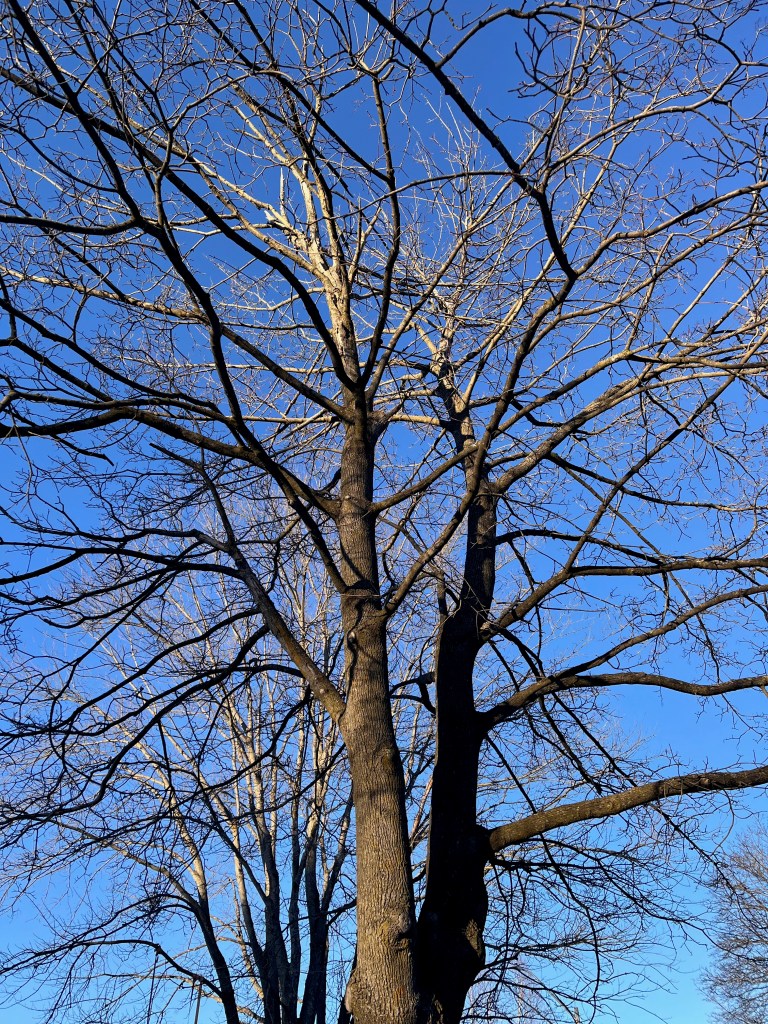
Last summer, I noticed that a Norway Maple (Acer platanoides) tree in my front yard was showing dieback of the canopy in the centre. I can only guess, but I suspect that root girdling was the main cause. Environmental stresses such as drought and road salt could only have compounded the situation. Another strike against this tree is that it has weak co-dominant stems. I contacted the city to have them check it out. I came home to see the dreaded pink spot spray-painted on the trunk—it is marked to come down. I feel mixed emotions—on one hand, it is an invasive species that isn’t the best for our ecosystem but on the other hand, it is still sad to see any living tree come down—especially one that wasn’t very old. If it could remain safely standing as a snag, that would be beneficial for wildlife. A snag is a dead tree that is left to breakdown naturally. It serves as a nesting site for birds and other wildlife and the insects that reside in them serve as food for wildlife, fungi, and other microorganisms.
A Dying Maple

A Neighbour’s Snag

What’s going on in your garden?


[i] Gorb, E.V. and Gorb, S.N. (2002), Attachment ability of the beetle Chrysolina fastuosa on various plant surfaces. Entomologia Experimentalis et Applicata, 105: 13-28. https://doi.org/10.1046/j.1570-7458.2002.01028.x

[ii] Tomaszewski, Dominik & Zieliński, Jerzy. (2014). Sequences of epicuticular wax structures along stems in four selected tree species. Biodiversity: Research and Conservation. 35. 9-14. 10.2478/biorc-2014-0014.

[iii] S. M. Stewart-Wade, S. Neumann, L. L. Collins, and G. J. Boland. 2002. The biology of Canadian weeds. 117. Taraxacum officinale G. H. Weber ex Wiggers. Canadian Journal of Plant Science. 82(4). p. 835. https://doi.org/10.4141/P01-010

[iv] Ibid.

[v] Ibid., p.837.

[vi] Ibid., p. 832.

[vii] Roos, Debbie. Provide Nesting Habitat for Native Bees Through Plant Stems in Your Garden. NC State Extension. Online: go.ncsu.edu/readext?857307

Winter Protection for Your Garden

By Christine Freeburn, Master Gardener

The new year arrived with not a speck of snow on the ground and although the ground was frozen and well watered from rainfall, that lack of snow can cause damage in your gardens. Snow, beautiful snow is a great insulator for your perennial beds. I often throw extra snow on things like my rhododendron or hibiscus as I am shoveling sidewalks. Mulch or leaves will also insulate the ground so it is always good to mulch up your garden in the fall, because we can’t depend on snowfall through the cold winter months.

February often brings a thaw as well as the ice and storms that can do damage to trees and flowering shrubs. Cold temperatures, biting winds and the strong winter sun can bleach or dry evergreens when they are not protected by snow. Wrapping in burlap will not save plants from the cold, but it will protect them from wind and sun.

Sunscald can happen when the sun shines brightly on cold winter days, raising the temperature on tree bark which can trigger it to start to grow. When the sun sets and temperatures drop, bark cells in the cambium layer are killed. The cambium layer is just below the tree bark where nutrients travel between roots and leaves. Sunscald will cause scarring or cankers on the trunk and tends to be on the south side of the tree. It usually will not kill a tree but it can put stress on it. It can be harmful on young trees whose bark is thinner. Wrapping your young tree trunk with white tree guards can help with this. Tree guards will also help keep rabbits and other creatures from chewing the bark. Remember to remove this guard in spring.

Dieback can happen on flowering shrubs during a cold dry period. Flower buds that set in the fall can also be killed off from the cold. Plants like forsythia and rhododendron may need to be planted in protected areas with good snow protection and without wind so they produce flowers.  Other shrubs like hydrangea that are not for our zone 5b gardens may not flower in our area because they set their buds in fall and when we get those cold winter days and nights, the buds die. Pruning in fall can encourage growth when the plant should be beginning to rest for winter, so don’t prune too late into fall.

Frost heaving happens when soil freezes and thaws, and when there is not enough snow cover to keep the ground insulated. The semi evergreen coralbell (heuchera) can suffer and die if they heave. Be sure these perennials are well watered and planted into the ground well before freeze up.

When the freezing temperatures and snow arrives, animals like rabbits, mice, voles and deer often feed on the flowering shrubs and trees in your garden, eating bark, twigs and flower buds. I have had rabbits eat euonymus, bridal wreath spirea, yews and willow trees. This winter I have put up burlap fencing around some of my bushes so rabbits can’t “prune” them. I want snow, but I hope it doesn’t pile up too high so the little varmints can just hop over!

References

https://www.gardenmyths.com/sunscald-trees-prevention

extension.umn.edu/planting-and-growing-guides/protecting-trees-and-shrubs-winter

laidbackgardener.blog/2023/12/13/how-will-this-mild-weather-affect-our-plants

www.gov.mb.ca/agriculture/crops/plant-diseases/print,winter-sunscald-frost-cracking

tidcf.nrcan.gc.ca/en/diseases/factsheet/1000135

Embracing the Chill: The Secret Dance of Vernalization

By Mary-Jane Pilgrim, Master Gardener

In the heart of downtown Selwyn where a heavy winter blanket covers my gardens, a magical process is unfolding in the underworld of some of my plants.

In the heart of my living room, I’m actively crossing off the days until Spring.

But, back to the plants. To monitor the seasonal progression and to time their reproductive development, plants must be able to sense and remember environmental cues such as temperature. The process by which plants use a prolonged cold period – winter – to promote flowering is known as vernalization.

Vernalization is the botanical equivalent of a winter sleepover, but instead of cozying up with blankets and hot cocoa, plants snuggle up to the cold. This process is essential for plants like winter wheat, rye, and most spring flowering bulbs in our region. Basically it is a cold period where specific plants not only go dormant (they hit the pause button until the weather warms) but must be exposed to a certain number of days with minimum temperatures or they will not grow properly and flower. It acts as a sort of safety mechanism to ensure that the growing and blooming process takes place at the correct time.

Picture this: a seed or bulb lies dormant in the frozen soil, patiently waiting for winter’s icy touch. As the temperature drops, the plant detects the chill and starts a biochemical countdown for a certain number of days. It’s as if the cold serves as a bell ringer, signaling that it’s time to prepare for the grand spectacle of spring. It’s amazing that even in the harshest conditions, nature has its own way of orchestrating the grand spectacle of life.

So, in my living room I continue to mark the winter days off one by one, reminding myself that the bulbs I planted in October need a cold cold winter to make my garden spring to life. It will definitely be worth it!

A Guide for Ontario Gardeners in December

By Mary-Jane Pilgrim, Master Gardener

As the snow blankets our gardens in Ontario, many might assume it’s time to hang up the gardening gloves until spring. However, seasoned gardeners know that December can be a time of indoor/outdoor preparation for the upcoming growing season.

One key activity for this month is winter mulching. While it may seem counterintuitive to spread mulch in the cold, it’s a crucial step to protect your plants from the harsh Canadian winter. A thick layer of mulch acts as a cozy blanket, shielding the soil and plant roots from extreme temperature fluctuations. Thankfully in our region, Mother Nature does this job for us in the form of snow!

For those dreaming of vibrant spring blooms, December is the ideal time to start forcing bulbs indoors. Tulips, daffodils, and hyacinths can be coaxed into early flowering by providing them with a period of cold storage, mimicking the winter chill they would experience outdoors.

Don’t forget about your compost! While your outdoor compost pile may slow down in the winter, it’s still a valuable resource. If you don’t do this already, consider continuing your indoor composting with kitchen scraps to keep the nutrient-rich compost coming, even in the colder months. People living in the city will probably be already doing this thanks to the new green bin program, but for others living outside of the city limits, sometimes the outdoor compost pile seems like it’s just too far to venture to in the cold. However, a little bit of effort now will divert a lot of food waste from the landfill.

Lastly, embrace the festive spirit by incorporating evergreen plants into your outdoor decor. Hollies, spruces, and winterberry bushes add a touch of green to the winter landscape and can be adorned with festive lights or ornaments.

December in Ontario might be chilly, but for gardeners, it’s a time of planning, protecting, and finding joy in the small wonders that the winter garden has to offer. So, bundle up, grab your gardening tools, and let the December gardening adventures begin!

Winter Greens to Brighten our Homes

By Christine Freeburn, Master Gardener

When we are using plant nomenclature, there are a couple family names for the evergreens we love and include in our winter decorating.  Phinaceae includes hemlock (Tsuga), spruce (Picea), pine (Pinus) and fir (Abies).  Cedar (Thuja) and cypress are in the Cupressaceae family.

One good way to identify evergreens is to look at the needle arrangement. Pine needles are bunched together in two, three or five groupings rather than single needles like hemlock or balsam. Spruce needles are four sided, so when you roll them in your fingers you can feel the sides.

Cone size and shape also helps with evergreen identification. PIne cones hang down as do spruce cones, but spruce cones are flexible while pine cones are stiff and more woody. Balsam cones grow upwards.

Native Evergreens

White Pine (Pinus strobus) has 5 needles bunched together which can be up to 15 cm long. They give the appearance of being wispy and soft. These boughs flow over your container, giving it shape.

Red Pine (Pinus resinosa ) has needles in bunches of two that will snap if bent. Needles tend to be stiffer than white pine and are longer. These branches can be the “bones”  of your container, including the centre piece.

Ontario Cedar (Thuja occidentalis) has a lighter underside to the fan-like branches which give a pop of lime green colour to your display.  It also drapes nicely in your arrangement.

Balsam Fir (Abies balsamea) has smooth, flat needles that are soft and aromatic. Balsam are the most popular tree for live Christmas trees because of the soft needles and bushy appearance. Adding another texture to your pines and cedar gives more dimension to your creation.

Hemlock (Tsuga canadensis) is another native tree that is similar to balsam with flat needles that have a white stripe on the underside. Hemlock needles are shorter than balsam and have stalks that the needles form on. They have a lighter coloured underside.

Spruce needles are square and prickly growing all the way around the twig. Black spruce, white spruce & red spruce are native while Norway Spruce (Picea abies) are not..White spruce (Picea glauca) needles are much longer than black spruce (Picea mariana) needles.Check out this article from the Toronto Master Gardeners on the difference between white and black spruce.

Non Native Evergreens

Scotch Pine (Pinus sylvestris) is easy to spot along roadsides in the area.  Needles are grouped in twos, slightly twisty, sharp and 4-8 cm long. It was one of the first trees to be brought to Canada from Europe. It was imported to help with soil erosion in the early 1900s. This tree is listed on the Ontario Invasive Species list. Its sturdy branches make it another good choice for the “bones” of your container if you don’t use red pine.

Natural additions like pine cones or dried flowers like hydrangea, sedum, sumac or allium add to the natural look. Coloured ornaments can add a pop of colour, but the textures and colours of the greens are the true stars of an arrangement.

There are boughs that you can purchase that you cannot find in the wild. BC cedar has beautiful drapey branches. Incense cedar has lovely seed pods that you won’t want to put in your indoor displays as they will burst when the warmth hits them. Carolina Sapphire Cypress, Noble Fir and Leyland Cypress will add different shades and textures. Many of us cut from ditches and our own properties. Remember if you are out cutting to do it responsibly and respect private property.

Enjoy the green of the season….along with the white of the sparkling snow.

References

https://ontariotrees.com

Botanica North America by Marjorie Harris

GT Trees of Canada and North America by Alan Mitchell

Grateful for the Garden: Reflecting on the Past Year and Looking Forward to Spring

By Mary-Jane Pilgrim, Master Gardener

As the final days of the year tick past and the garden gets ready for winter, it’s the perfect time to reflect on the lessons that the past gardening season have meant to me. From the first tentative sprouts of spring to the vibrant foliage of autumn, many moments in the garden have been a source of inspiration and gratitude.

In the quiet solitude of my gardens, I find peace and beauty. The garden has tried to teach me patience as I witnessed the transformation of tiny shoots into flourishing plants, reminding me that growth takes time, both in nature and in life. Each new plant, bulb, tree and shrub has been a learning experience as I determine how best to care for them. Watering, weeding, watching things grow – it’s a simple kind of satisfaction. Success and failure are both reflected in the final layout at the end of the gardening season.

Fall brings a slow-down as the garden prepares for the coldest months of the year; dormancy for some, death for others. I’m grateful for the colours & textures in the autumn garden and the resiliency that many plants display.

As winter settles in, I’m grateful for the quiet months too. The garden might be sleeping, but it’s not forgotten. It’s there, waiting for the days to get longer and the sun to warm up the soil. I’m grateful for open spaces, hills, fields and parks nearby where I can wander through trees and rocks throughout this season, sometimes regardless of the temperature. I do have to admit that I’m not always a fan of the ultra cold, though!

Looking forward to spring, it’s like a natural reset button. New shoots, new colors – everything waking up again. Planning for the next season is already on my mind. What to plant, where to plant it – it’s the anticipation of starting the cycle all over again.

In this simple plot of earth that I call home, there’s a lot to be thankful for. The lessons, the wonder, the beauty – it’s all there, waiting for the next round. Here’s to another year of growing, learning, and being grateful for what the garden brings.

Oh no! My Spring Bulbs are Flowering, and it’s Starting to Snow!

By Mary-Jane Pilgrim, Master Gardener

Spring bulbs are hardy plants that are adapted to survive even in cold and unpredictable weather conditions. While a late frost or spring snow may cause damage to the leaves and flowers of spring bulbs, it is unlikely to kill them altogether.

One of the main reasons why spring bulbs can survive a late frost or spring snow is their ability to go dormant during periods of extreme cold or drought. During dormancy, the bulbs store energy and nutrients in their underground structures, allowing them to survive until conditions improve.

Spring bulbs have a unique growth habit that enables them to emerge from the soil before the last frost date. They grow and develop quickly, taking advantage of the early spring sun and warmth to build up their energy reserves. By the time a late frost or spring snow arrives, most of the growth and development has already taken place, minimizing the impact of the cold on the plant. You may lose any blooms at the time of the adverse weather, but new blooms will likely wait until the weather changes again, and it will!

Snowdrops, hyacinths and some daffodils seem to be particularly resistant to cold, wet spring precipitation. Tulips and lilies are a little more prone to damage once they’ve formed buds or blooms. If a hard freeze or extended cold period is in the forecast, it may be wise to cover budding or flowering tulips and lilies to ensure that you get to enjoy their blooms this year. Make sure that you uncover them if daytime temps rise above freezing. If they’re not budding or blooming, no covering is necessary as the foliage is quite robust.

When planting spring bulbs in the fall, make sure that they are planted deep enough in the soil to avoid the worst effects of a late frost or spring snow. This means that even if the surface of the soil is frozen or covered in snow, the bulbs remain insulated and protected underground.

If frost damage does occur, don’t cut off the leaves as bulbs need even damaged foliage to feed the bulb for next year’s blooms!

In conclusion, while a late frost or spring snow may cause some damage to spring bulbs, they are unlikely to be killed off completely. These hardy plants have developed a range of adaptations to cope with the unpredictable and often harsh conditions of spring, allowing them to survive and thrive year after year.

Winter Weeds

By Laura Gardner, Master Gardener

At this time of year there are two kinds of easily identifiable weeds: “winter annuals” and “biennials.” Biennials begin their lifecycle by germinating from seed in the first growing season. Winter annuals germinate from seed in the fall. They both form a vegetative basal rosette that lies in a suspended state over winter. The rosette protects what is known as the shoot apical meristem—stem cells of the plant that are responsible for the generation of shoots and leaves later in the spring. They will then grow more upright, flower, produce seeds, and then die, finishing their lifecycle. Some species may function as either a winter annual or a summer annual. Summer annuals germinate from seed in the spring and complete their life cycle that same year. One of the challenges of managing summer annuals is that they can reproduce more than once a year, potentially contributing to a large seed bank. Biennials generally take two years to complete their lifecycles. However, some so called biennial species may extend into subsequent growing seasons and be more like perennials if they have sufficient root energy stores and have not had the opportunity to flower and go to seed. This can happen if you do not remove at least the root crown of the plant when weeding.

In the Peterborough Public Library’s native plant garden, I took some photographs of some basal rosettes with the idea of identifying them later at home. Coincidentally, a copy of a book that I had on order for more than a year finally arrived: Weeds of the Northeast, 2nd Edition, by Joseph C. Neal et al. (Cornell University Press). In addition to the US Northeastern, Mid-Atlantic, and Upper Midwestern states, the book includes Southern Canada. In the 26 years since the first edition was published in 1997, more than 200 new species have been added. Many of these new species are invasive plants from the horticultural trade [e.g. Common Periwinkle (Vinca minor)]. It is strictly an identification guide and so if you are looking for weed management guidance, this type of information will need to be found elsewhere.

The book has a dichotomous key that is a bit different from others. It relies on identifying the plants through their vegetative parts such as leaf lobes, leaf arrangement, leaf margins, leaf hairs, etc., but not on their floral traits. It also does not lead you to an immediate single species identification, but rather enables you to compare your plant with several possible matches through their photos and descriptions. The photos are particularly valuable for identification purposes—showing plants in various stages of life—from seedling to maturity. The glossary is helpful for those that are unfamiliar with some of the botanical terms. This is a great resource for anyone to use to confirm the findings of a plant identification app.

Here are some of the weeds I found and identified using this guidebook:

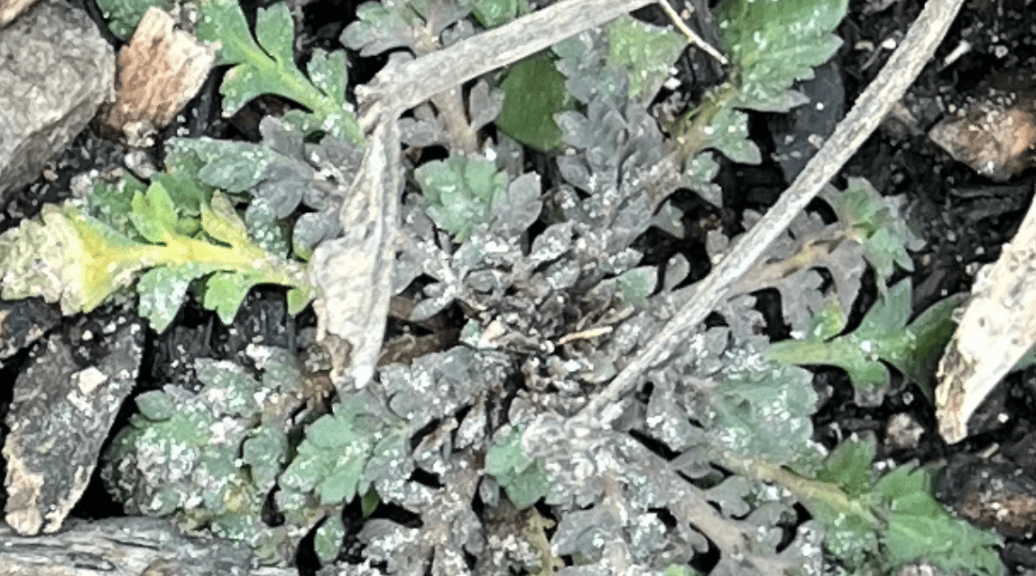
Shepherd’s Purse (Capsella bursa-pastoris): A summer or winter annual.

Shepherd’s Purse (Capsella bursa-pastoris)

Field Pennycress (Thlaspi arvense): A Summer or Winter Annual

Field Pennycress (Thlaspi arvense)

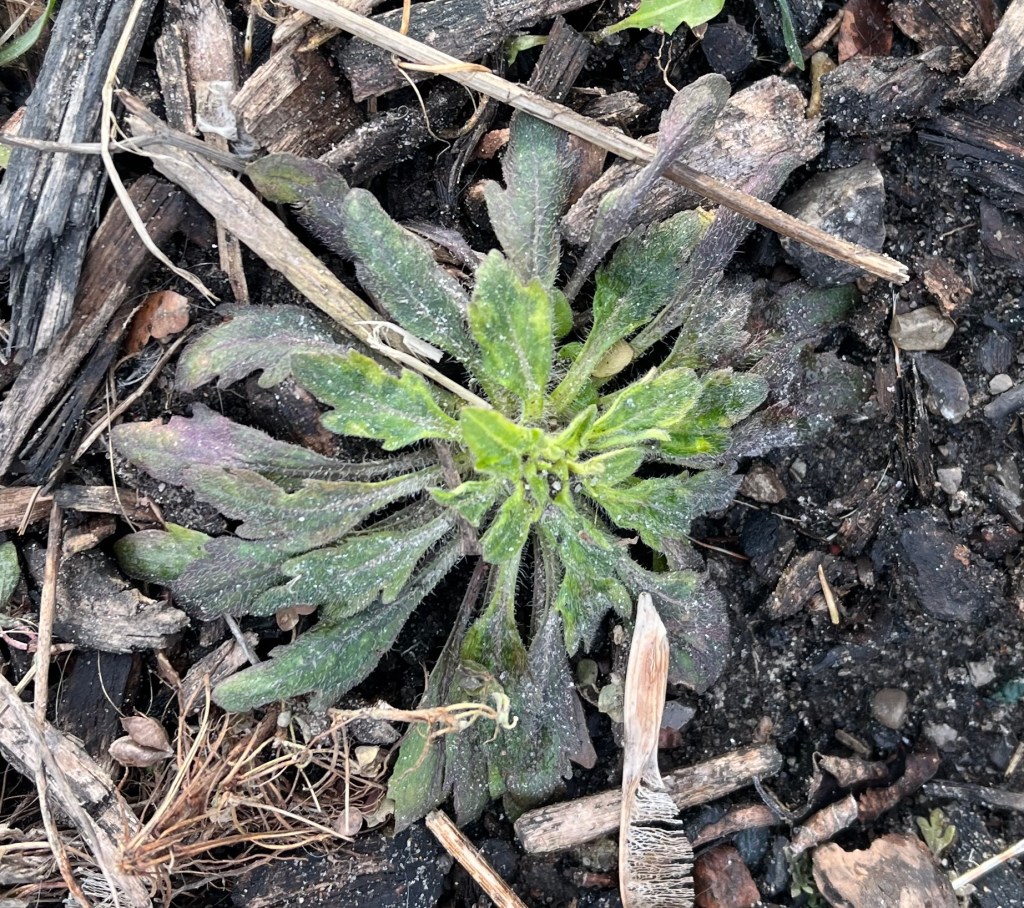
Canada Horseweed (Erigeron canadensis): Summer or Winter Annual

Canada Horseweed (Erigeron canadensis)

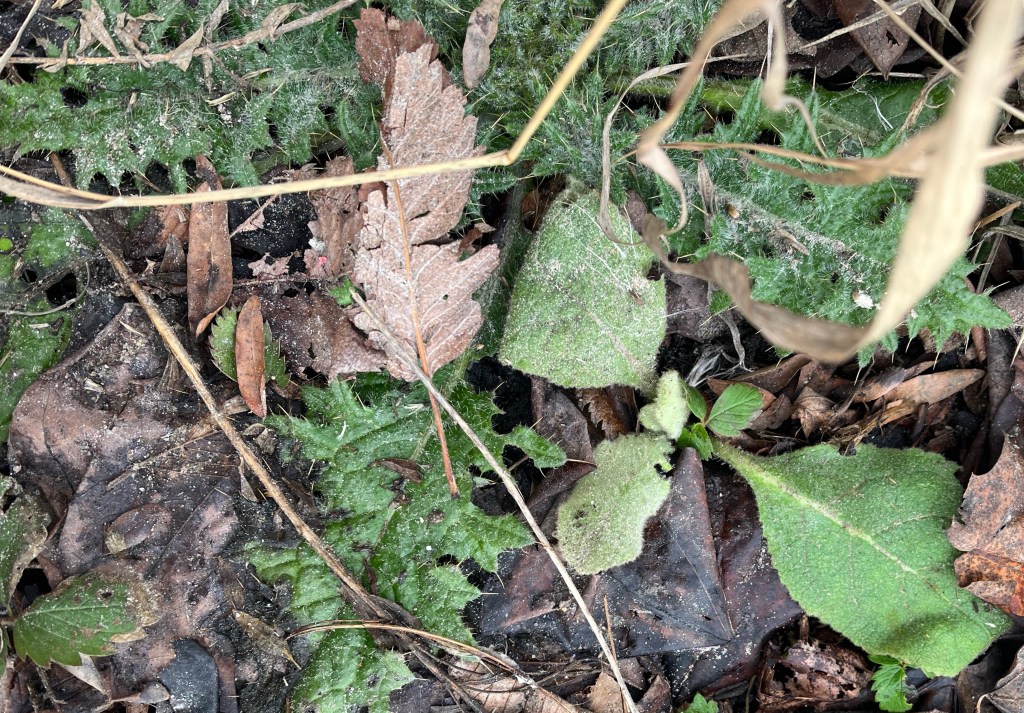
Bull Thistle (Cirsium vulgare) and Common Mullein (Verbascum thapsus): Biennials

Bull Thistle (Cirsium vulgare) and Common Mullein (Verbascum thapsus)

Gardening in January

By Christine Freeburn, Master Gardener

Here we are in the dark days of winter; the holidays are over, the new year has been rung in, and the days are getting longer as we see the snow falling and the temperatures plunging.

Although we can’t go out and play in the garden, there are still lots of things we can do to satisfy our green thumbs.

Clean and sharpen garden tools
Buying good quality tools and keeping them clean and sharpened just makes good sense. Diseases can be passed through your tools, so always wipe with soap & water or even better with disinfectant wipes. Check out this site for tips on keeping tools in great condition.

Check out seed catalogues online
Growing plants from seed gives you a wider variety to choose from and also the satisfaction of growing your own. If you are a vegetable grower, try something new this coming season. If you are like me, you will want to order a paper copy catalogue from your favourite seed companies.

Start a garden journal
Set something up on your computer with charts and photos, or start a written record in a blank book or special garden journal. Record new plant purchases and who you bought them from and where they were planted in your garden. Include successes, ways to improve and dreams for next season.

Review last year’s garden successes
If you have kept a journal, you can check your notes. How can you improve for this coming season? Did you plant the right plant in the best location? Were soil, light and water conditions the best they could be? Remember that weather can determine success or failure as well. Some plants thrive with wet cooler springs while others enjoy hot and humid weather.

Check your houseplants for signs of pests or diseases
Gnats and aphids seem to come alive during the next couple of months. Have Safers soap ready to combat those nasty pests. Remove diseased leaves and isolate plants that are sick. Many houseplants are in resting stages and are not actively growing, so do not fertilize. Houseplants may not be drinking as much either so water sparingly. Have a bright indirect spot in your home? Maybe it’s time for a new specimen. Remember to isolate your new plant to ensure it is not infested or diseased before introducing to the rest of your collection.

Brighten your home with some fresh cut flowers
There is nothing like fresh cut flowers to brighten up a gloomy winter day. Check out this post on our website for caring for cut flowers.

Read a gardening book
When the weather outside is frightful, be sure to have a list of books to read, whether physically or electronically. Lorraine Johnson’s A Garden for the Rusty-Patched Bumble Bee is on my list.

Outside garden maintenance
When you are outside shovelling snow, throw some clean snow on and around any of your more tender perennials. Things like rhododendrons and hibiscus overwinter better if they have a nice layer of snow to cover and insulate them. If the weather has gotten mild and the snow has melted, cut and use your old Christmas tree branches to cover and protect from the coming frigid temperatures and bright burning sunlight.

Sign up for some online learning
There are many local garden organizations that have newsletters, blogs, YouTube videos and live zoom events available. Be sure you are learning from a reputable and local site if you want to add to your knowledge for your own garden. You can, of course, enjoy the foliage of some exotic locations, but know we can’t grow most of it in our zone 5 environment.

Try these sites for local learning. Some sites offer free webinars while others will charge.

https://arboretum.uoguelph.ca/educationandevents/workshops
https://splibrary.ca/events/gardening-changing-climate
https://www.eventbrite.ca/e/attracting-pollinators-to-the-garden-tickets

Already signed up for some online learning?  You can share with us or post on our facebook page “Over the Fence with the Peterborough Master Gardeners

As of today, there are only TEN more weeks till spring.

Use this time to rest, plan and dream for the next season.

In Praise of the Lowly Common Juniper

By Mary-Jane Pilgrim, Master Gardener

I am always amazed that wildlife makes it through winter in our zone, as food doesn’t appear to be all that plentiful when everything is covered in snow and ice. However difficult it seems, native wildlife have a variety of adaptations to surviving winter; knowing where to find food is one of them.

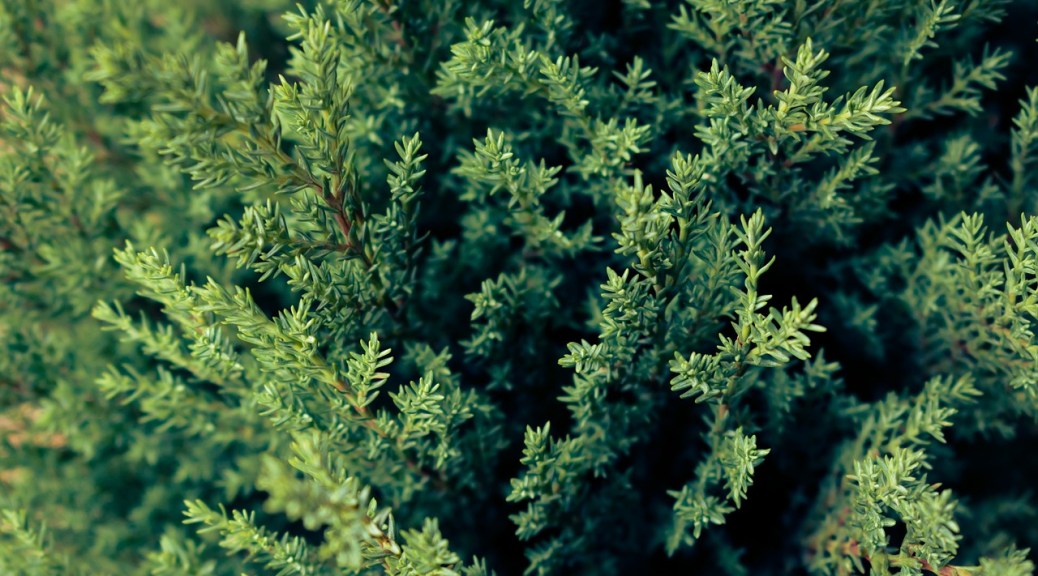
Juniperus communis or common juniper is one of the most widely distributed trees in the world. They are members of the Cupressaceae family. They can tolerate a wide range of conditions; they are tough, they can survive with a lot of wind, and thereby can provide protection for animals in harsh weather. Junipers have a strong scent, bitter taste, and sharp needles. Deer tend to ignore plants with these attributes.

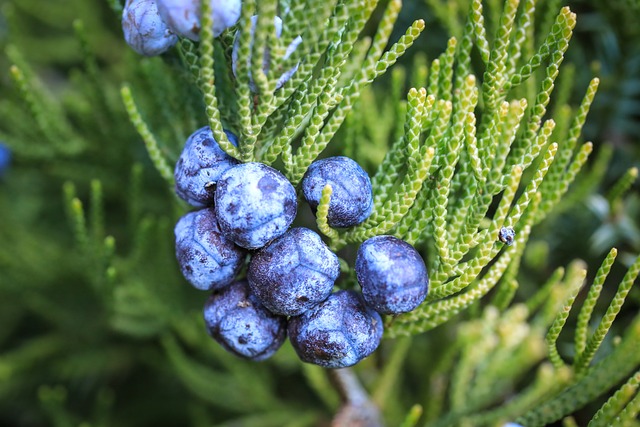
The berries, however, are a different story. They begin life a grey-green color, and ripen in 18 months to a deep purple-black hue with a blue waxy coating. While they are called juniper berries, the “berry” is actually a cone, the female seed cone. Junipers are almost always dioecious which means that in order for the female plants to set fruit, a male plant must be in the vicinity.

Juniper berries are one of the top late winter foods for many birds and mammals which covet the deep blue orbs. They aren’t particularly high energy or calorie-dense; they are soft and fleshy, and have a strong, woody, spicy, pepper-like flavor with a gritty texture. Perhaps this is why they are ignored early on, but in the depths of winter when all the other really desirable food is gone, they become more popular with wildlife. Juniper berries could be the difference between survival and starvation for the species who rely upon them.

Junipers have a long history with humans as well as wildlife. These trees are responsible for one of the only spices derived from a conifer. The ripe, blue berries were and are currently used throughout the world to flavor meats (particularly wild game) – and sauerkraut. The first record of juniper berries was in Ancient Egypt at around 1500 BC.

During the Black Death in the 14th century, plague doctors wore masks with long beaks full of juniper berries and other botanicals to mask the unpleasant smells they’d encounter tending the sick. They believed that juniper stopped the spread of the disease. This was somewhat true – the disease was spread by fleas and juniper is an effective and natural flea repellent.

Most famously, the unripe, green berries are used to flavor gin. Gin is originally from the Netherlands — in the 16th century, a schnaps was distilled with juniper berries to become so called “Genever” (in dutch: juniper berry) which was consumed for medical purposes. “Genever” developed to become the today’s “Gin”.

Juniper berries have since been used to flush out toxins, heal infections and even aid in digestion. Caution: If you intend to forage your local woodlot for berries, be wary because while most of them are harmless, there are some species that have mildly toxic berries. Do not randomly harvest juniper berries unless you are sure of the species.

Foraging aside, if you are looking for native plants for your garden, a few juniper bushes are a great choice. They’re hardy, provide cover and food for a variety of wildlife, and will definitely help our wild neighbors survive particularly difficult winters.