Category Archives: Houseplants

Caring for your Poinsettia

By Mary-Jane Pilgrim, Master Gardener

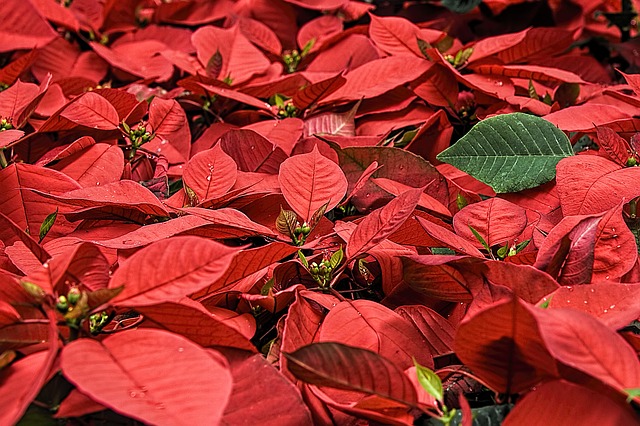
Christmas Day is tomorrow (gasp!) and with that we have a few tips on how to care for your Christmas plant — the poinsettia. This plant came to Europe from Mexico. Because of its bright red colour, it became a popular Christmas decoration and nowadays it’s hard to imagine Christmas without it. You may not know this, but the colourful parts of the plant are actually leaves, and that all poinsettias have tiny yellow flowers.

Having a poinsettia is a great way to brighten up your house this winter and if you follow the tips, your plant may last even until Easter.

Water your plant when it feels dry to touch, but take care not to drown it by ensuring that adequate drainage is available. Place a layer of pebbles on a tray beneath the plant to keep it out of water and increase the humidity. Avoid letting it sit in a water-filled saucer as this can lead to root rot.IMG_4312

Place your plant in bright, but not direct sunlight; give it a minimum of six hours of light each day. South, east or west facing windows are preferable to a north window. Maintain Temperatures between 18 – 22C in the day, and cooler at night. Avoid extreme temperature changes by ensuring that it’s not near near fireplaces, drafts or ventilation ducts.

If you notice that the leaves are falling off, you can usually still save the plant. Environmental factors such as a room that is too warm or too dry is most often the reason. Keep the plant in a coolish, draft-free area and provide plenty of water.

Fertilizing a poinsettia is never recommended while it’s blooming — and you should fertilize only if you plan to keep it after the holiday season. If so, apply fertilizer every two weeks using a complete houseplant fertilizer. While it is possible to keep the plant from year to year, it is a very fussy exacting process. Since they are not that expensive, you might just choose to start fresh next year.

For years poinsettias have had the bad reputation of being poisonous. They certainly are not meant to be eaten by humans, pets, or livestock and ingesting poinsettias would probably cause some stomach upset, as would eating most any houseplant. However poinsettias have undergone extensive testing and there is no evidence that they are toxic or unsafe to have in the house. They are also safe to put into the compost.

If you are interested in keeping the plant after the holidays, here are some tips:
https://www.thespruce.com/poinsettias-keepers-or-compost-1403587
https://landscapeontario.com/home-care-tips-for-your-poinsettia
https://www.gardeningknowhow.com/ornamental/flowers/poinsettia/poinsettia-care-how-do-you-take-care-of-poinsettias.htm

Taking Care of House Plants

By Judy Bernard, Master Gardener

An interesting question came to me through our website about caring for houseplants. This person had A LOT!

Whether you have 3 or 4 or 3 or 4 dozen, my suggestions will apply. A little research is needed to identify all of your plants. Once that is done, group them as to light, moisture, and fertilizer needs. Then you can care for them in groups instead of individuals.

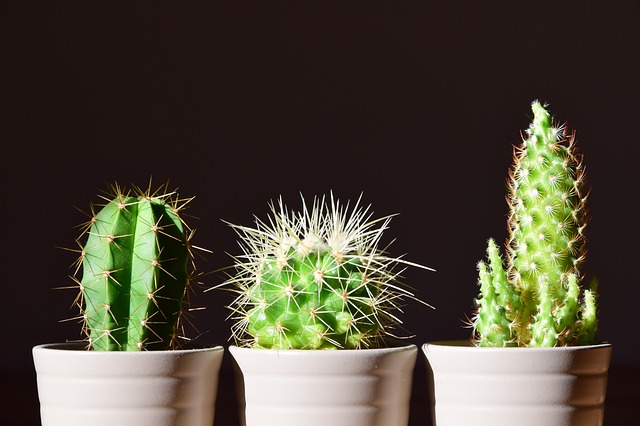
What I’ve done is to make plant labels for all of my plants. I’ve stuck the labels into each pot. On the labels I’ve written the plant name, water requirements, light requirements, and fertilizer schedule. Once that is done, it is easy to put the plants where they will get the best environment for their growth and health. Grouping them with plants of similar needs will make their care easier.mini-cactus-755542_640

You can then make a watering schedule for the different groupings of plants. Also check the pots to make sure you’re not overwatering. One of the most common things people do is overwater. The symptoms of too much water are very similar to too little. You have to check the soil.  If it’s damp to the touch, you likely don’t need to water!

Space them so that there is good air circulation around the pots.

Some of the plants will need to be in a more humid environment than others. You can put a tray filled with stones for the pot to sit on and add some water to the stones. They will provide moisture to the plant without the roots being in the water.

These suggestions should help you to have healthy plants for a very long time.

My Orchid Had a Baby!

by Judy Bernard, Master Gardener

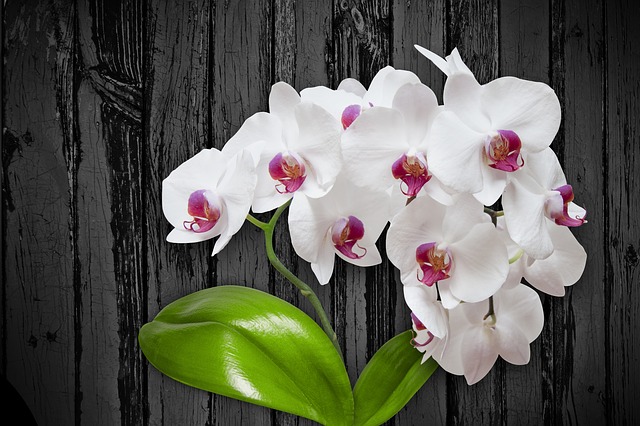
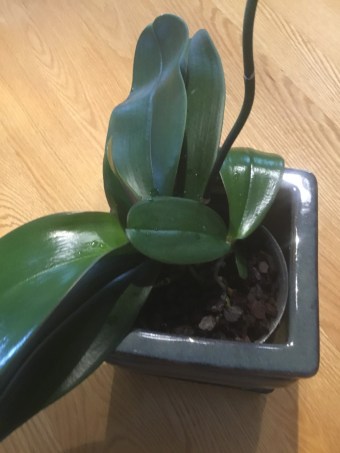
A year ago last summer I bought a new phalaenopsis orchid to go in my renovated kitchen. It had 2 stems of beautiful white flowers with a fuchsia centre. Eventually the flowers dropped off, but the stems remained green and healthy. Knowing there was good potential for the nodes remaining on the stem to start to produce another scape of flowers, I checked it carefully and was rewarded with a node budding out. It had leaves!judy's orchid

Looking up on Google, I learned that one of the ways an orchid will propagate is by producing a baby in its stem. These babies are called Kiekis. I had to wait for several months until the baby grew 3 or 4 roots and they were 8-10cm long before I could remove it and plant it.

Although it may be a sign that the mother orchid plant is under stress, this mother always looked healthy with dark glossy leaves. While it was nurturing its baby, the mother produced another scape on the other stem with a spray of 9 flowers.

Finally the day had come. I also learned that the best way to help the baby along was to plant it with the mother. The mother will regulate the growing medium around their roots and help the baby along. The mother’s pot was too small. So I purchased fresh bark for the orchids and a larger container. Planted them. Watered them.

They seem to be thriving!

Link:  All about Keikis

Bringing Outside Plants Indoors

By Chris Freeburn, Master Gardener

The long hot summer is coming to an end. Now is the time to start thinking about what plants you are going to bring into your home to overwinter and how you can do that successfully. During the summer months, many houseplants can become outdoor plants.thumbnail_DSCN2619

It is relatively easy to overwinter ivies which can go into outdoor containers. Take cuttings from your ivies, spray them with a safer soap solution to eliminate pests and place the stems in water to root in a bright window. You can also try this with other annuals like coleus or wandering jew. Once the stems have rooted, plant them in good potting soil and you can enjoy them through the winter months and have them again for outdoors the following year. In early summer put plants such as oxalis, kalanchoe, asparagus fern, or wandering jew outside to enjoy on your deck. Most can come back into the house in early September after a thorough spray with safers soap.

Tropicals

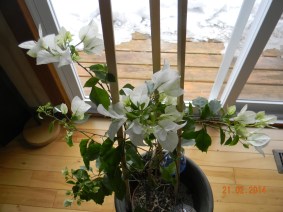
Tropicals like hibiscus and bouganvillia love to be outside during the hot summer months but it is sometimes a challenge to overwinter them indoors. The trick to avoiding plant shock is to bring your plant in before the nights get too cool. Tropicals like a warm, even temperature so if you wait too long to bring into your home, the plant will shock, drop leaves and look like it is dying. I have had a bouganvillia drop almost all its leaves when I left it out during a lovely fall season. The trouble was the nights were down around +10 while the days were up over 20 degrees. I cut the branches back, saw there was still green in the stems, so put it in indirect light, watered lightly and eventually new leaves began to sprout and it came back to be placed outside again the next summer. If you can stop that reaction by bringing in earlier, it is worth the effort.

Spray for Bugs!

Any plant that comes inside should be sprayed for bugs. There is nothing worse than an indoor pest infestation which can travel from one plant to another. Using a good safer soap product and completely spraying leaves, stems and soil a couple of days before you bring them in will help. Now is also the time to transplant plants into fresh new soil. Over the summer, your plants will have grown below the soil as well as above. If you are bringing in plants from a container, plant up in a pot that is just larger than the root ball with new soil. This will help to eliminate those pests as many will lay their eggs in the soil to hatch and attack your plant. You can also prune back plants that have gotten large. Most annuals do well with a bit of a haircut.

Bringing plants indoors and extending their life can be a fun and rewarding task. Don’t be discouraged if you experience some failures. It is always nice to have to go out and purchase something new to add to your collection!

Reblooming an Amaryllis Bulb

By Sharleen Pratt, Master Gardener (in Training)

sharleen amarllyis
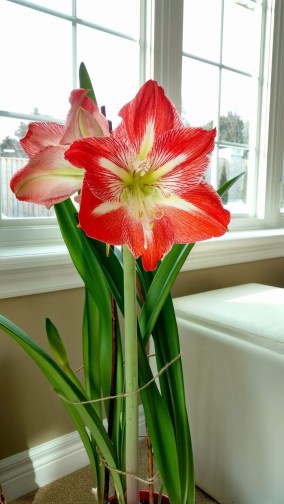
Amaryllis Bulb in its 3rd Year

Amaryllis bulbs are a wonderful winter flower! They never disappoint and are easy to grow over the Christmas season. They come in many dramatic colours. The bigger the bulb, the bigger the bloom, so it is always a good idea to spend a little more to get a good sized bulb.

They are prized for their exotic trumpet-shaped flowers that sit on top of leafless stalks or “scapes”. They are native to Peru and South Africa. The bulbs were brought to Europe in the 1700s. In warmer climates, they have been known to bloom for 75 years.

In Canada, we generally buy new bulbs each year, but did you know that it is possible to keep these bulbs from year-to-year and it is relatively easy to get them to re-bloom. Below is a simple guide to what works for me, but I have also attached a few reliable articles. The methods are a little different, but with the same end result.


HOW TO GET YOUR AMARYLLIS TO RE-BLOOM

  • Wait until the amaryllis finishes blooming.
  • Remove the wilted flowers and allow the stalk to die back a little to feed the bulb, then cut it down. Leave any leaves as they also help to feed the bulb.
  • When all chance of frost has past, take your amaryllis outside in the pot and place it in a protected area. It is best to choose a spot that gets morning sun rather than the scorching sun of the afternoon.
  • If you wish, you can also remove it from the pot and plant it in the garden. I tend to leave it in the pot as I find there is less chance of infection from disease.
  • During the summer months, feed it with an all purpose fertilizer about once a month. To be honest, I don’t always remember to do this! If we have a really hot summer, you may actually get another bloom during the summer season. I had this happen two summers ago.
  • Around Thanksgiving, before a hard frost, remove the bulb from the ground or the pot.
  • Cut all the foliage back, close to the bulb.
  • Dry the bulb well (this is important), outside if it’s sunny or in a nice sunny window.
  • Once it is good and dry, put the bulb in a brown paper bag and store it in a cool, dry place. I store mine in the back of the garage up against the house.
  • Leave it for at least 6 weeks.
  • Bring it back in, pot it up in good potting soil. Don’t use a pot that is too large as they like to be snug. Remember to leave the top 1/3 out of the soil.
  • Put in some good supports, fertilize with an all purpose fertilizer at ½ strength, keep it watered but not too wet and ‘cross your fingers’.
  • Indirect light is best until you see some growth, then move it to where you normally keep your amaryllis.
  • You may find that you will get leaf growth first, but eventually you should see a stalk emerge.
  • I have found that you tend to get flowers closer to the end of January, which is a real treat in the middle of winter. If you prefer to have them earlier, start the process before Thanksgiving.
  • Good luck!!

For a slightly different method, check out this article by Sonia Day who writes for the Toronto Star. Or, check out this article written by a Master Gardener from Guelph-Wellington.

The Soil in Your Garden

by Christine Freeburn – Master Gardener

For the plants in your garden to be the best they can be, you need to start with the best soil you can make. Enhancing your soil with compost and manure is the best way to do this.

Soil provides physical anchorage for plants

You need your soil to have enough texture to hold your plants without being so heavy that it strangles them.

You should know what your SOIL TEXTURE is.  To do this, you can try this simple test:

  • fill a quart jar one third full with a sample of your soil
  • dig down into the soil to get a sample
  • fill the jar with water, put the lid on tightly and shake well.

As the soil settles, you will be able to see different layers.  The bottom level is the sand portion.  Next will be silt. Silt has larger particles than sand, but smaller than clay.  Last will be clay.

The amount of each that you have in your soil will determine what type of soil you have….clay, sandy, silty or any combination of these. The best soil is sandy loam, which is about 60% sand and 40% clay.

This will also tell you how your soil deals with water….does it drain well or hold and stay wet longer.

You can amend your soil to improve the texture, but it is a constant challenge. Sometimes it is better to accept what type of soil you have and grow plants that prefer a sandy soil or a clay soil.

Soil supplies water and nutrients to plants

When you water, water the soil and roots of your plants, not the leaf portions. Water is absorbed through the roots and channels up into the leaves.

pH

Another thing you should know about your soil is it’s pH…is it acidic or alkaline. pH has a scale of 1 to 10, with acidic soil have a low number. Most plants like 6.0 to 7.5. This is where they can best absorb the nutrients in your soil. You might have heard that plants like rhodendrons prefer acidic soil, which would have a lower pH.

Knowing the nutrients in your soil is important also. You can send away to Guelph University to get your soil tested, however that can be expensive. You can use an inexpensive soil testing kit also. It will also test for pH.

There are 3 big nutrients and these are Nitrogen, Phosphorus and Potassium. You will be familiar with them as the three numbers on fertilizers. Many fertilizers are synthetic, however you can get organic types.

Nitrogen is for leaves and greening of your plants.NPK-01.png

  • fish emulsion
  • blood meal

Phosphorus is for bloom

  • bone meal

Potassium is for roots and overall health of plant

  • wood ash
  • composted seaweed

Other natural fertilizers

  • animal manures – make sure they are well composted or they will burn your plants or be full of weeds
  • manure tea – dilute manure in water, let sit for a week, then water plants
  • comfrey tea – another good nutritional source
  • epson salts – put a tsp in hole when planting

Know your soil, it’s texture, pH and nutritional content

Grow the plants that will thrive in those conditions or be prepared to make amendments

Soil is a living thing which needs to be enriched on a regular basis

Compost and Topdress