Category Archives: Garden Design

New Garden Planning; a Look Ahead

By Cheryl Harrison, Master Gardener

Fall is a great time to get a head start on the new garden that you have been dreaming about for next year.

Deciding the new garden’s location depends on the purpose of the garden.  Will it be a quiet area for relaxing?  Look at the view from outside and also through the windows from inside your home when assessing potential locations.

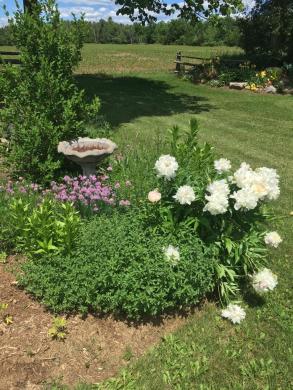
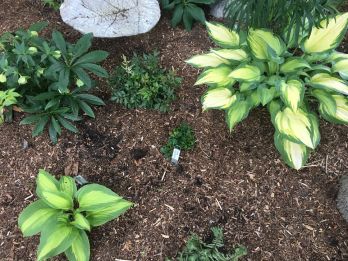
Consider the growing conditions.  Is the potential location windy, sunny, shady or combination sun/shade?  It may be important to know the location of utility lines and pipes depending on how radical the planned change to the landscape.  Do you have access to water?  New plants usually need supplementary water for their first year.  Also check the area for flooding and provide drainage when necessary.IMG_1164

Think about garden structures……perhaps an arbor, fence or pergola or maybe a bird bath or bench?  For larger structures, you may need a construction permit.  A landscape professional can be a great person to consult at any stage of planning.

Soil condition is vey important to the growth of plants.  Newly built homes often have very little topsoil layered over nutrient poor subsoil.  It may be necessary to dig out some of the subsoil and replace it with good topsoil.  This “digging” step is when to be aware of the location of your utilities.

Create a new garden by edging the chosen area with a sharp shovel or edging tool then placing the material (usually a combination of grass and soil) into the centre of the new garden location.  Smother unwanted growth by covering the area with 4-5 layers of newspaper, or cardboard, and water it down.  Then layer topsoil about 15 cm (6 inches) on top and add additional organic material like composted manure.  Finish the new garden bed with a 7-10 cm (3-4 inch) layer of mulch.  The newspaper/cardboard layer, and the mulch will eventually decompose to become part of the garden’s soil.

Your new garden bed is ready for planting.  Choose plant material by looking at plant catalogues and on web sites.  What a great way to spend a fall or winter afternoon!

The Importance of Plant Labelling

By MJ (Mary-Jane) Pilgrim, Master Gardener

Why should we label the plants in our gardens? The answer is simple–so that we know their names & can then give them the correct care. For herbaceous plants, the labels act as placeholders over the winter, so that we don’t accidentally disturb them, or try to plant bulbs too close to them while they are dormant.

Figuring out how to handle labeling is one of the trickier parts of perennial and vegetable gardening. Do you keep the tags your plants come with, filling your garden with dozens or hundreds of bits of plastic? Do you tape them into a special garden notebook, so you can keep track of where all of the information for your plants? Or do you simply toss the labels in the recyling bin as soon as you get the plants in the ground?

For me, the answer to all of these questions was ‘no’ simply because most of my first plants came from local plant sales and were probably pretty common (and invasive?) plants. The white paper address label from the sales were usually blank the following spring so I was no further off than when I started. Then, I started buying more unique perennials at garden centres — the real money kind of plants. It seemed a shame to toss those beautiful tags full of information, so I buried them close to the plant which worked well — but the tags did crack and disintegrate after a couple of seasons. Tags created with my simple Dymo labeller were often blackened by the sun after a similar amount of time. Then, I listened to a speaker at my local horticultural society discuss his approach to labels — one of those portable labelling systems that could take a special kind of tape: “high temperature/low temperature”. He reported that his labels were lasting 10 years and counting. Being a “techy” kind of person, I bought one from Brother/Staples about 5 years ago and I’ve been pretty happy with it. I also record plant information and cultivar names into my mobile phone’s “notes” feature in categories such as ‘hostas’, ‘coneflowers’, ‘sedum’, ‘trees’ so that if I forget to create a label, or the label goes through the chipper in the spring (yikes!), I still have something to go back to. Keeping a list of plants I’ve purchased on my mobile device also helps but doesn’t prevent me from purchasing duplicates. Sigh. (Been there, done that, too many times to count).

My last reason for labelling is that any visitor to your garden will ALWAYS want to know the names of your plants! They may already THINK they know what it is, and they are happy to have their knowledge confirmed with the presence of a tag.

Downside of Plant Labeling

  • The amount of time it takes to check the plant, produce the label, and attach it, not to mention regular checking and replacing of broken, moved and missing labels
  • The cost to purchase the labeller ($100 ish) and the label tape ($30 per roll)
  • Labels can be easily be mistakenly moved from one area to another at cleanup time — and a wrong label is worse than no label.
  • Labels can sometimes detract from the beauty of the garden.

Reasons to Label:

  • You’ll remember your plants’ names, and can give them the correct care.
  • You’ll remember which heirloom veggies are which for reordering next year.
  • You’ll know which very expensive perennial you purchased LAST year did not show up at all this year.
  • The labels act as placeholders so that you don’t accidentally plant something new in the space being held by another, but dormant, plant or bulb.
  • “Oh, I’ll remember what this is.” Oh no, you won’t; trust me.
  • Plants are worth WAAAAYYY more at plant sales if you know the cultivar name — we normally know the genus and species, but the cultivar name is much more tricky and often impossible to determine after the fact.

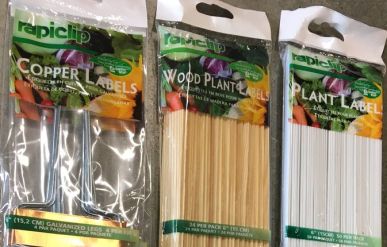
labelling optionsPlant Label Materials:

  • Simple white plastic labels for seed-starting are available at many landscape supply stores, but what to use for the actual marking?
  • Copper labels – use a ballpoint pen to make a true inscription on the thin copper — although these are sometimes difficult to read years from now.
  • Paint the plant names on both sides of hand-sized smooth river-style rocks.
  • Cheapest option: plastic mini-blinds or wooden popsicle sticks but these often fade or disappear.
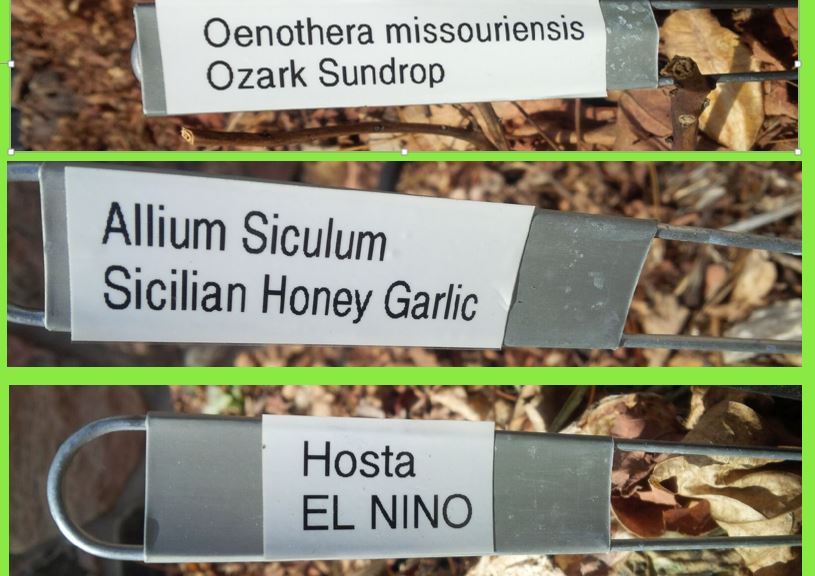
  • Strips of galvanized “duct hanger” metal strips, cut to length with a plastic label.
  • Metal hairpin-type labels with a plastic label: sturdy, but easy to step on or pull out with a rake.

According to my research, the following will work on plastic, wooden and/or metals tags: pencils, ballpoint pens, paint pens, Sharpies, and supposedly fade-resistant nursery marking pens. According to some articles I’ve read, the unexpected hero is the ordinary pencil on plastic or wood: it’s perfect for all but the shiniest materials. A great suggestion is to include the plant information on the back of the marker, too. If the front fades or is damaged, the info on the more protected back side will hopefully still be readable.

brother-labeller low-resMY Preferred Labeling System: hairpin-type label stakes (Lee Valley), pushed more than halfway down with white “live forever” plastic label tape (Amazon) printed on a small Brother labeller (see picture).

One last suggestion for plant record-keeping is the digital camera. It’s so easy to take a picture of the label right against the plant in the garden — you’ll then have a visual record of the name and where the plant is growing.

Hope this helps to save some time, energy and frustration for someone!


Dealing with Drought in the Garden

By Mary-Jane Pilgrim, Master Gardener

Plants are composed of anywhere from 50-90 percent water. When they suffer from the heat, it’s because of an insufficient amount of water being available to them. Drooping, seemingly lifeless leaves are a sign that a plant does not have enough water and is unable to take in carbon dioxide from the air through tiny, open pores on the underside of the leaves and make food.

When plants wilt from lack of sufficient water, they stop growing, stop producing and will die if their cells are not replenished with water.

Plant Selection

The best way to deal with drought is through plant selection. Grow plants that don’t ask for much!

pink-2678918_640

Choose plants that are drought resistant and can handle the heat in the first place, rather than struggling with the more sensitive types. Some suggestions are: ornamental grasses, salvia, sedums, cacti. Also native plants such as black-eyed susan, liatris, purple coneflower, coreopsis, lavender. Some non-native plants such as daylilies, hellebore, barrenwort/epimedium also all tolerate the heat well.

Watering

The best way to get moisture to the plants is to apply water at ground level with drip irrigation or via soaker hose, and the best time to do this is in the morning. The idea is to give the plants an infrequent but deep soaking. Water that seeps deep into the soil will help plants develop a deep root structure, which helps them survive prolonged periods without rain. The morning is the coolest time of the day, and there is less evaporation while temperatures are relatively cool than later in the day when the temperature is at or near its peak. The second best time is right at dark or just before dark.irrigation-2402568_640 (1)

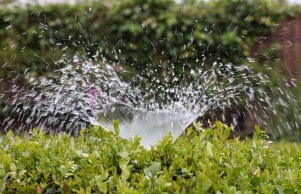
Using sprinklers is not as optimal because a significant amount of water is lost due to evaporation from the leaves into the air before the leaves can absorb the water.  However, for extensive garden beds, it may be the only available choice!

For patio container plants, consider adding water gels to the potting mix. The gels absorb water and release it slowly to the plant roots, reducing the number of times the plants will need to be watered. Another option for patio containers is a self-watering pot. These types of containers have a water reservoir from which water is absorbed up into the pot and to the root zone. Like the gels, these specialized containers will reduce the need for frequency of watering.

Mulching

Another way gardeners can help their plants survive excessive heat and drought is to mulch their garden beds. The mulch will help reduce evaporation, insulate plant roots from the high temperatures and reduce or eliminate weeds, which compete with desirable plants for water and nutrients. When choosing mulch, use only biodegradable materials that decay over time. Two to three inches of mulch should be plenty for the growing season. Don’t put mulch up against trees because it can cause the trunk to rot. Also, mice and other vermin may create nests in the mulch and chew on the tree’s bark.

IMG_2320Shredded leaves are also an excellent choice, but they break down faster than wood mulch and may harbor seeds like maple keys. However, earthworms love shredded leaves and will make the soil more friable and fertile with their castings. If leaves are hard and fibrous, leave them in place to decay. Oak and other tough leaves should be shredded and allowed to decay a bit before placing on the garden. Soils topped with shredded leaves will soon be crumbly and easy to plant.

Weed-free straw is good mulch and is often used in vegetable gardens. It packs down and hold weeds at bay. Make sure to use straw (grain stalks) instead of hay (dried grass) to prevent seeds from germinating.

There are many other tips / tricks about gardening during drought but the key message is that “you don’t have to stop gardening due to drought. Simply change the way that you garden to adapt to the conditions.”

Growing Clematis

By Sharleen Pratt, Master Gardener

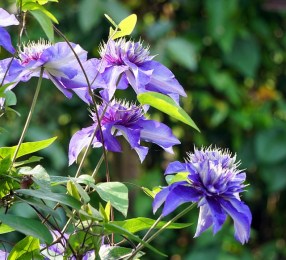
clematis-350358_640Clematis is a genus of about 300 species within the buttercup family, Ranunculaceae. They are a very popular perennial climber and produce many beautiful flowers in the summer months.

When purchasing a clematis, remove the plant from the pot and check for a tiny white bud on the very bottom roots. This will ensure a healthy plant. For best results, purchase a clematis that is at least two years old as they are tender when very young and take several years to mature.

Clematis absolutely demand good drainage. Either add sand to the soil, or line the bottom of the hole with a layer of gravel. When planting, it’s important to bury the crown of the plant at least two inches (6 cm) below the surface of the ground to encourage more stems to grow from the base. Water deeply at least once a week until the plant is well established.

To encourage good flowering, sprinkle superphosphate fertilizer onto the surface of the soil at planting time to promote good root growth and winter hardiness. For mature plants, add fertilizer once in the spring and again in June.flower-3394263_640

Clematis need at least six hours of sun per day, but their roots like to be kept cool. One suggestion would be to plant a large hosta at the base of the Clematis. Their roots are shallow so they won’t compete for nutrients. You could also use large rocks or flagstones.
If the stems of very young plants seem thin, pinch them back to just above a set of buds. This will help the stem to thicken, making them tougher and more resistant to damage.
You need to understand the kind of clematis you have before attempting to prune. Some clematis grow on last year’s vines, so you want to avoid cutting them to the ground in spring. Others flower on current-year vines, so they don’t mind being cut to the ground each year.

A very tough clematis is the Clematis x jackmanii, which is an old reliable climber, easily growing to three metres with large, deep purple flowers. It is the oldest large flowered cultivar, bred in 1858. Another easy to grow clematis is Clematis ‘Abundance’, which has a deep red flower with greenish-yellow stamens, which flowers in mid June.

You might consider checking The International Clematis Society website. It is full of valuable information for people new to growing clematis, with several links to catalogues, nurseries and education publications.

Growing Perennials in Containers

By Amy Woodward, Master Gardener

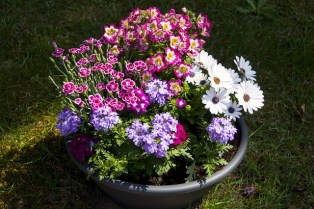
Throughout the years annuals have been a staple to grow in containers.  However, they can be high maintenance and expensive as they are discarded after a season of planting.  Growing perennials in containers has started to become popular.  Perennials require less maintenance and are expensive initially but are a great investment as they continue to grow year after year.  Advantages of growing Perennials in Containers:flower-3397964_640

  • Great way to have perennials if you don’t have a lot of space
  • Fast spreading perennials can be contained
  • Mobility- you can move your plants to suit your needs
  • Weeding is eliminated and less deadheading
  • You can adjust your soil PH easily depending upon the perennial you are planting
  • Perennials can be planted before annuals as they can handle the cooler temperatures

Choosing Plants and Containers:

  • Use plants that have similar requirements for sun, feeding and moisture.  Plants in containers will need more watering than those in the garden, as the plants can’t draw nutrients and moisture from the soil.
  • Use “thrillers, fillers and spillers”.  The tallest plants are the thrillers and they go in the middle of the pot.  Fillers are medium sized and go around the thriller plant. Spillers trail over the sides of the pot.
  • If you do not plan to overwinter the perennials then make sure you choose plants that are 2 zones hardier
  • Use larger pots as plants become root bound and are quick to dry out
  • Make sure your pot has been cleaned before use and has good drainage
  • Choose a container that does not dry out quickly or freeze

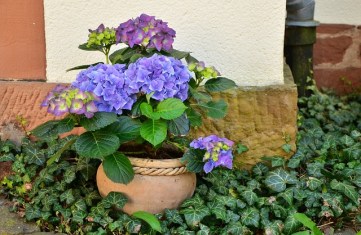
Examples of perennials to choose:flowerpot-1345371_640

Achillea, Echinacea, Aster, Heuchera, Astilbe, Hosta, Bergenia, Lamium, Bleeding Heart, Phlox, Coreopsis, Sedum

Options for Overwintering Perennials

In colder climates, perennials cannot be left outside in containers over the winter. Remember plants that are hardy in the ground may not last in a container.  When you chose perennials you must consider the zone.  If you choose to leave in a container over the winter the rule of thumb is to choose plants that are 2 zones hardier.  Here are some other options to overwinter perennials:

  1. Move plants in containers to an unheated garage. Do not fertilize when the plants are dormant.  Once plants stop growing in the fall, stop fertilizing.  Plants will need to be watered until the soil is frozen.  When temperatures increase in late winter or early spring gradually move containers back outdoors.
  2. Transplant into the garden.  Then dig them up in the spring and return to the containers.
  3. Bury the pots in the ground.  The roots will then be better insulated.  In the fall, dig a hole in the ground that is large enough for the container.  Place the container in the hole then cover with leaves or mulch.  In the spring, bring the pot out of the ground.

Maintaining the Garden – Common Garden Practices

By Sharleen Pratt, Master Gardener in Training

Bed Preparation

This is probably one of the most important practices of gardening.  How you prepare your soil will have huge implications on the health and survival of all your plants.
Heavy clay or stony soils are very challenging and can be quite intimidating, but an initial effort to either remove or amend the soil will go a long way in ensuring healthy plants.  Two years ago, my husband dug a deep hole in preparation for building a small pond.  All the clay, rocky soil was removed.  In the end, we decided on a smaller water feature, so I filled the hole with the soil from my composter as well as some good quality garden soil.  I ended up creating a garden bed that was rich in nutrients and a soil that had good water-holding capabilities.  The following spring, I planted annuals in my ‘new’ garden bed.  They were fantastic!  The old saying, “Tend the soil, not the plants” is right on the mark!sharleenpratt


Perennial Division

Some perennials can get out of control quickly and benefit from division.  One common problem of fungal infections in gardens are plants that are overcrowded without sufficient air movement.  They can become spindly and weak and are more prone to disease, as well as insect attack.  Remember that some perennials will divide easily while others will not be happy! It’s always best to check with your favourite garden centre or a good perennial book to find out the best time to do the division.

Plants will benefit from dividing when:

  • They are spreading into other plants
  • Shoots are popping up amongst other plants
  • There is a bare patch in the centre of the plant
  • They are leggy and sparse and not flowering well
  • Soil around the plant has become clumpy and hard

A general rule for perennials is to divide in early spring and just after flowering.  Avoid hot, windy days and ensure that all newly divided plants are well watered for at least six weeks.  Dividing is an excellent way to share your favourite plants amongst friends and your perennials will definitely benefit from the division.


Simple Pet Deterrent for your Garden

By Lee Edwards, Master Gardener

Do you have pets, yours or perhaps the neighbourhood pets, that constantly tramp through your garden beds, eat or damage your bulbs and flowers, and even worse, litter in your garden? We certainly do! Now, we love pets, but we’d much prefer them to stay out of our garden beds and away from our prized flowers and vegetables.cat-2539225_640

In this article, we’ll share with you our tried-and-true garden hack. A pet deterrent that is chemical free and not dangerous to pets; up-cycled, used, plastic forks, that have successfully deterred many a four-legged invader from our gardens.

How To:

Sink any colour, any size, used plastic forks, tine side up and close together in the ground all over your garden bed; about two inches apart is good. Make sure the forks are snug in the ground by tamping down firmly around them. Also, the stronger the quality of the forks use, the better they will withstand pet weight in the ground.

Then, cover the forked bed with mulch, or your favourite finishing topdressing such as river rocks, straw, etc. Leave about an inch of the fork tines showing above the mulch.

These prickly forks’ tines sitting just above the topdressing make it uncomfortable on the paws of animals thereby discouraging pets from walking through or laying down in the garden bed while maintaining the finished appearance of the garden.

Voila! A simple, eco-friendly, pet deterrent that dissuades pets from lingering in your garden.

Have Fun Gardening!

Lee Edwards is a Realtor, Master Gardener, and co-owner of Avid Gardeners-a Garden Consulting & Maintenance Company. She enjoys spending time with her family and best pal, Sir Max, along with reading, gardening and writing articles for online publications.

The Right Way to Plant Trees, Shrubs and Other Plants

by Lee Edwards, Master Gardener

The task of planting is among the many tasks avid gardeners faces every season. Therefore, we’ll focus on the proper way to plant trees, shrubs and plants thereby reducing transplant stress while promoting lush, healthy, plants and root growth.ecology-2985781_640

1. Dig A Proper Hole

To achieve the correct hole size that allows a plant, tree or shrub’s roots to stretch out, dig a hole wider than the width of the plant’s container; about two to two and a half times wider, and as deep as but not deeper than the container’s depth. Then, water the hole.

2. Remove Plant From Container

Ease the plant from its container, gently pushing up from the bottom. If roots are densely packed outside the container (rootbound), loosen the roots before removing the plant. Do not pull on the plant’s trunk, stem or branches when removing from the container, as this may severely damage the plant.

3. Inspect and Prune

Once out of the container, inspect the plant thoroughly. Prune damaged, girdling (circling), dying roots, and suckers. Water the roots, wrap with moist paper, and place in a shaded area away from the wind until ready to plant (same day). If you plan to plant in a few days, cover the paper with mulch and water thoroughly.

For bareroot plants, prune, completely wet then wrap roots, and keep shaded until roots are fully hydrated. For burlapped and dug plants, cut away burlap/wires, prune, wet then wrap roots, and keep shaded until ready to plant.

4. Prepare Soil

gardening-690940_640.jpgSoil is important. Use the soil that was dug from the hole and amend it as needed; for example, add loamy soil to clay soil to ease denseness, or organic matter to sandy soil to slow the soil draining quickly. Ensure the soil is suitable for the plant being planted with sufficient nutrients to satisfactorily support and sustain the plant.

5. Plant Properly

The depth a plant is planted is important. If a plant’s crown is too far below soil level, stunted growth or crown rot may occur. A crown planted too high above soil level may cause sunscald and unnecessary drying out.

Place the plant in the pre-dampened hole and spread out its roots. Make sure the roots sit on firm soil with the crown slightly above soil level to safeguard the crown from sinking below soil level after watering. Fill the hole halfway with soil and tamp down with your hands. Water thoroughly to remove any air pockets. Fill the hole with the rest of the soil and create a shallow, bowl shape at soil level around the plant. Tamp down firmly.

6. Water and Mulch

To reduce transplant stress, water the roots slowly and thoroughly allowing the water to completely sink down and around the roots. Add mulch as needed to maintain moisture then water again. For the next six weeks, regularly water taking care not to allow the soil to dry out.

Have Fun Gardening!

Lee Edwards is a Realtor, Master Gardener, and co-owner of Avid Gardeners-a Garden Consulting & Maintenance Company. She enjoys spending time with her family and best pal, Sir Max, along with reading, gardening and writing articles for online publications.

Four Great Books

by Cauleen Viscoff, Master Gardener

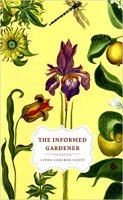
1. The Informed Gardener – Linda Chalker-Scott

51XOwySYW6L._SX304_BO1,204,203,200_Debunking many anecdotal garden myths, this book is backed by scientific research. Boring, it isn’t. It is charming and witty with a no-nonsense approach. Ms. Chalker-Scott is a passionate professor whose life work is devoted to raising consciousness about marketing misconceptions so we can garden with intention and confidence in an environmental and sustainable way. (paperback – $20.00)

2. The Informed Gardener Blooms Again – Linda Chalker-Scott

9780295990019I learned so much from her first book, I bought this one and was not disappointed. She surprises, teaches and makes sense. (pp. $20.00)
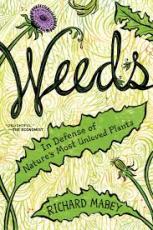
weeds3. Weeds: in Defence of Nature’s Most Unloved Plant – Richard Mabey

This book is readable, informative, and also charming but in another way. He takes us through the life of some plants and seeds we call weeds, showing why we do, where they came from and that many have been here for many centuries. He shows how they travel thousands of miles on ships, in ballast, on animals and in other unmentionables. This is a book to read…and to learn, of course… loved it. (pp $20.00)

4. The Wild Garden (expanded edition) – William Robinson and Rick Darkewild garden

This is such a pleasure to read; it begs a snowy afternoon and a pot of tea. Originally written in 1870, Robinson works to teach formal gardeners to let some “wild” creep into English gardens. He travelled the world to do so. This book has been updated at least 4 times and this edition, with beautiful new photos, includes the original chapters and engravings. Readable, educational and well worth the price. (Hardcover – $71.00- softcover – $10 less)

The Evolution of Gardening

By Amy Woodward, Peterborough Master Gardener

Last year I went to the Master Gardener Technical Update at Toronto Botanical Gardens.  One of the keynote speakers was Mark Cullen and he was discussing how Canadian Gardening has evolved.  The way we garden is constantly changing by utilizing small spaces, composting and appreciating insects and the natural environment.

Gardening Spaces

Many in urban areas are limited to the space they can garden in.  There are numerous examples of minimal space gardens such as in apartments, community allotments, rental properties and new homes with smaller yards.  A change in my gardening pattern has been from the old fashion long vegetable rows to square foot gardening.   Mel Bartholomew, creator of square foot gardening, was disenchanted with long rows that took up too much space and involved too much weeding.  He came up with the square foot method of gardening that takes up much less space, less weeding and minimal maintenance.  This method is very popular amongst our Master Gardener Organization and for those short on space.  Other approaches to limited space are container gardening, rooftop gardening and lasagna layering.

Composting

trees-1789120_640
Leaves 1789120 by pixel2013, 2016, used under CC0 1.0


Although composting has been around for many years, we have seen changes in the way people compost.  For instance, in the past, leaves were known as a nuisance and people would rake them, bag them and wait for the municipality to pick them up.  Now it is recognized that leaves are a great addition to the compost pile.  Leaves are rich in carbon and balance out nitrogen rich green material.  You can also use leaves as mulch.  Simply rake leaves onto the garden and the leaves will keep the moisture in and weeds out.  Leafs are also used to improve soil texture and encourage earth worms to reside there.

Pollinators


nature-3076891_640
Nature 3076891 by hettyvanderzanden, 2015, used under CC0 1.0 

The public is now more educated and interested in how to save native pollinators such as flies, wasps, beetles, birds, butterflies and most importantly bees. Unfortunately, pollinator populations are decreasing.  A number of steps have been adopted to protect pollinators including choosing native plants, planting milkweed, decreasing pesticides and installing insect hotels.  The critical role that pollinators play is why the public is so concerned and methods of gardening are changing.


Overall, gardening continues to change and evolve.  It will be interesting to see what our future has in store for us.