Category Archives: winter

Foraging for Winter Décor

By Marilyn Homewood, Master Gardener

As we enter the holiday season, the time has come to start collecting some of nature’s bounty to create seasonal trimmings for your home.  Much of this bounty is right under our noses and can be gathered easily. Foraging should begin at home on your own property.  It is surprising at what you can find in your own garden not just in terms of evergreens but also dried material such as seed pods.  For those items not immediately on your doorstep, look elsewhere where you have the permission (I visit friends for a few snips of things from their gardens) or forage on public spaces such as roadsides.  Remember to harvest sustainably taking only what you will use and take minimum amounts from each plant.  When harvesting boughs, only use trees larger than 6 feet and cut your boughs 2-4 feet from the tip of a branch and above a node to encourage regeneration. Make it look like you were never there.

Swag on potting shed

Cedar, white pine, white spruce and scotch pine can be found in abundance locally but don’t overlook the junipers (I like to use wild junipers), yews and euonymus.  Fir is really nice but more difficult to source in my area but it is available for purchase.

Boughs can be used as garlands or in planters.  The soil in the planter acts as a source of moisture until freeze up and also stabilizes the display.  Conifer branches can also be cut down to be used in table arrangements or in wreaths.  For arrangements kept indoors, fill the container with a mixture of potting mix and vermiculite and keep damp to prevent needle drop. 

Winter wreath

Woodies: Two species that are used extensively in this area are white birch and red osier dogwood.  Both provide colour contrast and add a structural element.  I keep my birch from year to year so only had to source once. Birch is available for purchase at many stores.  Dogwood is available anywhere it is moist so remember to be mindful of your footwear when foraging.

This arrangement lasted 6 weeks before the needles began to drop

What says the holidays better than pinecones?  They come in many different sizes and shapes depending on their species.  Closed cones can be opened by placing on a cookie sheet and baking at 250 degrees for 1 hour.  Cones can be used as accents in planters/arrangements/wreaths or by filling bowls full of them.  I have dipped the edges of my pinecones in white craft paint so they appear to be snowtipped.

Other additions to my gatherings include seedpods from Siberian iris and oriental poppy, seedheads from coneflowers and penstemon and dried allium heads.  Some types of perennial foliage such as that from Heuchera “Palace Purple” and the Penstemon “Dark Towers” is long lasting and adds interesting contrast to an arrangement. I also used some of my dried hydrangea in the planters.

Coneflower in planter helps to provide winter interest

Berries add a nice pop of colour and it is hard to beat those from the winterberry bush (Ontario’s native holly, Ilex verticulata) but these are not commonly found wild in this area due to our higher soil pH. Some of the local nurseries and florists have it available for sale however.  I do purchase some for my planters, for my wreath, I use the berries from the choke cherry bush (Prunus virginiana).  The bright red berries retain their colour throughout the entire winter and are not eaten by the birds (unlike the berries from the grey dogwood that were eaten after the first cold night).

When you’re done, if you still crave more variety, local nurseries have greens and other decorations available for sale.  For ideas on how to use what you collected, go no further than YouTube and Instagram.  One of my personal favorites are the Instagram live sessions done by Claus Dalby (Denmark’s version of Monty Don). They are posted to his IG page (clausdalby) as “Master Classes in Nordic Christmas”. It is a great source of inspiration and puts one in the holiday mood.

Not into foraging? Visit your local nursery. The offerings are astonishing!

Winter planter after a snowstorm

Winter Gardening Activities

By Cheryl Harrison, Master Gardener

Winter in Ontario, Canada, is a time for gardeners to relax, plan, learn and become inspired…..so let’s explore!If you are new to gardening and want to learn more and/or would like to connect with other gardeners then joining one or more local horticultural groups might be of interest. The Ontario Horticultural Association divides Ontario into districts.  District 4  lists horticultural groups for Bobcaygeon, Brighton, Campbellford, Coboconk, Cobourg, Cramahe, Ennismore, Fenelon Falls, Grafton, Lakefield, Lindsay, Minden, Omemee, Norland, Norwood, Peterborough and Port Hope..   For more information check Ontario Horticultural Association / GardenOntario.

For those who have been gardening for awhile, you may wish to become a Master Gardener.  Master Gardeners inform, educate and inspire others to create healthy and vibrant gardens, landscapes and communities.  We promote horticultural practices that are safe, effective, proven and sustainable.  For more information check Master Gardeners of Ontario and Peterborough and Area Master Gardeners.

There are many Horticulture related educational opportunities….some offered on-line and some in-person.  Both the University of Guelph and Dalhousie University offer on-line courses that will fulfill the requirements for a Master Gardener certificate.  The Horticulture and the Master Gardener groups all have an educational component to their meetings and some may be accessible on-line.  The Peterborough and Area Master Gardeners are again offering, on March 4, 2023, the inspirational and in-person “A Day for Gardeners”  after a 2 year hiatus.  Watch the web site, Peterborough and Area Master Gardeners, for registration and more information.

Plan for next summer with catalogues, books and on-line research.  We are fortunate to have many seed companies in Canada.  A list of “Home for the Harvest’s” top 25 may be found here.  Please save room in your garden plans for plant shopping at your local nurseries too.  Local nursery staff are able to provide you with invaluable information on growing in your region.  Your local library is guaranteed to have some gardening books that you could borrow.  On-line research will also provide a wealth of information…..try a search for “Gardening in Ontario”  and you will see what I mean.  A really great source of information is a fellow gardener.  Ask any gardener a gardening question and they will be thrilled to give you some guidance.

And last but not least, please make time in your day for fitness.  You need to keep yourself fit for all of the gardening activity that you have planned for next summer.  Gardening is an excellent way to maintain a good level of fitness, both mentally and physically.  Read more about the benefits of gardening as exercise here .  There are YouTube videos that can get you started.  I particularly liked the video located here.  The presenter demonstrates some exercises and some things that you can do to prevent injury while gardening. You might consider just getting together with a couple of friends to practice yoga, do some strengthening and flexibility exercises or go for a walk.

The world of gardening is immense.  Keep track of your ideas and resources so that when gardening season returns, you will have the information readily available.  I hope that this medley of gardening choices will help you to relax, plan, learn and become inspired during the upcoming Ontario winter!

Winter: When Bunnies Can Wreak Mortal Havoc on Gardens

By Mary-Jane Pilgrim, Master Gardener

Two weeks ago, MG Lois Scott wrote an article about Burning Bush (Euonymous alatus) and other invasives now on the Invasive Species lists that she is eradicating from her gardens in favour of natives. I actually used to have a beautiful Burning Bush, right at the front of my garden. And then winter came, and a furry rodent.

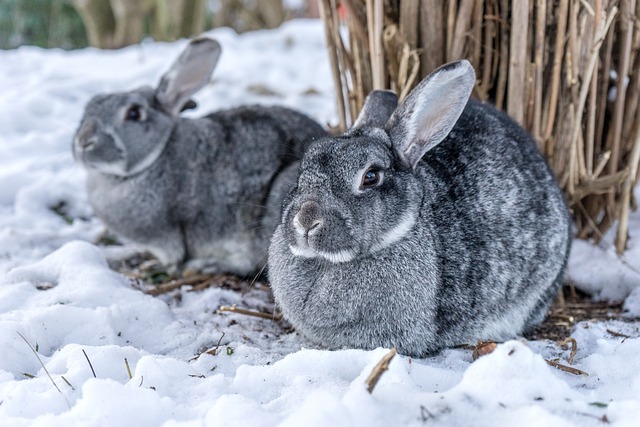
Rabbits might look cute and fluffy, but they’re not a welcome sight for gardeners; especially between December and March. As cute as they might be, they can cause serious damage to plants in the winter when greens aren’t available for them to easily munch on.

Pretty sure that Bugs Bunny, who we could see in the snow through the living room window, caused the demise of the burning bush. In the spring, it didn’t bud. Most of the outer bark was missing and tooth marks were very evident. It was as dead as a doornail. (Aside: “Dead as a doornail” is one of the oldest idioms found in print, going back to the 14th century. It referred to nails having been pounded through a door, and having the pointed end pounded flat against the door. That nail could not be reused!)

Back to my story. Apparently, our neighbourhood cottontail had made a lunch or dinner (or several of each) out of the soft bark on our small burning bush shrub and also my prized “Perry’s Gold” pine (Picea abies ‘Perry’s Gold’), purchased from Anna’s Perennials; my favourite local garden centre. Sigh. Happily, Anna had another one for me.

Obviously, rabbits don’t hibernate. When winter arrives and greens disappear, they turn to nibbling on the bark of young trees such as birch, crabapple, mountain ash, honey locust, willow and oak. Older trees with their thick rough bark aren’t as tempting as a young tree where the bark is smooth and thin. Green food material is just under the surface of young trees.

The rabbit’s menu also includes bushes/shrubs, such as roses, sumac, Japanese Barberry, viburnum, Burning Bush, Rose of Sharon, arborvitae/cedars and other broadleaf evergreens. It’s all about survival and they won’t be picky when their populations are high. Once a rabbit has chewed the outer bark of a small tree or shrub, little can be done to save it.

While I feel for the starving rabbits out there, there are a few preemptive steps you can take to stop rabbits from wreaking mortality havoc in your gardens. The most effective is to place chicken wire fencing around vulnerable plants like a cylinder. The fencing material needs to be high enough that rabbits won’t be able to climb or reach over the fence after a heavy snow. In most cases, a fence that stands 2-3 ft should be sufficient. To prevent them from crawling underneath the fencing, pin the fencing to the soil with U-shaped anchor pins.

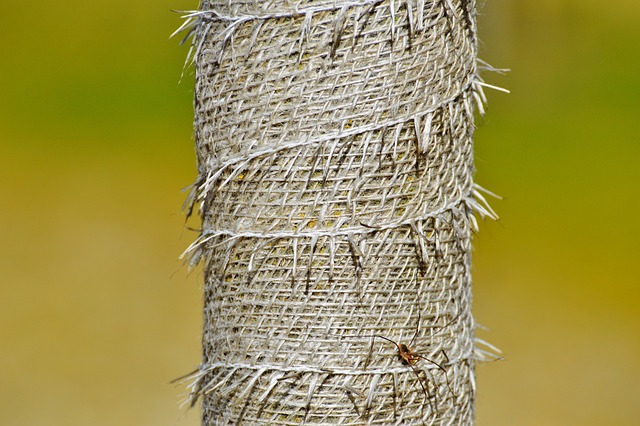
Small trees can also be protected by placing white spiral tree guards around their trunks or by wrapping them/their trunks in burlap. Damage may be further reduced by removing brush, junk piles and other places where rabbits live and hide from around your home.

Lastly, there are a few plants that rabbits seem to find less appealing, particularly plants with thick or prickly leaves, and plants with very strong scents. It may be worth it to experiment around your prized shrubs with hellebores, foxgloves, allium, acanthus (bear’s breeches), and salvia (sage).

A final parting note: One or two rabbits that overwinter in your garden this year could mean dozens returning to munch on your prized shrubs next winter, given the fertility of these furry rodents!