Category Archives: Seniors

Gardening as We Age – Addressing Stretching and Mobility Issues

by Emma Murphy, Master Gardener

WeIl I don’t know about you, but I am starting to feel my age. I used to be out in our gardens all day long, moving soil and rocks, planting garden beds, moving perennials, and weeding and watering to my heart’s content.

I did a Master Gardener blog about the importance of stretching before gardening (at any age) back in 2021 and since then I have been modifying my activities by stretching ahead of time and changing my tasks every 25 minutes (with a stretch break of 5 minutes). No more 8 hour marathons of weeding in the garden!

So I thought I would follow up with another blog for senior gardeners (or anyone with mobility issues) to look at gardening techniques that focus on minimizing bending and kneeling by using raised beds (2-4 ft high), taking advantage of vertical planters and structures, and employing container gardening.

We should also examine the environment —using lightweight, ergonomic tools with long handles, focusing on creating wide/smooth paths for walkers or wheelchairs, and advising people on low-maintenance but hardy plants.

Some Key Strategies for Mobility-Friendly Gardening

Raised Beds and Containers

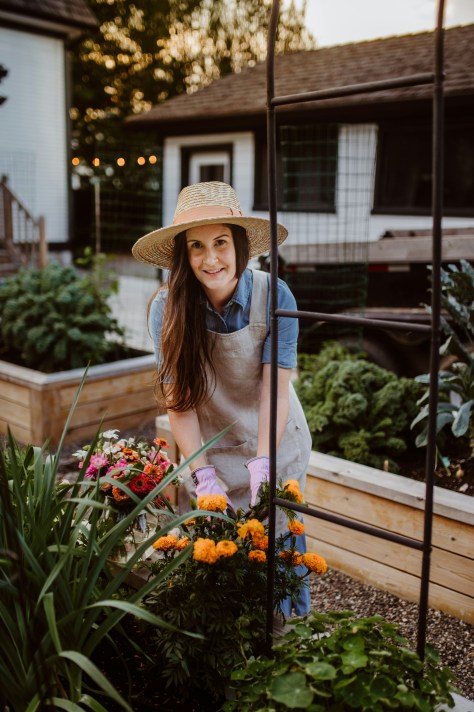
Build or purchase raised beds, ideally 24–36 inches high, to eliminate the need to bend or kneel. These should be no more than 4 feet wide so that the centre can be reached from either side.

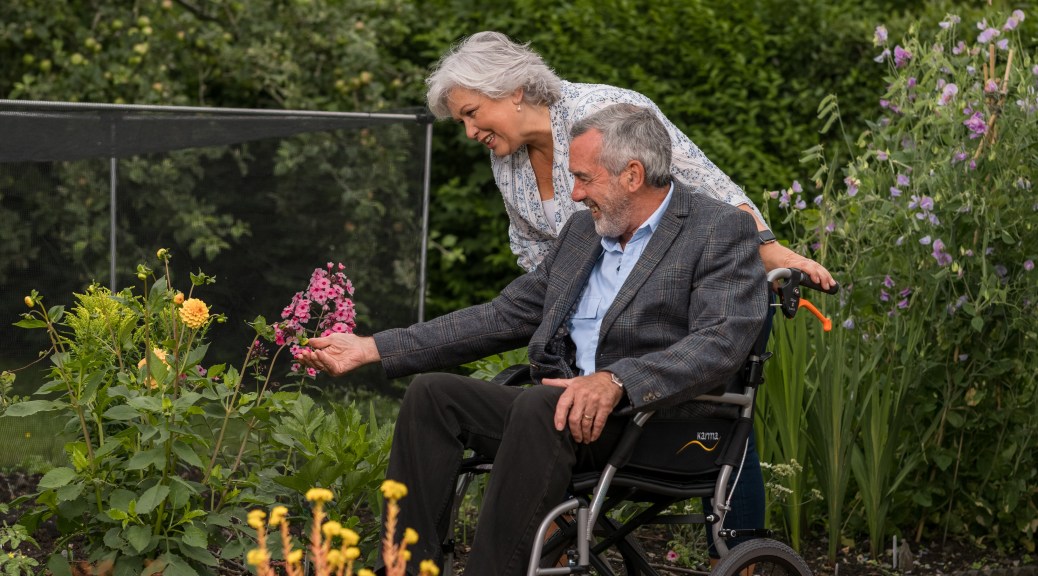
Use pots for container gardening but place them on casters so they can be moved around easily or create a raised area (like a table) that the containers can sit on. For wheelchair access make sure to design beds with clearance underneath for wheelchair access, typically 22 inches wide and 30 inches high.

Vertical Gardening

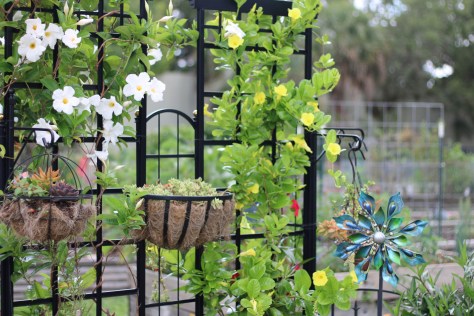
Use trellises, wall planters, and hanging baskets to allow plants to be available at eye level. Examples of climbing plants to consider are sweet peas or vegetables like cucumbers or beans.

Accessible Layouts

Ensure paths are wide, flat, and made of stable materials like smooth pavers or packed gravel for wheelchairs or walkers.

Ergonomic Tools

Ergonomic garden tools help people with mobility issues by reducing strain on joints, backs, and wrists through angled grips, extended handles, and lightweight designs. Use tools with long, padded, or curved handles to reduce strain on wrists and backs. There are so many on the market nowadays.

Watering Plants

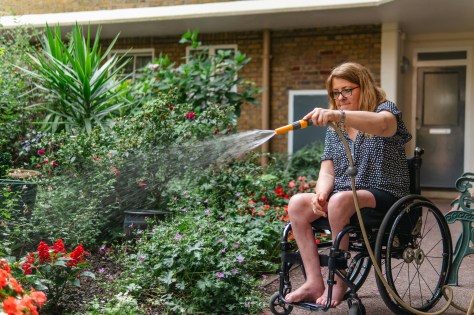
Install drip irrigation systems or other watering options to reduce the need to carry heavy hoses.

Low-Maintenance Plants

Choose hardy, perennial plants such as that require minimal upkeep.

Sitting and Resting Areas

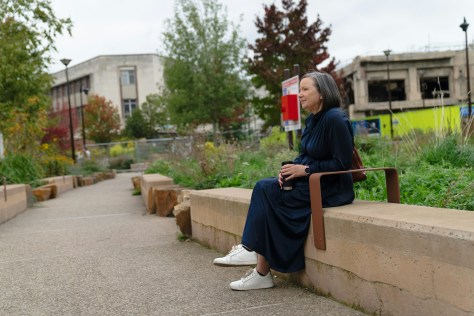
Incorporate sturdy benches or chairs in shaded areas in your gardens to allow people to take breaks. Provide water for drinking where possible.

Other Resources

Here are links to other Ontario-based resources you might want to explore for ideas and inspiration.

Accessible Gardening — Just Food – Ottawa

Barrier-Free Community Gardening in Waterloo Region (PDF)

Cultivating accessibility in your garden – Blooming Boulevards

A Guide for Making Community Gardens Accessible – Root in Nature

These Ergonomic Gardening Tools Will Get You Back Into the Garden! – Garden Therapy

Gardens are for Everyone – Oregon State University Extension

Accessible gardening and tool lists – University of California/Master Gardeners of Fresno

Accessible gardening toolkit – University of Saskatchewan 

Getting Started with Accessible Gardening – National Center on Health, Physical Activity & Disability

Sharing the Love of Gardening

by Emma Murphy, Master Gardener

I’ve always loved nature and the environment, but my all consuming love for everything gardening didn’t hit until we owned our first home in West Rouge, Ontario. Finally, we had a place where we could put our own “stamp” on the landscape, and we loved trying new plants in our gardens.

We made a lot of mistakes in those beginning years, but over the past 30 years both I (and my husband) have learned so much. Most of that learning came through joining local horticultural societies and eventually (for me) becoming a Master Gardener (MG) in 2012 after taking the requisite courses and becoming part of my local MG group in Peterborough.

Reaching out to the Younger Generation

While we don’t have kids, we are grateful for all the youngsters in our Lakefield neighbourhood and this summer, our neighbour’s son, who is 3.5 years old, has shown an interest in gardening.

He first saw our lovely summer phlox in all shades of pink, purple and white in August and decided he would like it in ‘his garden’. So we proceeded with some hands on learning, digging up some plants (with his supervision), and replanting them in their front garden (after consulting with mom, who asked to have both pink and white in the garden).

Summer phlox moving across the road from our house to L’s house
Learning about watering their new plants

This past week, little L saw me out in the garden planting bulbs, and his curiosity was peaked. His mom had picked up some Grape Hyacinth (Armeniacum) and I happened to have a few extra Daystemon Species Tulips, which we are naturalizing in our garden.

Species/botanical tulips originated in the Asia and Turkey back in the 1800s and are the basis of all our modern tulips. They are short, naturalize, and the Daystemon variety have white tipped star shaped yellow flowers. Bonus? They are deer and critter resistant.

Daystemon Tarda Species Tulips

So, rake and small spade in hand, this past weekend L, his mom and I cleared off the leaves in their front garden bed and proceeded to learn about how to plant bulbs.

Putting our special bulbs in the ground.

L learned all about ‘pointy end up, furry end bottom’ and all the bulbs got planted in their spots, along with a bit of dried chicken manure (just to try and put off the squirrels). He was very excited to hear that these little bulbs would be pretty purple and yellow flowers in the spring.

After raking the leaves back in place (again to dissuade the squirrels from being too inquisitive), we will have to wait until the spring to see the results.

It’s not all about the youngsters

Gardening is for everyone, and I’m also so impressed with some of the work that our Peterborough Master Gardeners do in our community, particularly with seniors.

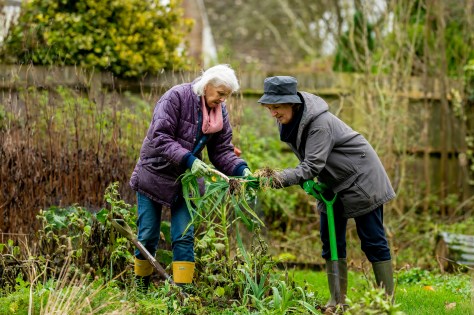
For many years, several of my colleagues have been volunteering at a local retirement home, assisting elderly residents with raised garden beds, and sensory therapy. Their work really touches me deeply as moving into a senior’s residence and leaving your home (and garden) doesn’t mean that your love of gardening is any less (or that you can’t take up a new hobby if you haven’t gardened before).

Studies have proven that horticultural therapy significantly improves senior’s mental and physical well-being by reducing depression and anxiety, enhancing cognitive function, boosting self-esteem, promoting social interaction, providing gentle physical activity, and offering a sense of purpose through gardening activities.

Photo credit: Grand Strand Comfort Care

So, no matter what your age, if you love to garden, try and find a way to share that with both the younger and older generations. Gardening is for everyone.