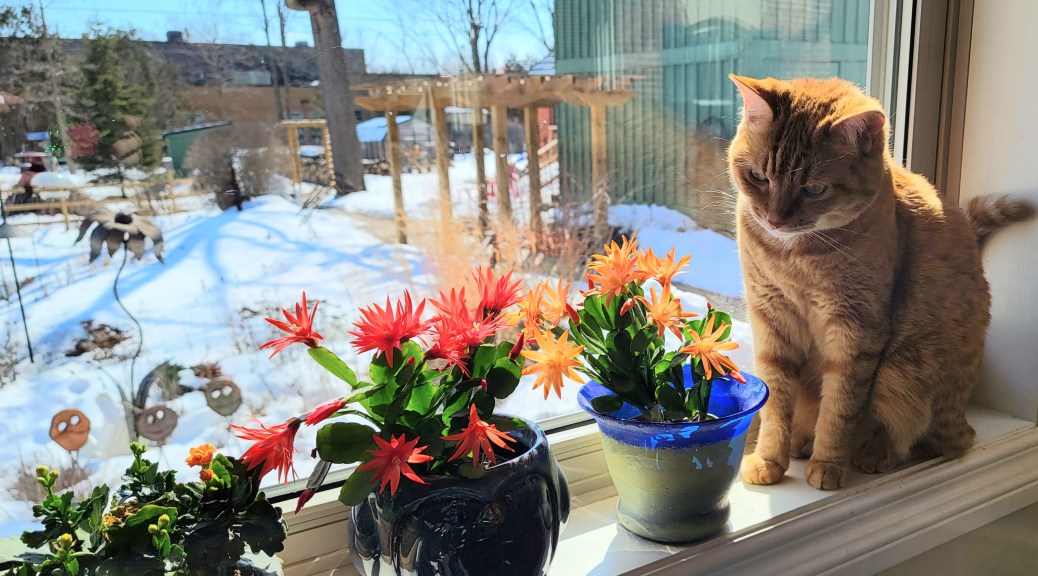
by Emma Murphy, Master Gardener
While I like to think of myself as a decent outdoor gardener, the same cannot be said of my indoor houseplant expertise.
However, I have worked hard at it over the years and we’ve had some lovely Clivia, various cactus, some Pothos, a Norfolk Island pine, and a goldfish plant (Columnea gloriosa) in my office at various times.

This was pre-2018, when my indoor kitties had no interest in my houseplants, and no nibbles were had.
That all changed when these two arrived in October 2018 – meet Lulu and Roxy.

While I love both of them, Lulu’s favourite activities are digging in the dirt and chewing on plants. Roxy just likes to rub up against them, knock them over and then maybe have a nibble.
While indoor plants can add beauty and life to your home, it’s essential to be aware of their potential toxicity to our furry friends. Certain plants can be harmful or even fatal to pets, especially cats and dogs. Understanding which plants are safe and which to avoid is crucial for ensuring a pet-friendly environment.
Many common indoor plants are toxic to pets, such as Pothos (Devil’s Ivy), which causes vomiting and oral irritation in cats and dogs, lilies (which are particularly dangerous for cats) and sago palms, which are extremely toxic, especially to dogs, causing severe liver damage. The Ontario SPCA has a list of the 17 most poisonous plants, but it’s not an exhaustive list.
If you suspect your pet has ingested a toxic plant, it’s best to consult a veterinarian immediately. Look for signs such as difficulty breathing, vomiting, diarrhea, or lethargy. It’s always better to be safe than sorry.
Reliable Resources on Plant Toxicity for Pet Owners
Here are some reputable websites offering advice on pet safety and plant toxicity:
The American Society for the Prevention of Cruelty to Animals’ (ASPCA’s) Animal Poison Control Center
A comprehensive and excellent searchable list of toxic and non-toxic plants.
Pet Poison Helpline Canada
Assistance for pet owners who suspect poisoning, including plant toxicity resources (there is a cost).
PetMD
Plants poisonous to cats
Plants poisonous to dogs
Detailed information on animal health and safety, including plant toxicity.
So What Plants Can I Have In My House?
If you’re looking to enhance your home with pet-friendly plants, here are a few options for you to consider. Personally, I find the palms, ferns and spider plants still tough to have in our house because I think our cats will gravitate to anything that is grass-like.
Unfortunately if your cat or dog is a habitual nibbler, you might be better off without houseplants altogether. We love our kitties more than we love our houseplants. For now I’ll just stick to my Phalaenopsis orchids and my various seasonal cactus and focus my gardening efforts on the outside of our house.
Spider Plant (Chlorophytum comosum)
African Violet (Saintpaulia ionantha)
Prayer Plant (Maranta leuconeura)
Orchids (Phalaenopsis spp.)
Easter, Christmas or Thanksgiving Cactus (Schlumbergera or Rhipsalidopsi spp.)
Bromeliads (Bromeliaceae)
Bamboo Palm (Chamaedorea seifrizii)
Sword/Boston Fern (Nephrolepis exaltata)
Nerve Plant (Fittonia)
Ponytail Palm (Beaucarnea recurvata)
Hoya (Hoya carnosa)
Gerber Daisy (Gerbera jamesonii)
Areca Palm (Dypsis lutescens)
Calathea (Calathea spp.)
Lady Palm (Rhapis excelsa)
Lucky Bamboo (Dracaena sanderiana)
Friendship Plant (Pilea involucrata)
Also have a look at this Laidback Gardener post.


 The Peterborough & Area Master Gardeners