
By Marjorie Vendrig, Master Gardener in Training
It’s the darkest time of the year, daylight is at its lowest, and most gardening has ended for the season. That doesn’t mean, however, that there is nothing in the garden to be enjoyed. Garden design and planting choices should take into account the many months when the garden is still and inactive. It’s during this time when, despite the lack of light and active growth, the garden is revealed. It is stripped bare of colour and the exuberance of growth is set aside. With the leaves gone and many small plants succumbing to frost, the garden reveals itself openly and honestly. It’s odd, but in the dark days of winter there is more light in the garden. Unencumbered by layers of leaves, loud colours, or scrambling growth, the garden becomes airy and lets us see its bones and form. There is a lot to consider and enjoy when the garden, no matter how big or how small, is revealed.
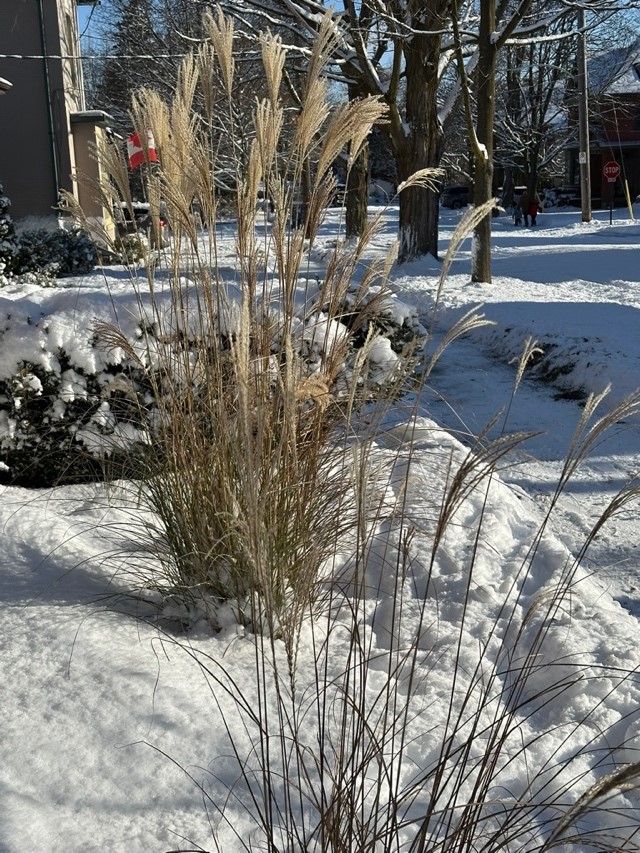
The low slanting light of late autumn and winter is an important piece of the beauty of the garden. Glancing out my bedroom window first thing every morning, I’m drawn to the morning light shining behind the swollen, grey buds of the magnolia tree next to the driveway. The buds are soft and fluffy, vulnerable yet so full of promise. In a nearby garden, there are a few large clumps of Karl Foerster grass (Calamagrostis x acutiflora) that sway and drift with the slightest breeze. Their slender stalks are a soft gentle brown, somehow able to withstand strong winds and pelting rain. Fall blooming grasses are a particular treat in fall and early winter, the slanting light is illuminated through the fluffy plumes making a beautiful statement. Hameln (Pennisetum Alopecuroides ‘Hameln’) is a favourite but there are many to choose from including some special native ones such as Side -oats Grama (Bouteloua curtipendula) and Prairie Dropseed (Sporobolus heterolepis).

Another subtle feature of winter light is the shadow effect. The gentle lengthened shadows created by tree structure, moving grasses, seed heads, or conifer form merit consideration when choosing plants and placement. They are certainly worth more than a glance on a spectacular bright winter day.

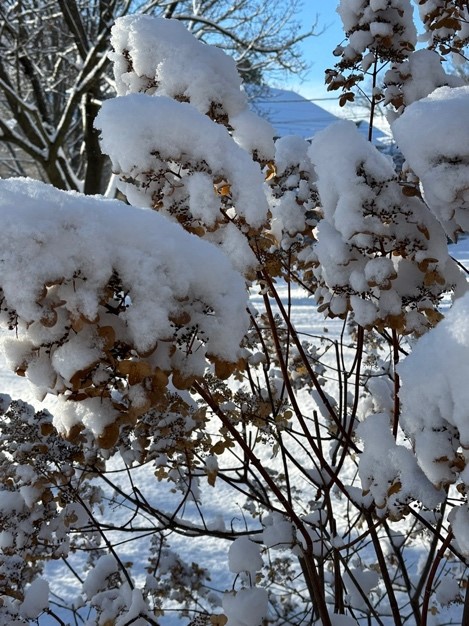
The dried flower heads of ever popular hydrangeas are a common winter garden treat especially when topped with a light dusting of early snow. Summersweet (Clethra alnifolia), a small summer flowering shrub, also retains dried flower heads through fall and winter. Other shrubs offer interest because of bark colour and texture (red twig dogwood, cornus sericea) or growth habit. Staghorn Sumac doesn’t take centre stage in the summer, but offers spectacular colour in fall. In winter, its red fruits, antler-like branches, and graceful form make it a show-stopper. Another shrub favourite in my fall and winter garden is Seven-Son Flower (Heptacodium miconiodes). It is an all-around wonderful, unique shrub with added appeal for its beautiful peeling bark in winter. Other shrubs that hold particular appeal in the winter are Witch Hazel (Hamamelis virginiana) and Corkscrew Willow (Salix babylonida).

Of course, conifers are the bones of any garden in winter. With different needle textures and lengths, and different shapes and forms, they provide obvious interest to every garden. When everything else is grey and brown, the rich textured green of a conifer stands out and when the snow comes along their interest increases. It’s important to have a variety of shapes and forms: cylindrical, mounding, conical, and weeping. In a small urban garden such as mine, I’ve found dwarf varieties and columnar species. One of my favourites is a weeping white pine (Pinus strobus ‘Pendula’), which is supported and pruned to fit a small spot. It’s a lovely unique specimen tree with gentle movement, at certain times of the day its pleasure is doubled when the sun throws it shadow on the nearby shed.
References
Winter Gardens: Reinventing the Season by Cedric Pollet
This book features beautiful winter gardens across France and the UK
 The Peterborough & Area Master Gardeners
gardens truly are beautiful at all times of the year. I especially love to see birds enjoying the seed heads — I tend not to do much deadheading for that very reason. Plus as gardeners we can imagine next year’s glory even beneath the snow.
LikeLike