By Lois Scott, Master Gardener
You have probably heard this adage applied to various activities/hobbies, but here I go. Buying seeds and starting seeds are two different activities. I engage in both, but sometimes the buying outruns the starting and I find myself looking at an unused package of vegetable seed purchased in the past and wondering if those seeds are viable. Checking vegetable seed viability is easy and may save you from the disappointment of a poor harvest.
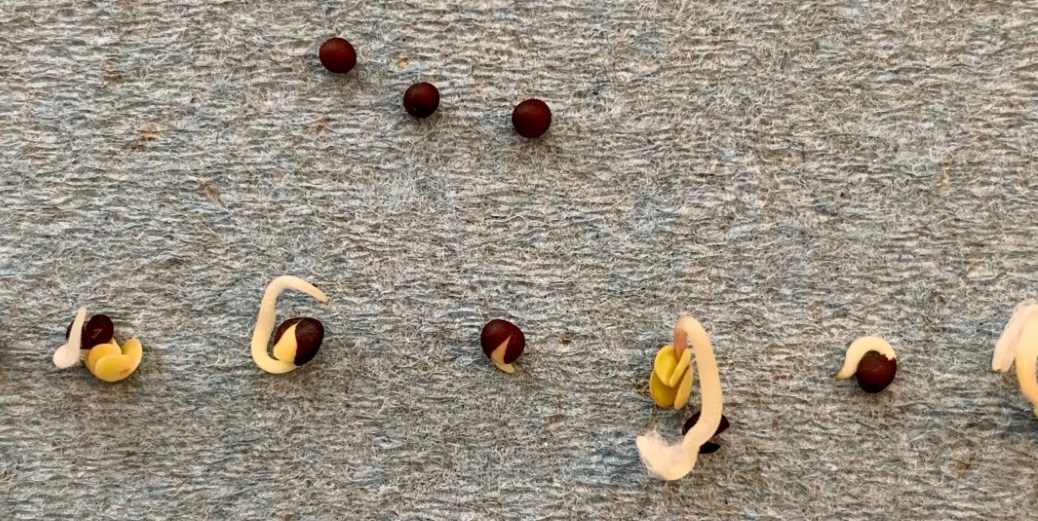
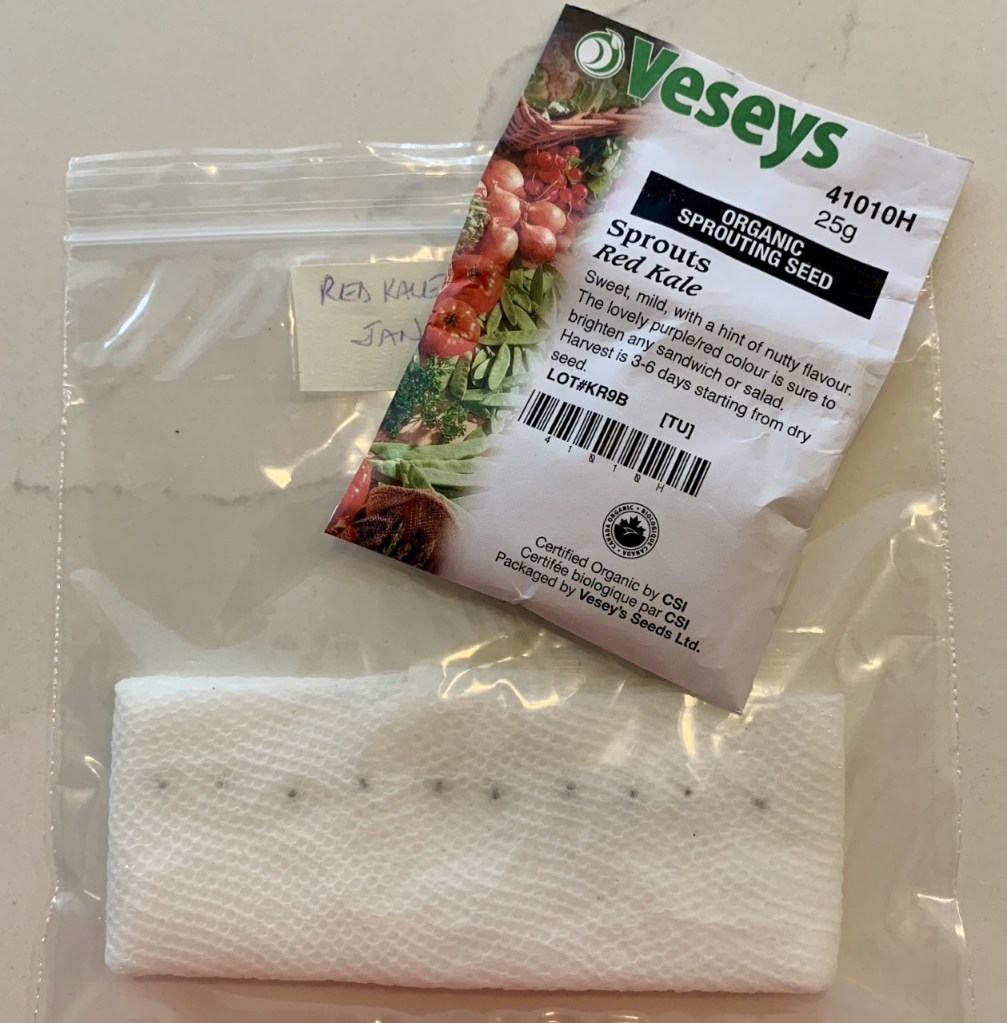
To say a seed is viable is to say it is alive. Checking for this can be easily done by wrapping a number of seeds (10-20) in a moistened paper towel, placing them in a sealed plastic bag in a warm place (21-26*C) and then checking for germination in a week or so. Your germination rate is a percentage, calculated by multiplying the seeds germinated by 100 and dividing that by the total number of seeds in your trial. It is recommended that if your germination rate is below 70% you should buy new seed. In my demonstration featured in the two photos shown, I used 10 seeds and 7 sprouted. My germination rate is 70%.
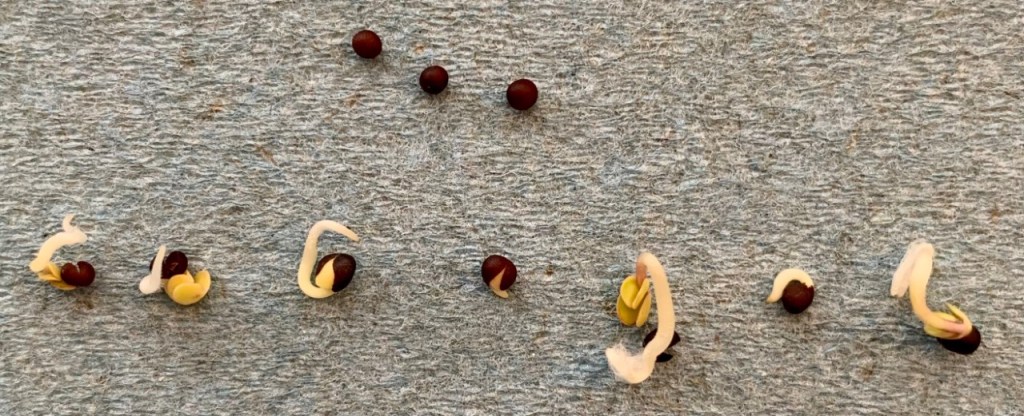
Checking for seed viability by putting seeds in water and discarding the floating ones is not a reliable test.
Different types of vegetable seeds remain viable for different lengths of time https://today.oregonstate.edu/news/give-seeds-test-performance but proper storage of seeds will optimize their viability. They are best stored in a cool place like a refrigerator, cool basement or root cellar. https://hortnews.extension.iastate.edu/how-store-seeds-and-test-germination-rates
Some seed companies also list on the back of their seed packages the optimum germination rate and the year the seeds were packed and tested. So, I know that the rapini seeds I haven’t used were packed in 2022 and maybe I should plant them this year!
It’s coming to that seed starting time of year so don’t hesitate to give some of your older seeds a chance to prove themselves and save yourself from vegetable garden let-down.
 The Peterborough & Area Master Gardeners