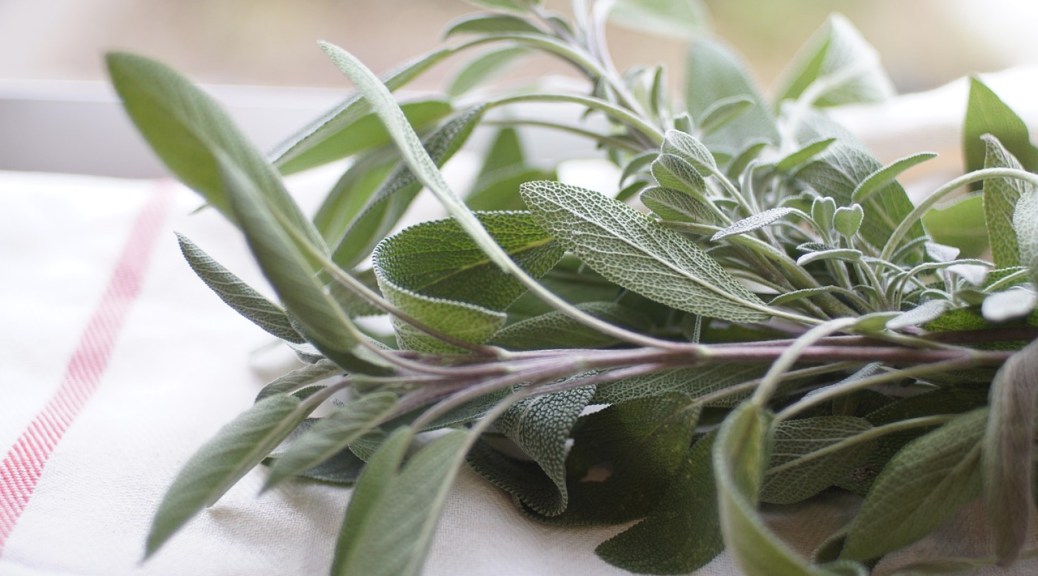
by Rachel Burrows, Master Gardener
Do you want to put some ‘oomph” in your meals? Culinary herbs are the answer.
After my husband was diagnosed with heart disease, I needed to rethink some of the rich, fatty meals that were full of salt. Luckily I had two friends who had a small herb business and were willing to share their expertise with me.
Master Gardener Christine Freeburn wrote a great blog in June on herbs in containers. She gave us lots of good ideas and I will take this a step further. I will look specifically at growing and using culinary herbs in the garden. I love Chris’ idea of planting herb containers close to the kitchen for accessibility.
While many herbs will flourish in pots let’s look at perennial herbs and how to use them. Specifically, I am going to write about more unusual herbs and what to do with them.
Most herbs are fairly easy to grow as they don’t require a rich soil and most bugs don’t bother them due to their strong smell. Several herbs such as oregano, sage and lavender have a Mediterranean origin and love hot sunny weather. There a few such as chives, parsley and lovage that prefer partial shade. It really important to provide herbs with good drainage, they hate having wet feet. If you have heavy soil you can mix in some grit when you are planting.

We all know the sweet basil that can be found in pots in grocery stores but why not try dark opal, lemon or Thai basil? I love to grow calendula and use the petals in salads, fish and rice.


Lovage is a tall herb that grows well in this area and has a strong celery flavour, useful when you forget to buy celery.

Salad burnet is another of my favourites for salads and flavouring butters. It has a nutty, cucumber taste.

Winter savory is a perennial that has a more intense flavour than summer savory. I use it to make stuffing, vinegars and jellies.

Sweet cicely is an interesting , tall plant with many uses. Use the leaves in soups and omelettes and the seeds in fruit salads. Cook the young leaves with tart fruit such as rhubarb to reduce acidity and the need for extra sugar.

Young sorrel leaves are great in soups and salads. Lavender is an amazing herb that reduces stress but is also used by cooks in cookies, jams and jellies.

Of course there are many herbs that can be dried and used to make tea. These include lemon balm, anise hyssop and bergamot and there are many more. Although I was born and raised in England I am not a regular tea lover but I do like to experiment with other herbs.

I have only touched sparingly on a few of the less well known herbs and their culinary uses.
Part two of this blog (you’ll have to wait until November 17th) will cover where to buy unusual seeds and plants, taking cuttings, layering, harvesting , drying, freezing, pestos and vinegars.

Further information
Rodale’s Illustrated Encyclopedia of Herbs
The Complete Book of Herbs (by Lesley Bremness)
 The Peterborough & Area Master Gardeners