By Mary-Jane Pilgrim, Master Gardener
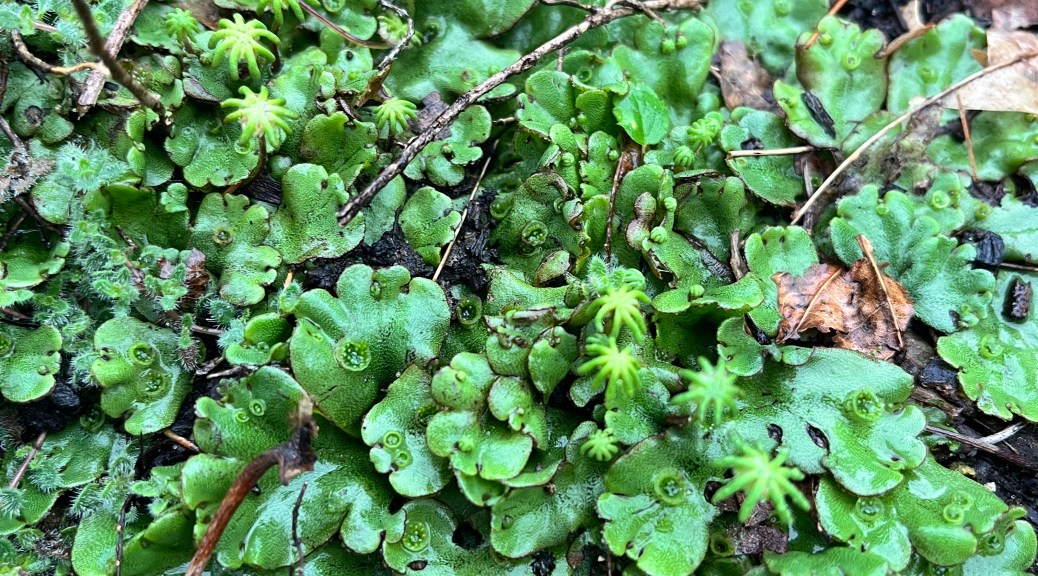
Umbrella liverwort (Marchantia polymorpha) is a fascinating plant that often catches the eye with its unique, umbrella-like structures. These small, flat, and green plants have been around for millions of years, making them one of the oldest plant species on Earth. They do not have a vascular system, and like ferns, they produce spores instead of seeds. While they do not flower, the female reproductive structures mature to look like tiny palm trees or umbrellas. For this reason, the common variety is called umbrella liverwort.
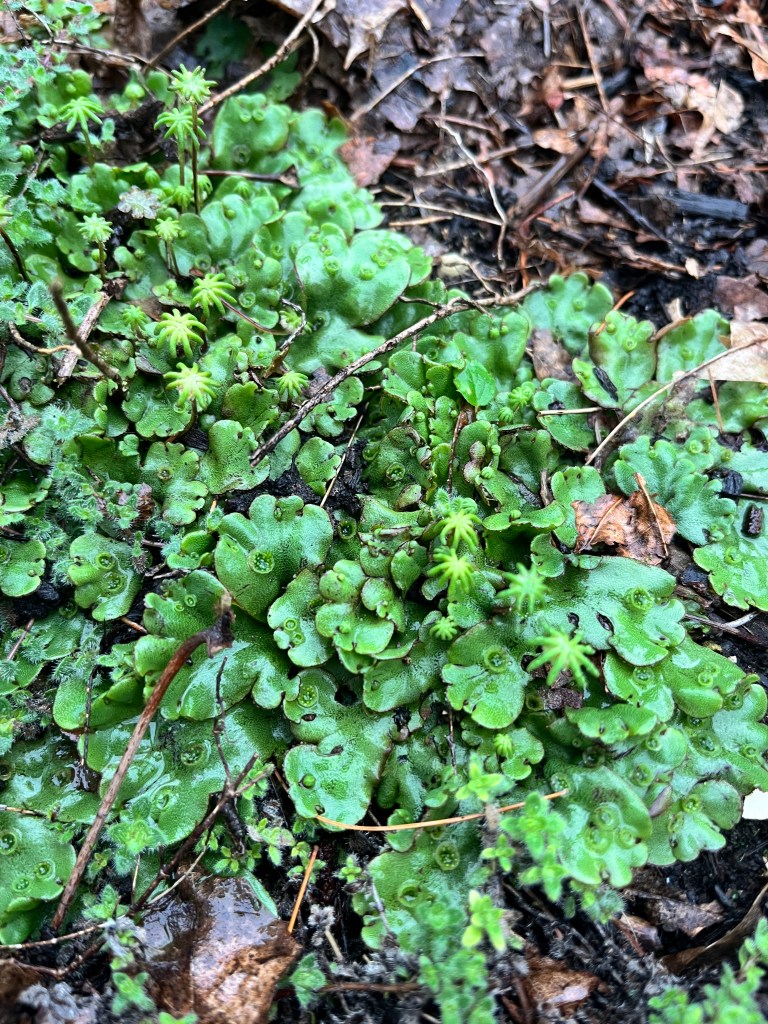
In our area, umbrella liverwort is commonly found in moist, shaded areas like garden beds, greenhouses, and along stream banks. This plant is native to many parts of the world, including Ontario, and has a long history of thriving in damp environments.
While liverwort is native, it can sometimes behave like an invasive plant, especially in gardens and greenhouses. It thrives in conditions where moisture is abundant, and air circulation is poor. If left unchecked, it can spread rapidly, covering the soil surface and competing with other plants for light and nutrients. However, its unique appearance and ancient history make it a cool plant to observe in your garden.
If you want to manage umbrella liverwort, focus on improving drainage, reducing moisture levels, and allowing more sunlight into the affected areas. But for those who appreciate its prehistoric charm, umbrella liverwort can be a delightful addition to a garden, provided it’s kept in check. An added benefit is that you don’t have to plant them — they just show up!

 The Peterborough & Area Master Gardeners