By Christine Freeburn, Master Gardener
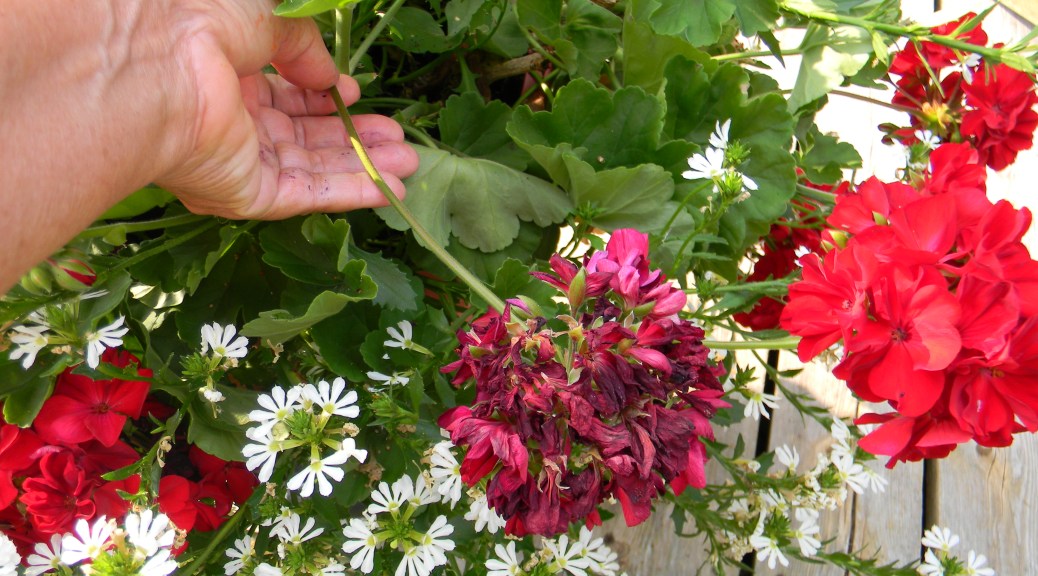
Deadheading is an important garden maintenance chore for July and there are several reasons for deadheading (or not). When deadheading, it is important to not just take the blossom off, but to cut the stem right back to the first junction and cut above that. Often you can just break the stem by hand, but be sure not to rip it. Use good pruning shears to make a clean cut. This applies to almost all deadheading, whether it is hosta, daylily or annuals.


The reason a plant grows and flowers is so it will go to seed and reproduce. If you remove the seed head you are encouraging the plant to put its energy back into the roots and leaves, making it become a stronger plant. Doing this as soon as possible after the flower is spent, is important for the overall look of the plant and the energy redirected.
Perennials that rebloom such as salvia, dianthus, delphiniums and roses should be deadheaded to encourage new blooms. Many new hybrids have tags that say “reblooming”, so watch for this when purchasing. Annuals like dahlias, marigolds and zinnia all benefit from cutting spent blooms to encourage new flowers.
Another reason to deadhead is to control self seeding in the garden. Many perennials and biennials will multiply by dropping seed. Forget Me Nots, Oriental Poppies, Lupins and Native Coneflowers will all appear in your garden if you don’t deadhead or disturb the soil.
Deadheading also makes the garden a bit neater. I deadhead Iris right after they bloom; cutting the stem right back. I often leave Siberian Iris to form seed pods as I use them in dried arrangements. I don’t particularly like the washed out purple flowers on Hosta, so I usually cut them back. There are some Hosta flowers that are fragrant and white, and I like to leave those on. The profusion of flowers on the daylilies this year are stunning. I like to snap off the spent blossoms, so they don’t distract from the fresh new flowers. Peony petals separate and settle through the flower bed, so I like to remove them before this happens. Other perennials that benefit from deadheading include yarrow, cranesbill, phlox, and astilbe.


Clematis form a lovely fluffy seed head which can be left on. I also leave my Monarda didyma for the birds and the pretty seed heads.
Your hanging annual pots and containers also may need a bit of TLC by now. Annuals like to be cut back. It encourages new fresh growth and flowers, makes them bushier because when you cut a stem it will branch out. Cutting back also brings the planting back under control so it doesn’t look overgrown.

Removing seed heads is removing food that birds may enjoy. If you are growing natives, you may want to leave them for the birds, butterflies and other pollinators, however you can deadhead and leave in an open compost pile. Although I deadhead throughout the summer, by late August, I stop and let the seed heads form on perennials like coneflower and black eyed susan so the chickadees and finches can feast.
So, get in your garden, enjoy the beautiful blooms and “off with the heads” of those that need it!
https://extension.psu.edu/to-deadhead-or-not-your-final-answer-is
 The Peterborough & Area Master Gardeners