By Carol Anderson, Master Gardener in Training
Over the years I have worked in many gardens with challenging microclimates, as well as those with challenging conditions such as poor drainage, drought, lack of sunlight, windy and excessively dry, and gardens with poor soil structure. However, the most challenging situation I have personally had to contend with was a garden that was “smothered” in landscape fabric. Although well-intentioned gardeners often utilize landscape fabric to control excessive weed growth in garden beds … the end result is most often the creation of a “garden catastrophe”.

Don’t get me wrong — landscape fabric has some applications that can make the garden more esthetically appealing and easier to manage, however its use should be largely limited to acting as a barrier under rock formations and/or stone installations where plants and weeds will never call home! In any other application, the result is hard packed, poor soil, unmanageable weed infestations and ultimately limitations in the natural growth and health of plants. Understanding the natural composition of soil and the cycle of life that occurs in the dirt and how this creates a natural environment conducive to plant growth will perhaps aid in understanding why landscape fabric is an enemy.
Soil … the essence of life for plants. Soil is a mixture of mineral and organic material that is capable of supporting plant life. The ideal soil composition is 45-48% minerals, 2-5% organic matter and 50% pore spaces (filled with ~25% air and 25% water). As plant matter decomposes, it is worked into the soil by insects and other organisms. Through this process, the soil is continuously fed the nutrients needed to sustain plant life and air spaces are created which ensure water and nutrient availability to plant roots. Microorganisms in the soil contribute as well to ensuring nutrient availability and uptake for plants.
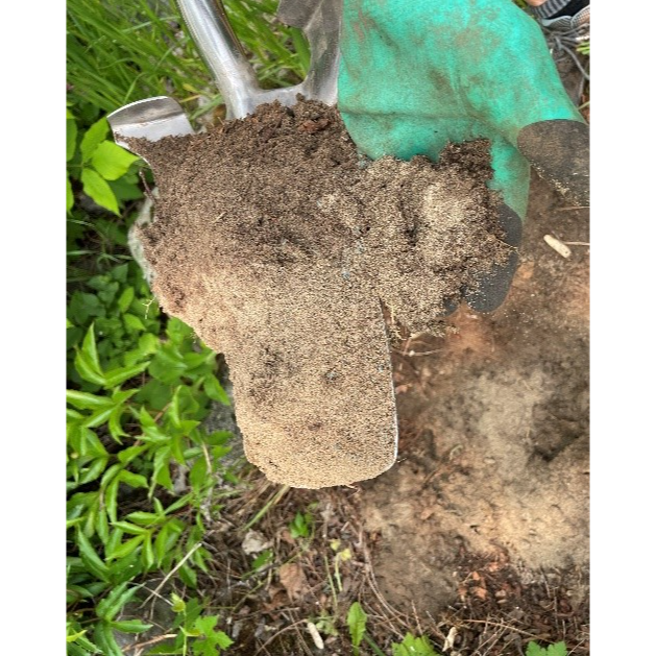
Landscape fabric halts this process by preventing the natural mixing of decomposing organic matter into the soil, resulting in hard-packed or poor quality soil. Good soil looks soft and crumbly. Poor soil looks either compacted and hard or very loose (such as sandy soil). Both of these soil conditions prevent plants from accessing water and nutrients in the soil. This picture depicts the poor soil structure and composition discovered in a garden after years of landscape fabric use. The was no evidence of organic matter and a lack of insects and worms that would be normally found in garden soil. As a result, the plants were weak, small, and nutritionally deprived.
If you are not yet convinced, let me also dispel the myth that weed growth is halted by the use of landscape fabric. While it may reduce the number of weeds in your garden initially, the ones that do thrive become entangled in and under the fabric. The removal of the weed bed that is embedded in the fabric becomes a nightmare to try and accomplish without destroying the rest of the garden. In addition, the organic matter and mulch used on top of the fabric facilitates weed growth, the roots of which ultimately penetrate the landscape fabric. Often the plants that you love also become embedded in the fabric as they try to grow and reproduce without the space to allow them to spread naturally.
 The Peterborough & Area Master Gardeners
Great article. Thanks Carol.
LikeLike