
by Anne Trudel-Inglis, Master Gardener
Trees have had a social network for hundreds of years!
Do trees communicate? This concept is still up for discussion.
Trees communicate amongst themselves – one form of communication is through electrical impulses through their roots. Another form of communication is by scent released into the air.
For example:

“On the African savannah, giraffes were feeding on Vachellia tortilis (umbrella thorn acacias), the trees didn’t like this, so minutes later they started pumping toxic substances into their leaves to rid themselves of the large herbivores. The tree gave off a “warning gas” and other trees in the vicinity got the signal and followed suit.”1
The giraffes got the message and moved onto other trees.
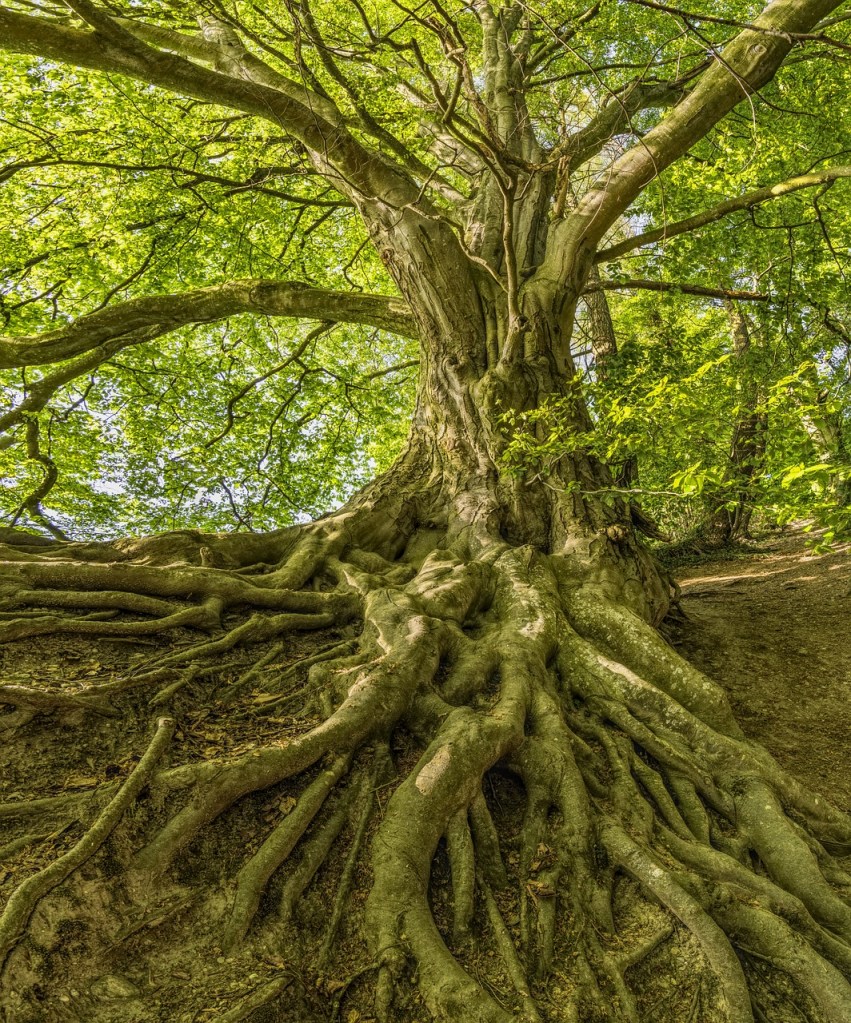
Communication by electrical impulses through their root system to other trees is accomplished through the fungal networks around their root tips. Messages are transmitted to the fungi which in-turn “operate like fiber-optic Internet cables”2 sending messages for miles along the fungal network to other trees in the forest about insects and other dangers lurking.
There are various scent compounds depending on the attack that is occurring. Trees have the ability to identify which species of insect is attacking by its saliva. The identification is so specific, it can release pheromones which attract the predator of the species attacking the tree.
If a tree finds itself in harm’s way it sends a message through the tree’s internal network which in turn signals the leaves to release a scent compound. “Not just any old scent compounds, but compounds specifically formulated for the task at hand”3.
The transmission of scent compounds travels in the air for miles. Animals and small critters in the forest detect the scents being released. If a predator picks up the scent, it knows a food source is nearby and follows the scent.
Tree Root Facts
- Most tree roots do not penetrate deep into the soil. Root depths range from 6 – 18 inches, staying close to the surface of the soil in order to absorb water, nutrients and oxygen from the soil.
- Tree root systems cover more ground horizontally. Some irregular root patterns extend 2 – 3 times larger than the crown of the tree.
- There are three basic root systems:
a. Tap root systems (straight, thick and tapering) include species such as Pine, Eastern Redbud, Walnut, White Oak, Sycamore, American Hornbeam and Douglas Fir.
b. Heart root systems (combination of large and small roots descending down and across) include species such as Norway Maple, Larch, Lime and Beech.
c. Flat root systems (no obvious primary root, several horizontal roots spreading laterally) include species such as Spruce, Sugar Maple, Silver Maple, Hackberry, Birch, Fir and Cottonwood.

I believe this is a form of communication or social networking – communicating to other trees, animals, fungi, insects, pests and beneficial predators.
References
- Wohlleben, Peter (forward by Tim Flannery; translated by Jane Billinghurst) The Hidden Life of Trees: What They Feel, How They Communicate – Discoveries from a Secret World. Greystone Books Ltd. Vancouver, BC 2015, P.7.
- ibid, page 10.
- ibid, page 8.

 The Peterborough & Area Master Gardeners