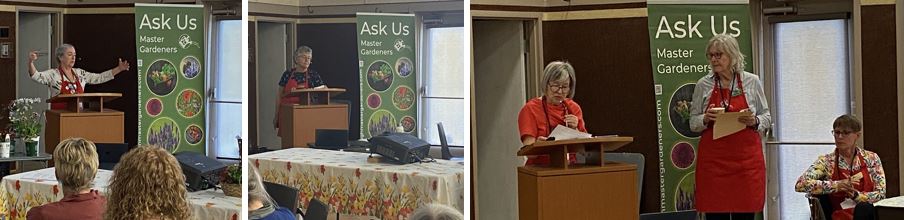
Are you looking for a speaker on a horticulture-related theme? A list of some of the presentations that our members have developed to share can be found below. If you’re interested in arranging for any of these presentations, please contact us.
One interesting option is for a few of our Master Gardeners to form an “Ask the Expert” panel at your event. Ask us about that!
Anne Craig:
contact: anne.kyleakin@sympatico.ca
- Looking at your garden with fresh eyes: Learn how you can increase biodiversity and enhance your garden ecosystem by adding native species and removing invasive species.
-
The magic of seedsLearn a little bit about the biology of seeds, how to start seeds and collecting and saving your own seeds.
-
Garden design with native plantsLike the idea of introducing native plants but think you’ll have a messy garden? Create classic garden designs – formal garden, cottage garden, modern garden – using plants that are native to our area.
- Rethinking the Lawn: Cultivating Change in Our Green Spaces
For decades, the manicured lawn has set the standard for the well-kept residential property; but at what cost? This session will examine the history of the lawn, look at the environmental impacts of conventional lawn care and share alternatives to the traditional lawn.
Christine Freeburn
contact : bcfree55@gmail.com
- Vegetable Gardening: A beginners guide to growing your own vegetables from seed with tips on soil, seed catalogues, growing in containers, pests and diseases.
- Bringing the Garden In: Tips on how to keep plants over through the winter months in your home. Talk includes pest and disease identification and propagation tips.
Jennifer Guertin
contact: dragon.fly.cottage@hotmail.com
- Supporting Pollinators Throughout the Seasons: Ninety percent of flowering plants need pollinators to reproduce. Find out how important they are to our ecosystems and how we can help them in our gardens.
- Made in the Shade: Transforming Dark Places to Beautiful Spaces. Learn how to fill those difficult spaces, giving ideas, design and inspiration. Shade gardening basics featuring annuals, perennials, shrubs and trees, and container gardening.
- Houseplant Basics: Essential Tips to Keep Your Houseplants Healthy. Having trouble with your tropicals, killing your kalanchoe, bugs on your begonia? Have no fear, I have solutions here! How to keep all your plants happy and healthy and some great basic plants that don’t require much effort for those less greener thumbs.
- Container Gardening: Do you want those beautiful planters you see at the garden centres? Here is a demonstration and powerpoint on planting and maintaining your outdoor pots. Learn about which plants to choose, how to plant, and what to do to keep them looking their best throughout the summer.
- And coming soon! Rose Basics and Keystone Species
Thom Luloff
Contact: thomluloff@gmail.com
- “Attracting Garden-Friendly Wildlife to Your Garden”: Transform your garden into a thriving ecosystem by inviting beneficial wildlife to share your space. From pollinators to amphibians, discover the species that support garden health and learn simple steps to create a welcoming habitat.
- “Creating a Bird-Friendly Garden”: Invite feathered friends to your backyard! This presentation covers tips to design a garden filled with food, shelter, and water sources that attract a variety of bird species, enhancing biodiversity and adding beauty to your outdoor space.
- “The Importance of Garden Invertebrates: Nature’s Tiny Heroes”: Bugs aren’t just pests—they’re essential players in your garden’s ecosystem. Learn about the role of worms, beetles, spiders, and more in pollination, pest control, and soil health, and how to encourage these tiny heroes in your garden.
Emma Murphy
Contact: puffin12@gmail.com
- The Twelve Plants of Christmas: Curious about the various plants associated with our Christmas season? Emma tells the stories behind 12 key plants that are either decorative, food, or just form part of our traditions for another reason!
- Over the Garden Gate-Touring English Gardens: In May 2022, Emma and her husband Grant travelled to southern England — not only to see many of the famous gardens (Sissinghurst, Great Dixter etc.) but also some lesser known beautiful private gardens. She shares her experiences meeting the people behind these private gardens in Oxfordshire, Berkshire and Sussex; some information about the UK’s National Garden Scheme; and of course, lots of lovely photos!
- Like Moths to a Flame – Rethinking Outdoor Lighting in Your Garden: (coming soon) Based on a Master Gardener blog, Emma explains how artificial lighting in our gardens affects pollinators, birds and wildlife. Read the blog now.
Mary-Jane Pilgrim, no Zoom please
Contact: mjpilgrim@live.ca
- GardenSpeak (Basic Botany): A little latin, some discussion on plant families and classification, and a few skills to be able to determine a plant’s family tree (spoiler alert *quizzes*).
- Beautiful Spring Bulb Gardens: Bulbs, Corms, Rhizomes & Tubers–how do these garden elements differ? When should you plant? Dealing with squirrels and other pests. Forcing bulbs for more petal power!
- 150 Years of Gardening: From gardening for food, to lawns as a status symbol, to ornamental gardens, back to gardening for food and then native gardens — enjoy a trip back in time for the green-thumbed in both Ontario and Canada.
- Horticultural Trivia: A lighthearted but challenging evening of “test your memory” on all things horticulture. Great for challenging your group to put their knowledge to the test, either individually or in groups. Bonus: Prizes!
- Horticultural Trivia Part 2: Great for any group that has already hosted me for the first trivia event. Different questions, a great challenge. Bonus: Prizes!
- Christmas Gardening Trivia — a light-hearted horticulturally-related evening of fun with a Christmas theme! Prizes to the “smartest” team.
- Tips, Tricks & Slips: After many years and thousands of plants, I sometimes think I’ve seen it all — but I clearly haven’t! Learn how to skip some of the biggest challenges and make your (mostly perennials) gardening journey a little easier.
- How Do They Do That?: How do they make weeping trees? What is and why would I buy a “standard” tree? What’s up with grafting? What’s a witch’s broom? What is tissue culture and why should I care? What’s an espalier? Learn about horticultural techniques(?) at their finest.
- Garden Disasters! Prepare. Survive. Thrive. In this talk, we’ll address some of the common misfortunes: Japanese beetles, grubs, lily beetles, cute but menacing critters, and a bit about invasive plants.
- Invasive Plants: Invasive plants are no joke! Many of having invasive plants growing in our yards and in our gardens. But what makes an invasive plant so bad? What harm do they actually cause? And what should we actually do about them to get rid of them? Let’s talk.
- The Dirt on Soap and Home Remedies — Home recipes abound for ridding your garden of every single bug, but do we really think that’s wise? What should we use for bugs that we know are not beneficial? A light-hearted look at frequently used household chemicals and what you may want to use instead.
- The Horticulture of Scent: Why Some Plants Smell Good… or Terrible — Volatile compounds, why fragrance changes with time of day or temperature, and plants known for their unusual scents (chocolate, vanilla, popcorn, curry, etc.).
- Horticultural Hoaxes, Scams & Plant Myths —The “vegetable lamb of Tartary,” fake blue roses, the tulip bubble, Victorian scams, miracle fertilizers, and the resurrection plant that doesn’t resurrect. A historical lesson about scams and hoaxes in our shared plant history. You know that I’ll find a way to make this humorous!
- When Plants Bite Back: The Chemistry of Plant Defenses — Why certain ornamentals are prickly, sticky, stinky, bitter, or toxic; how gardeners work with (or around) these adaptations; and surprising defensive traits in common garden plants.
Silvia Strobl:
contact: silviaevastrobl@gmail.com
- Invasive Species–what can gardeners do? Escaped garden plants are the number one source of invasive plants in Canada. Learn which common garden plants can escape and invade surrounding natural areas, which native alternatives offer similar beauty, and if you have invasive plants in your garden, how to choose the best option for control.
- Jumping Worms: What you need to know and how to prevent them from getting into your garden. In Ontario we still have opportunities to avoid introducing this pest to our gardens. This presentation will cover: how to recognize invasive jumping worms, describe their impacts to gardens and forest ecosystems, why their lifecycle makes control challenging, and what preventative measures gardeners can take now to avoid introducing this invasive pest into their gardens.
- Native Trees and Shrubs for Small Yards: Want to plant more native trees and shrubs to provide food, nesting sites, and cover for bees, butterflies, and birds, but think you don’t have room in your small yard? Learn about the best small native trees and shrubs that are both suitable for limited spaces and the local growing conditions. You’ll also get information on where to source native trees and shrubs.
- Preparing for Tree Planting Success – A little planning will help ensure your planted trees survive and add value to your home. This talk will give you the tools to choose and source an appropriate tree or shrub species for your site and objectives as well as be prepared to plant it and provide the care needed to ensure it reaches maturity.
- Winter Sowing: a fun way to make more native plants—Winter sowing is a specific method of successfully germinating seeds of native plants that produces lots of strong hardy plants for just the cost of a large bag of soil! This presentation will inspire you by showing you how to do this and even produce flowering plants within 7 months for some native species!
- Winter Tree Identification: When the leaves are gone, how do we know “what tree is that?” In this presentation you will learn which features can be used to identify local area native trees in winter. You will learn to hone your powers of observation and how to use resources like a dichotomous key to identify the diversity of trees around us. This presentation can be followed by an outdoor practice session, if interested.
 The Peterborough & Area Master Gardeners